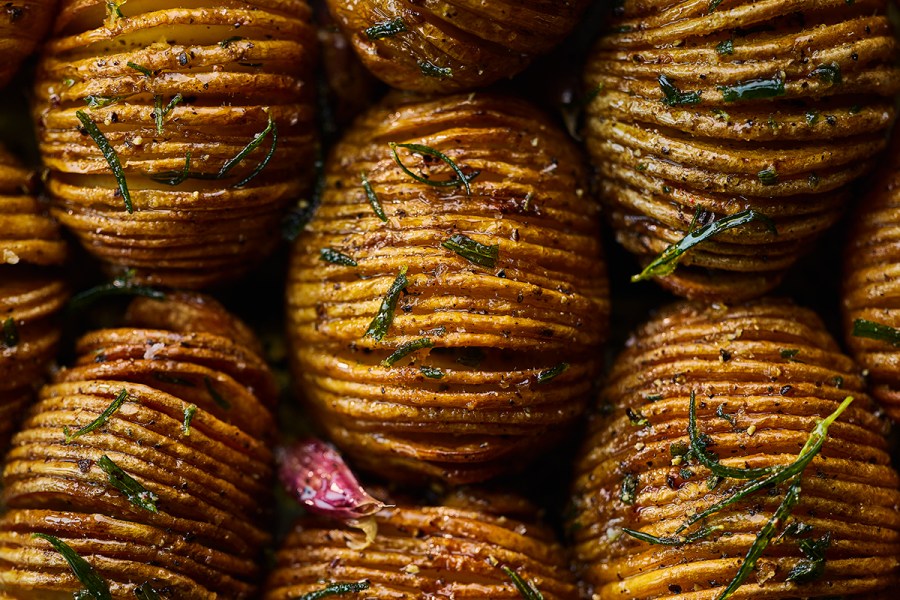
Open to both amateur and professional photographers worldwide, World Food Photography Awards sponsored by Tenderstem® competition features 27 categories capturing the eclectic relationship between food and culture. These include Food Influencer, Food Portraiture and Food in the Field, Politics of Food and The Jamie Oliver Youth Prize.
Among the standout categories is The RPS Student Food Photographer of the Year, recognising emerging talent from students currently studying photography, or who have graduated within the past year, at recognised colleges and universities.
The overall winner receives a grand prize of £5,000, while finalists benefit from invaluable exposure through exhibitions at London’s Mall Galleries and a curated display at Fortnum & Mason.
The following winners gallery showcases images that not only stood out for their technical skill but also for their capability to trigger hunger, imagination and emotion.
To see the online gallery of all the 2026 finalists, visit www.worldfoodphotographyawards.com
Entries for the 2027 edition of the competition will open in September.
Overall Winner
A Woman Eats in the Canteen of the Soviet-era Sanatorium by Jo Kearney, UK
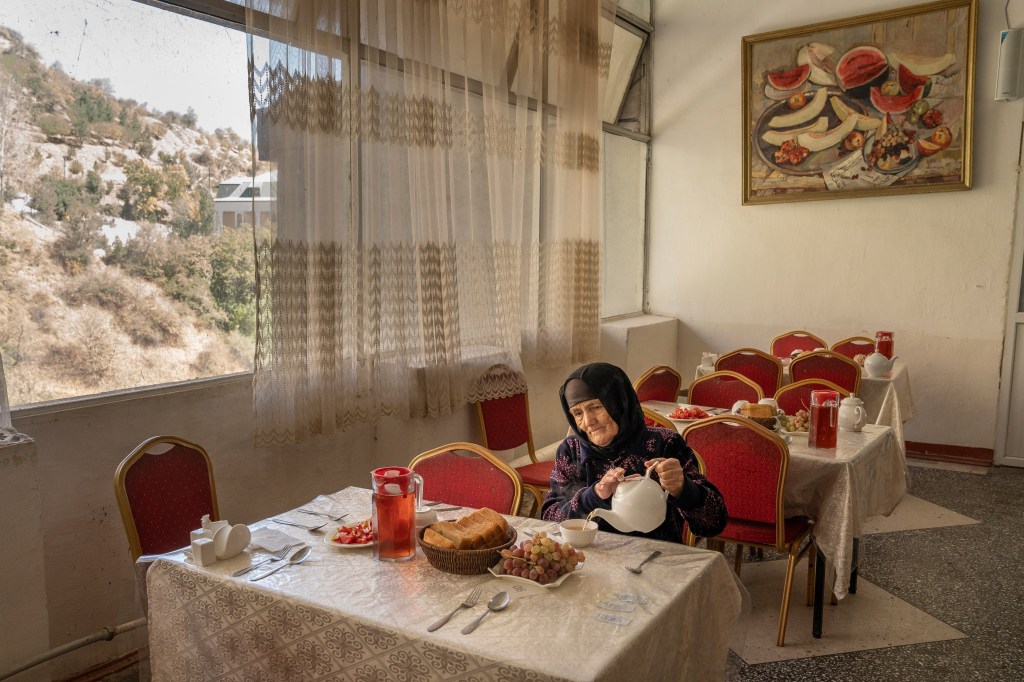
Jo considers herself a travel and portrait photographer rather than a classic food photographer. About her winning image, She says: ‘The photo came from a project on a stay at a Soviet-era sanatorium in Tajikistan. During Soviet times communist workers were given a 2 week health break at a sanatorium and there were lots of them scattered all over the Soviet Union, mostly by the coast or in the mountains. Obi Gharm is situated in the mountains on some hot springs so there was always a spa there even before Soviet times. But the Soviets built a huge multi storey concrete monstrosity on the site.Despite its appearance, and Soviet furnishings, it is favoured by Tajiks due to its affordability. It costs around £25 a day for full board and lodging and treatments which include dips in radon gas infused pools and steam rooms. For meals everyone gathers at the huge dining room for breakfast lunch and dinner. Food is basic but nourishing and some vegetables grown on site. The walls are covered with Soviet era murals and paintings. This woman was seated early in the dining room so I got a photo of her sitting alone. Behind her is a painting of fruit.’
Jo’s top tips
When you are travelling look out for any photos that have food in them as they might be suitable for the competition. Also look through your files you might find a winner.
Tips for projects and documentary photography – find a good subject and spend time on it. Even if you are there for just a day or two and think you’ve captured everything it is always worth staying a bit longer even if it is photographing the same subjects as often you can get better photos.
The Bimi® Prize
Candied Pear by Anne Mason-Hoerter, Germany
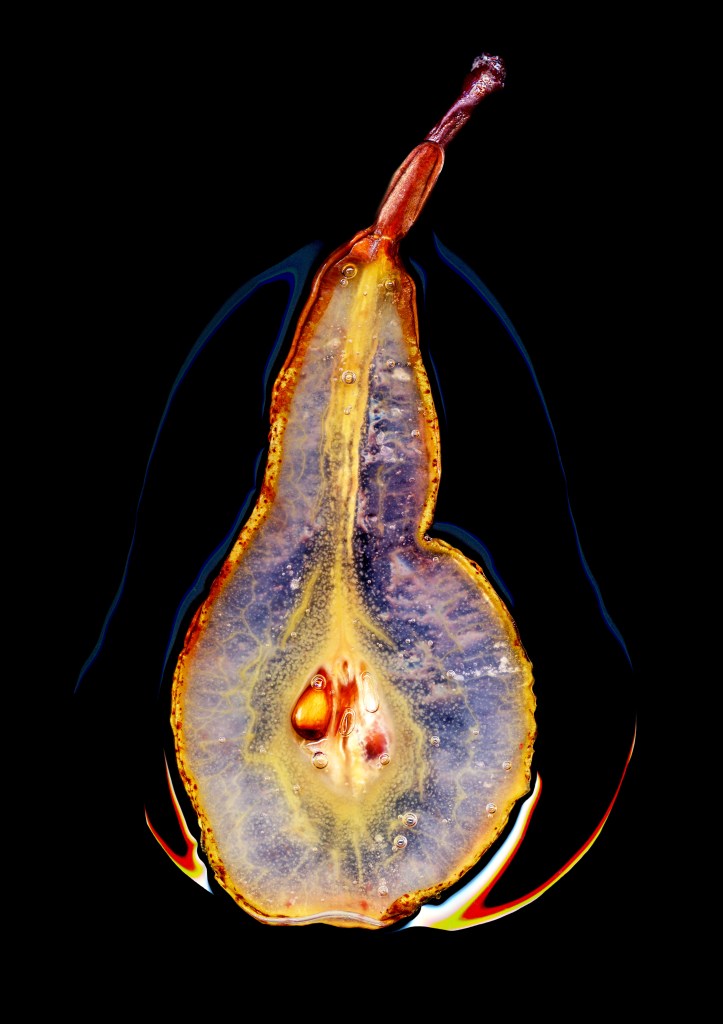
For me, I believe it’s important to create an original image of the food that you wish to photograph. Something that hasn’t been seen before. Experiment.
Anne’s top tips
First find a category that interests you and then go through previous winners to get a feeling for what has won. Then start thinking about what food you are interested in and experiment.
My process for food photography has been developed with much experimentation over many years. It works for my perception of food and how I would like to present it. I believe it is vital to find one’s own method and way to photograph in order to find your distinctive style.
Champagne Taittinger Wedding Food Photographer
Twin Bridesmaids Enjoy Canapés, Devon, UK by Emma Stoner, UK
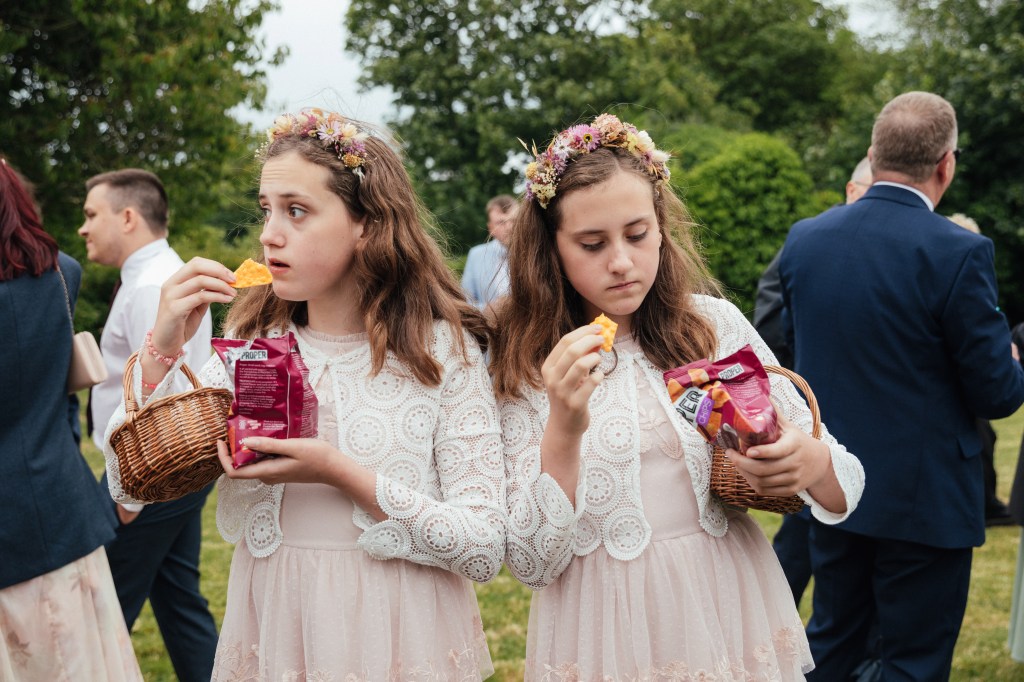
It always feels very exciting to be a finalist! I’m looking forward to going to the food awards this year as I couldn’t make it last year.
Emma’s top tips
My photography is documentary in style so my food photography has been shaped around this. I capture food in situ or just very natural set-ups, nothing too shiny, just very organic & relatable. I’d say just be yourself! You can apply your own style to food photography.
Look at the kind of photos that they are looking for in the different categories and see if that fits your images. I don’t generally enter cake photos, for example, as they often look very studio based. My photography is more about the wider picture than just the food so I tend to enter the more documentary categories.
I currently shoot on Canon R5 but this is a very recent switch so a lot of my pictures are still shot on the Canon 5D Mark IV. Looking forward to seeing how mirrorless plays out this year. For food I tend to shoot on a shallow depth of field, usually a 24-70mm lens. I shoot with that lens as it’s good for documentary style pictures and also good at capturing close-ups and goes to F2.8.
MPB Award for Innovation
Family Portrait by Hussam Sleiby, Jordan

I am not a food photographer per se, but I do specialise in still life photography that frequently incorporates fruits and vegetables. I begin by selecting a subject that resonates with me – one that possesses beauty and character and deserves to be captured and immortalised. This moment inspires me to create a visual story and make the photograph. I believe in finding something we love and photographing it; our emotions will ultimately shine through in the final image, resulting in a special piece that viewers can feel.
Hussam’s top tips
Food photography is all about storytelling, textures, and light. It’s not just about making the food look edible; it’s about conveying the atmosphere in which it was harvested, prepared, or shared. From a technical standpoint, mastering light is essential. Soft, directional side lighting or backlighting enhances the food’s glistening textures and casts beautiful, soft shadows. Think of it like a painter utilising chiaroscuro; you want the light to wrap around the elements of the composition, creating depth rather than flattening them with direct, harsh flash.
Submit images that convey a profound cultural or narrative story. This competition is highly prestigious, and the judges have reviewed thousands of stunning photographs. To stand out, look beyond the food itself. Focus on the human element: the hands that harvest, the ancient processes of preservation, or the raw emotions tied to a meal. Embrace cultural authenticity by documenting local traditions as they truly are.
Don’t just submit technically perfect shots; submit frames that tell a story, embody unspoken poetry, evoke nostalgia, or convey a strong sense of place – a photograph that provokes emotion.
I prefer a zoom lens for its flexibility, enabling me to select the appropriate focal length for the scene and frame the composition precisely without moving the tripod significantly. Typically, I use a focal length between 35mm and 50mm (equivalent to 50mm – 75mm on a full-frame sensor) to avoid the distortion that shorter focal lengths can cause, ensuring the proportions of the food and other elements appear natural.
Jamie Oliver Youth Prize 13 – 17
Chhath Puja Offerings by Indigo Larmour, India
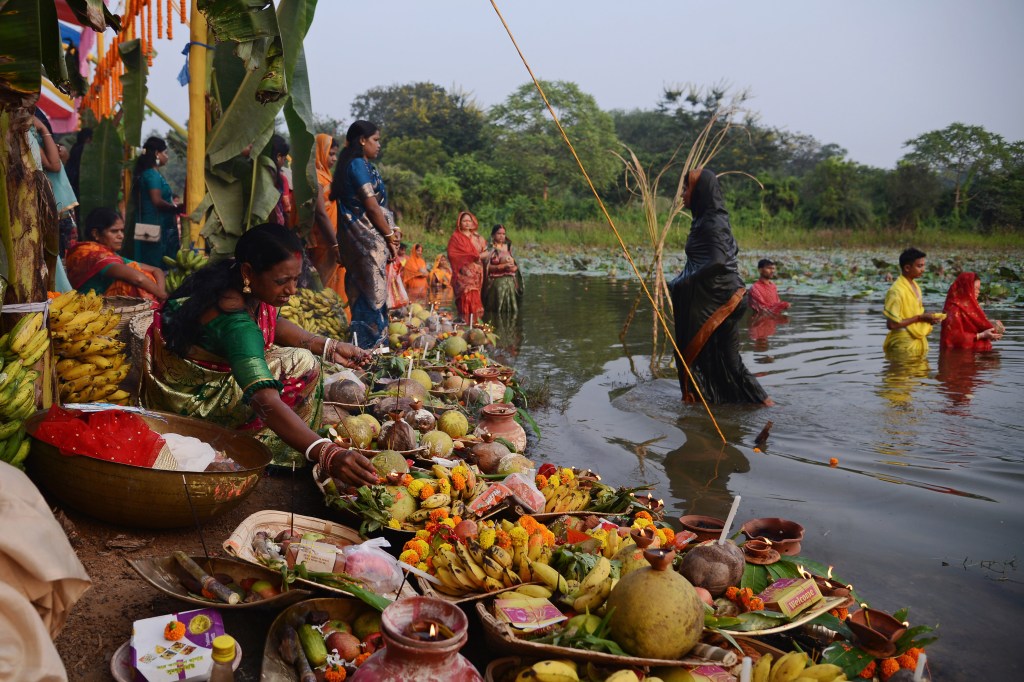
Food photography isn’t just about ingredients and cooking, but the way we live and connect with others.
Indigo’s top tips
Observe how food is present in the environment around you; is it ceremonial, medicinal, celebratory, or purely for sustenance? What does it reflect about culture and society?
Just go for it! The awards provide an incredible opportunity to reflect on your work, and the stories that your photographs tell. Pick the images that resonate with you (and family or friends, who are always useful to consult), because hopefully they will resonate with the judges as well.
I think that a technical understanding of your equipment and settings helps you to adapt to different environments, and the way you tell stories within them. For instance, as my image was taken around sunset, I was constantly adjusting my settings to account for changes in the light so that details would not be lost.
Louis Jadot Wine Photographer of the Year – Overall Winner (and People)
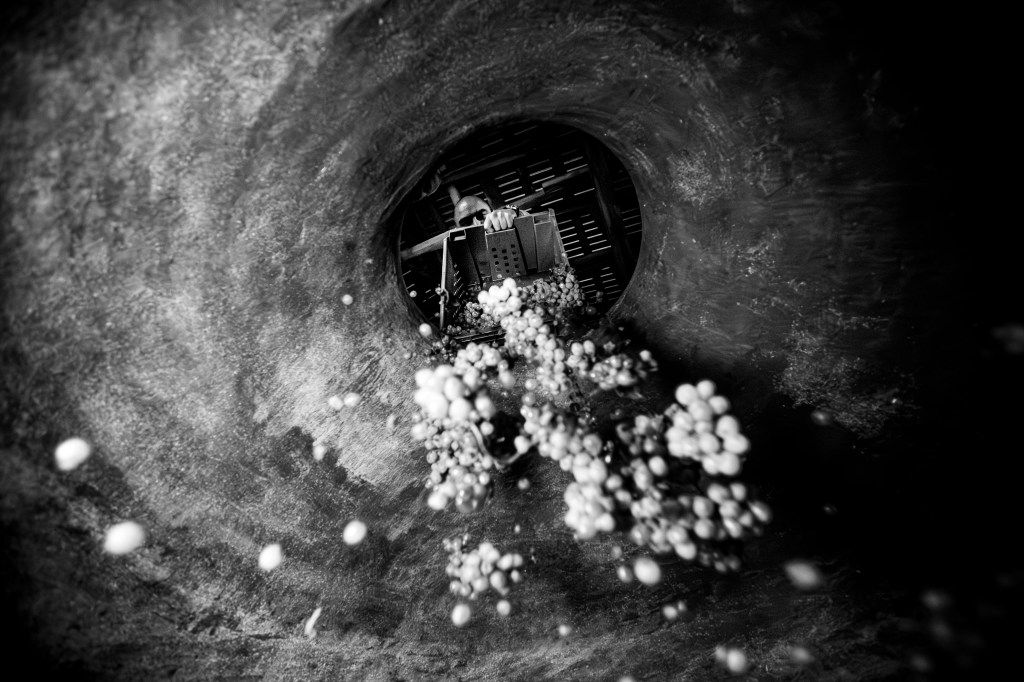
In the Depths of the Deposit by Juan Miguel Ortuño Martinez, Spain
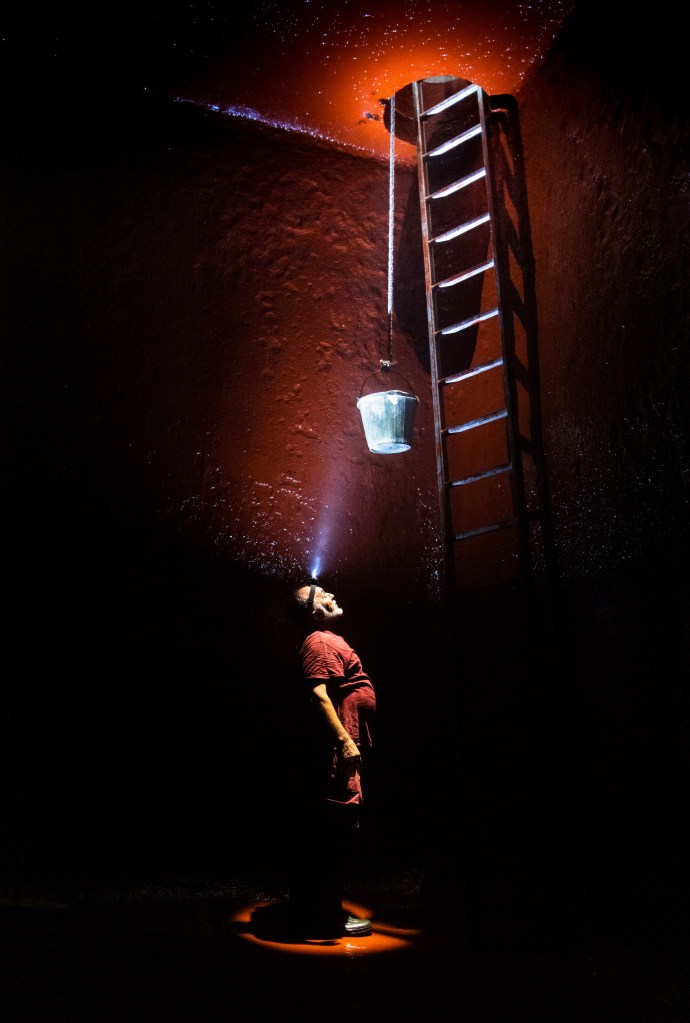
I really like the way the competition is structured, the different stages you go through; I love the calibre of the entrants, and I’m amazed by the images and ideas that some of them come up with – they really take your breath away.
Juan’s top tips
In my case, when photographing people in the wine industry, my best advice would be to get to know the people you’re going to photograph (the staff and workers) well, and to build a friendship or rapport with them. That makes things much easier, and sometimes they’ll give you ideas you hadn’t considered and show you hidden corners worth photographing.
You should be aware that the world’s best photographers will be taking part and that their images will be incredible, so my advice – and what I usually do – is to go through all the shortlisted photographs in the category you want to enter and look for something new, something that hasn’t appeared in previous years and that has a visual impact; sometimes it will be an idea to develop, and other times you’ll be ‘lucky” enough to be there at the decisive moment.
I’ve always believed that image quality comes down to the lenses; cameras come and go, but what really gives you that extra bit of image quality are the lenses. I only ask one thing of cameras, and in my case, that’s the ability to shoot at high ISO.
Claire Aho Award
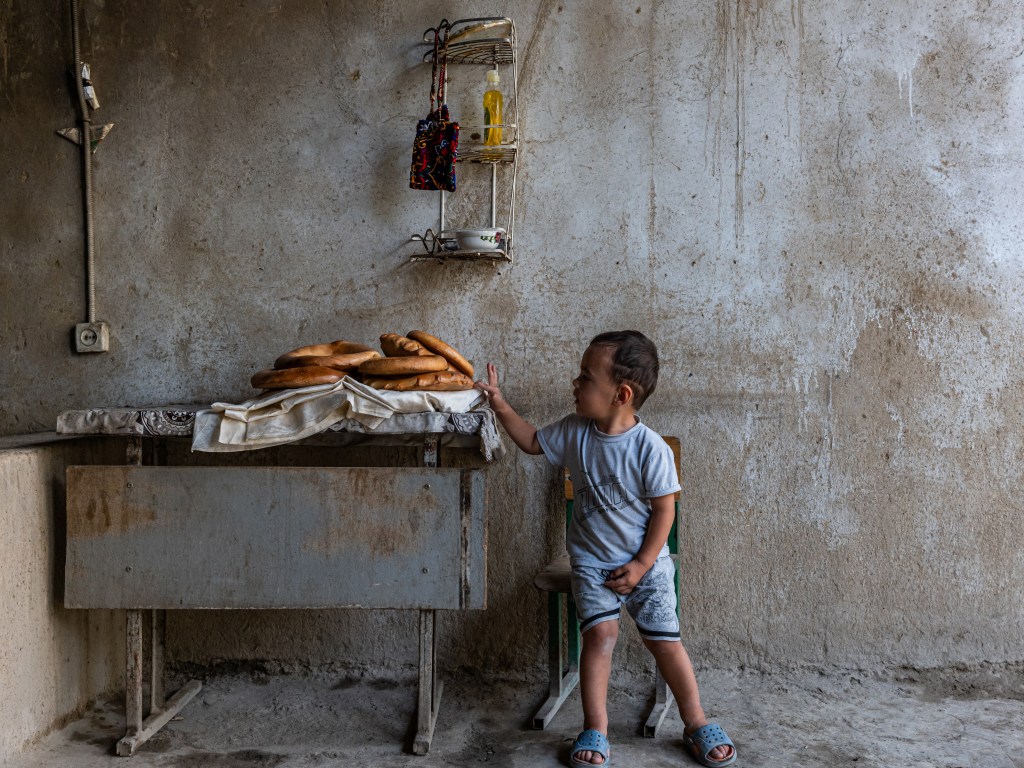
Granny’s Welcoming Gift of Love by Kellie Carter, USA

Oh my gosh, it feels AMAZING!! There are not words to describe how exciting this is!! To have been chosen as a Finalist in the World Food Photography Awards is such an honour! To know out of the thousands of entries and one of MY photos was chosen, well it makes me emotional every time I think about it!!
Kellie’s top tips
I look for something outside of the box. I don’t want my photos to blend in, I look for food and/or subjects that will stand out. Whether it be the colour or the actual food, I want something different.
Sometimes it is the photo that you enter that you think, “Oh this might be too far outside of the box” that will catch the judges eye.
I’ve always been a Canon girl, Canon to me is the best equipment out there. It’s tough – I live in Oklahoma and travel all over the United States shooting photos and I know wherever I go, my Canon equipment will hold up, whether it’s hot and humid or cold, Canon is reliable.
Food for the Family
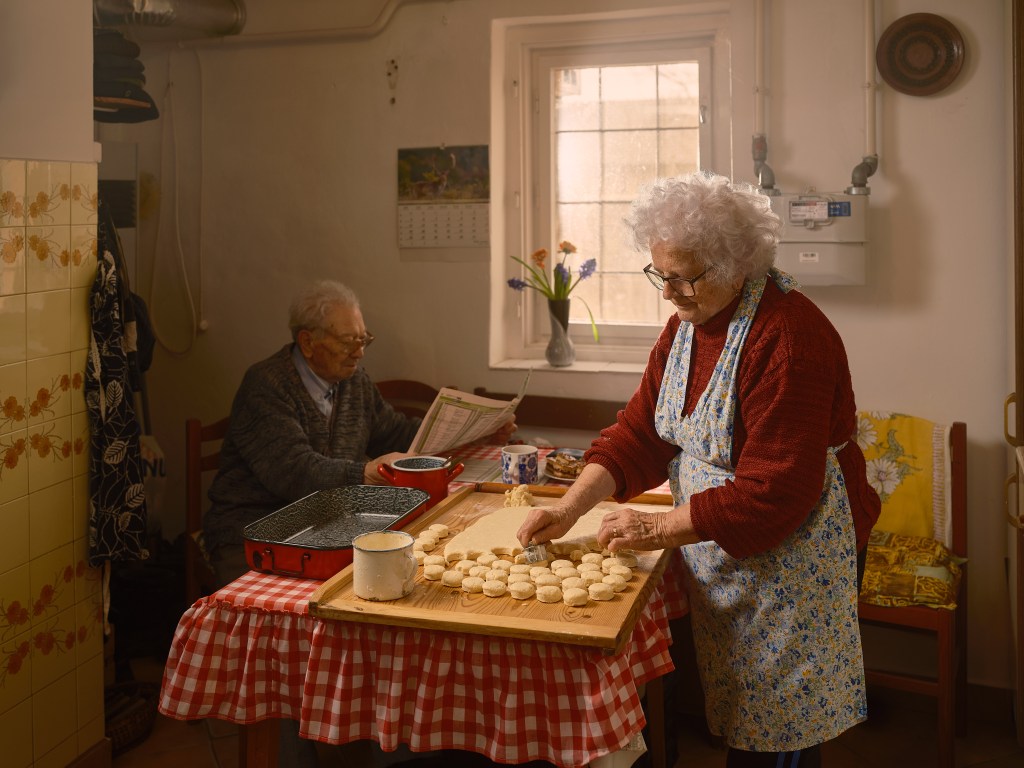
The Final Touch by Michela Balboni, Italy
For me, food should never be treated as just an object or a beautiful plate. I always try to approach it as a subject with a story behind it. Food can speak about identity, traditions, relationships, memory, territory, or social change.
Michaela’s top tips
Try to avoid focusing only on aesthetics. Of course light, composition and technique matter, but what really stays with people is a strong point of view. The projects and images that resonate the most are often the ones that reveal something human through food. I think it’s important to photograph subjects you genuinely care about, because that emotional connection becomes visible in the work.
I mainly shoot with Canon and Leica cameras, usually a Canon 5D Mark IV and a Leica SL2, and I mostly work with prime lenses whenever possible. I often use wide apertures because I like the sense of depth and intimacy they can create within an image.
Hotel Art Group Food Stylist Award
Sarah Ghijselinck, Belgium – Stacked Morning (photo Sandra Declercq)

Food styling has no real education or diploma behind it, you just kind of roll into it and figure it out along the way. So getting this kind of recognition is really good for the imposter living inside me. I feel really proud of myself.
Sarah’s top tips
Just try and try and try again. Recreating work you admire is honestly how I learned the most. Surround yourself with talented people from within the industry, ask for tips, assist on jobs, and don’t be afraid to ask for help. The more you see, do and discuss, the faster you grow.
As a food stylist, I work with a lot of tools. We travel with big suitcases full of tweezers, brushes, toothpicks, glue, matifiers, glossing agents, thickening products, … some pretty unusual stuff alongside the regular kitchen equipment. Half the job is knowing which weird little tool solves the problem in front of you.
Enter with work you really love yourself, something you’re proud of. That was my approach, not sure if making something specifically for this competition would have worked for me.
Judge’s Tips
Eden Sparke – Senior Content Manager, Action Against Hunger UK
There are a lot of different ways to stand out. Are you going to deliver a really technically great photo? Will you show us something we’ve never seen before, or something we have but from another angle (both figuratively or literally!)? Will you capture a moment for us that we might otherwise miss? And don’t get too hung up on trends. Stick to what excites you, what makes you want to pick up your camera and get exploring – and that will come through in your photos.
Chris Sutherland – Head of Photo, KODE
The strongest entries tend to feel like they belong unmistakably to the person who made them. Refining what feels most uniquely yours, keeping the edit tight, and making it very easy to understand the visual space you want to own all go a long way. A clear point of view is always more memorable than trying to be everything at once.
Plan it properly. Look at previous years’ submissions, think carefully about where your work sits, and don’t leave the selection until the last minute. The best entries usually feel considered rather than rushed. Test ideas, edit with discipline, and submit work that feels genuinely true to your eye rather than what you think people want to see. The more distinctive and self-aware the submission, the stronger it tends to land.
Skye Trayker – Director, AT Collective
Consider your image title and description. Often, if the judges can’t agree on a particular image, they’ll turn to the image story to see if it helps cast the deciding vote. Context matters.
Candid is in. You can see this more than ever in the Champagne Tattinger Wedding Food Photographer category. People want real. Imperfections are celebrated.
Related reading:
- Best photography exhibitions to see in 2026
- Food photography tips: adding human interest
- Complete guide – How to shoot food photography
Follow AP on Facebook, Instagram, YouTube and TikTok.