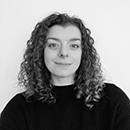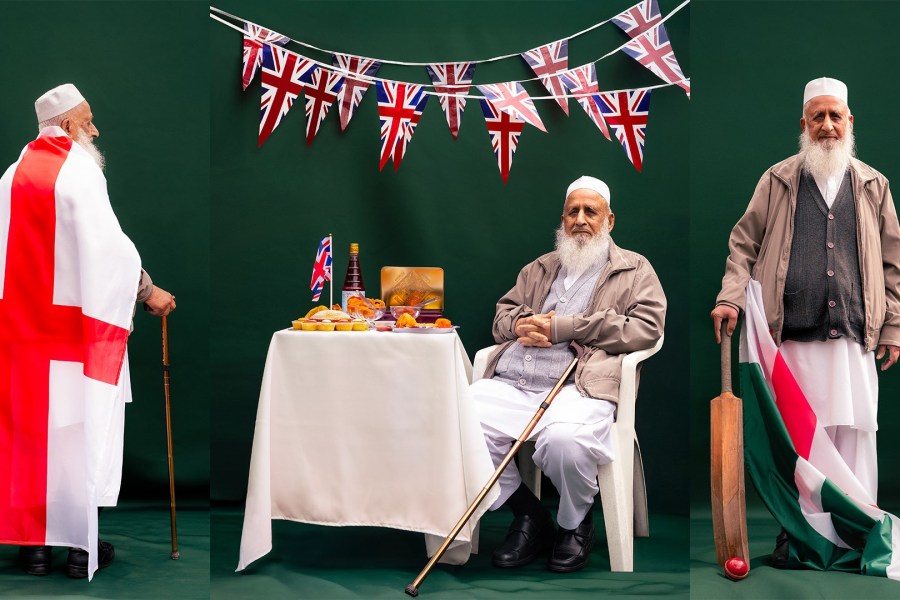
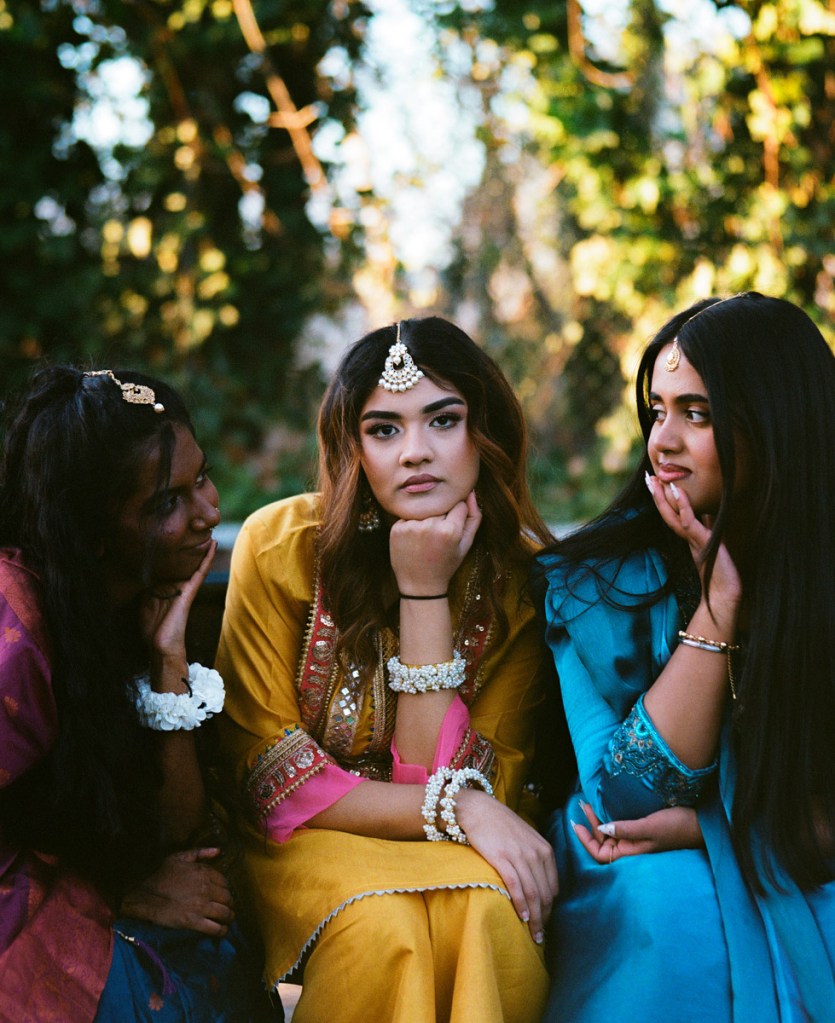
Shizza Majeed uses portrait photography to explore the stories of individuals and communities who are often underrepresented in visual culture. Having been shortlisted for, and won, a number of prestigious awards, she tells me more about her recent graduate project, Babaji’s Britain, which explores her grandfather’s sense of self and identity after 60 years in Britain.
Our emerging photographer series aims to shed a light on up-and-coming talent. Photographers are offered a platform to share their work with a wider audience through the AP channels, with the scope of furthering their careers. We also get an insight into their inspirations, the camera gear used and future aspirations, as well as the journey taken into photography – which doesn’t have to be the most traditional route!
We’ll be sharing the work of photographers on our website and social media and even in the magazine. If you have recently started your photography journey or are a student / graduate, share your work with us at [email protected]
When and why did you start taking photographs?
I started taking photographs at a very young age. I got my first camera for my birthday when I was around eight or nine years old. I’ve always been a really creative person, and I would constantly pick up new hobbies, trying my hand at everything and anything. I was never particularly drawn to academic subjects at school, much to my mum’s delight, but as soon as the art and crafts came out, I was completely locked in.
Photography, however, always felt a bit different to me, and it’s the one hobby that has stayed consistent throughout the years. Back then, I took photos because I enjoyed it. I did not know it then, but it definitely served as a therapeutic outlet for me. I haven’t always been very good at expressing myself with words, and photography allowed me to do so in a language I understood.
Now, my reasons for taking photos have definitely shifted. The more my practice has developed, the more I feel a kind of responsibility to use my skills in a way that serves a purpose. But sometimes that responsibility I give myself feels heavy and leads to so many creative blocks, so I have to often remind myself of that eight-year-old with her digital compact camera, who simply took photos because it was fun.
What genres do you tend to work in, and what draws you to them?
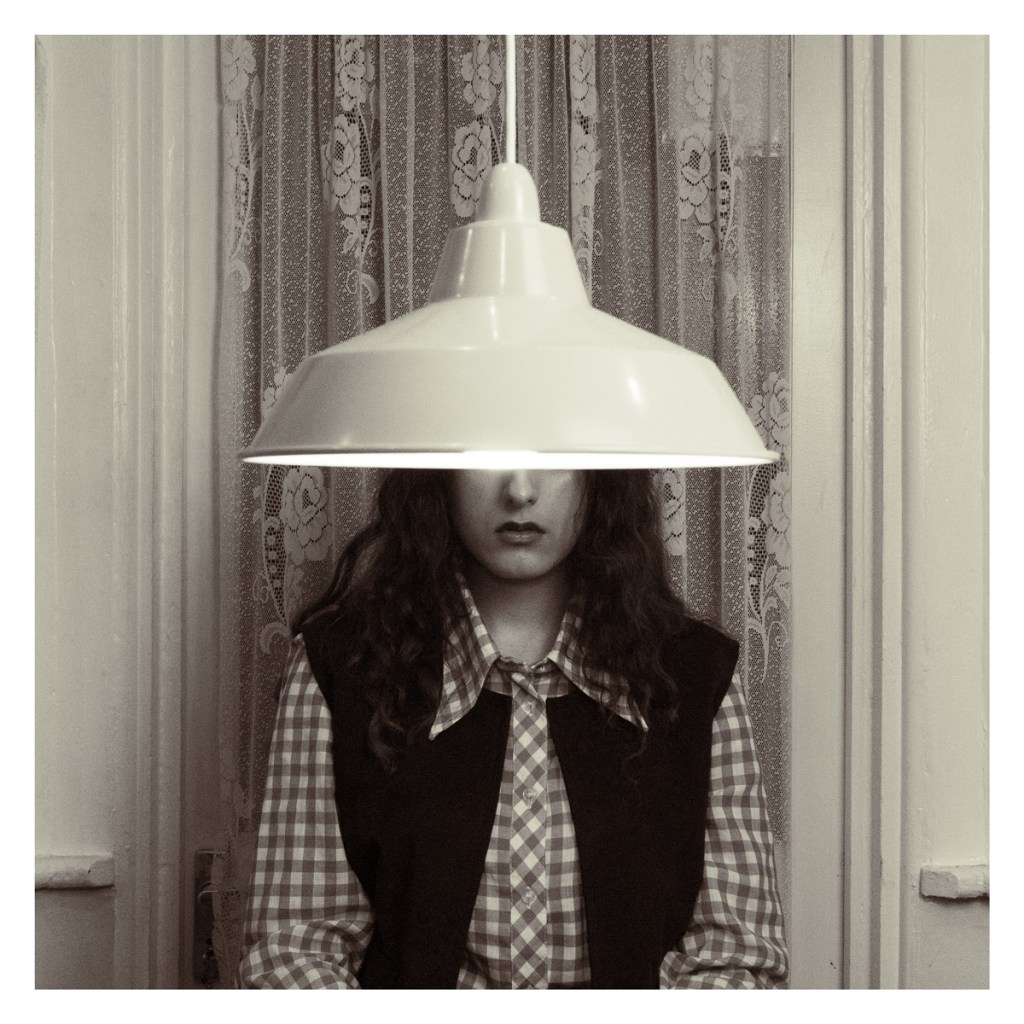
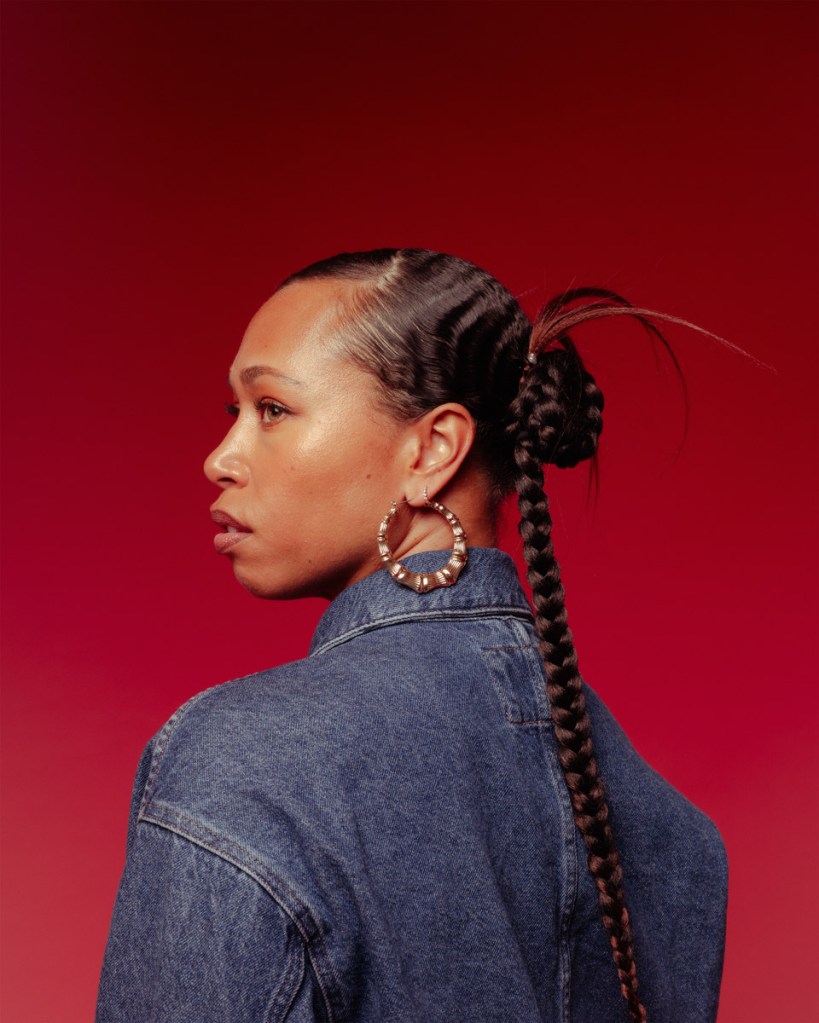
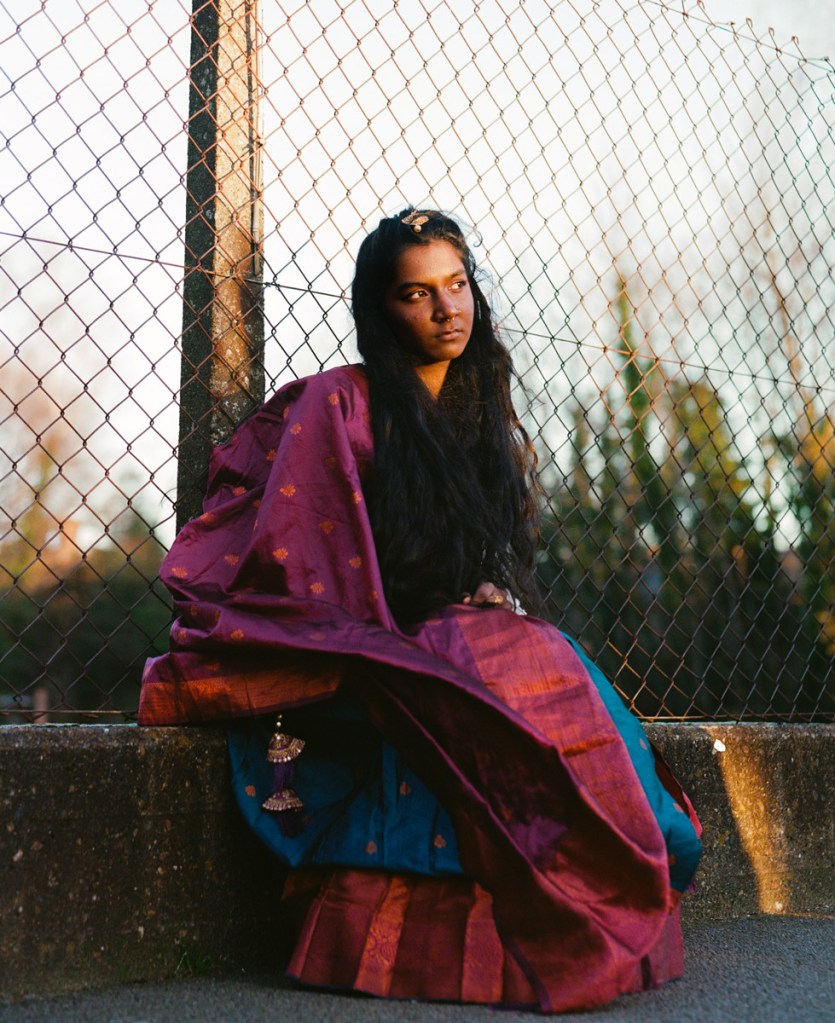
I’m still very much experimenting with different genres of photography and figuring out what I enjoy creating the most. At the moment, a lot of my work focuses on portraiture photography, often with a slight fine art element to it. My long-term projects tend to centre around individuals and communities who I feel are often underrepresented in visual culture, and portraiture feels like the most direct way for me to explore those stories. I am also getting into fashion photography, which is still quite new to me. It’s definitely a very different style of storytelling, but it’s been a lot of fun collaborating with other creatives.
Outside of that, when I’m shooting just for myself, I really enjoy doing street and architecture photography. I sometimes quite like not having to direct or set a scene, and simply just wait and let the world around me do its thing. Photo walks are one of my favourite things to do, especially with other people; they’re a great way to get to know someone because you get to see how they view the world.
Tell us a little bit more about your photographic training (if any). Why did you want to study on this particular course?
My formal photography training began at college, where I studied A-Level photography. Before that, my skills were completely self-taught through experimentation and YouTube tutorials. At the time, I wasn’t thinking about photography as a career, especially growing up South Asian, where a career in the arts is usually discouraged. I just enjoyed taking photos and wanted to improve. College was the first time I got to engage with photography more critically. I was pushed to experiment with different styles, which definitely helped me understand what I was drawn to creatively. However, my journey was cut short due to the COVID-19 Pandemic, and I never got to finish the course.
A few years later, I eventually picked up my photography journey again at Kingston University. What drew me to the course was how open the curriculum felt and the freedom to make work that genuinely interested me. For me, university wasn’t about relearning technical skills, as I already had that foundation from being self-taught and from college. It was more about having the time and space to develop my practice further in a safe environment. As well as having a deeper insight into the industry, and building connections. It was during this time that I started to take photography more seriously and realised it could actually be a career for me.
Tell us more about your graduate project
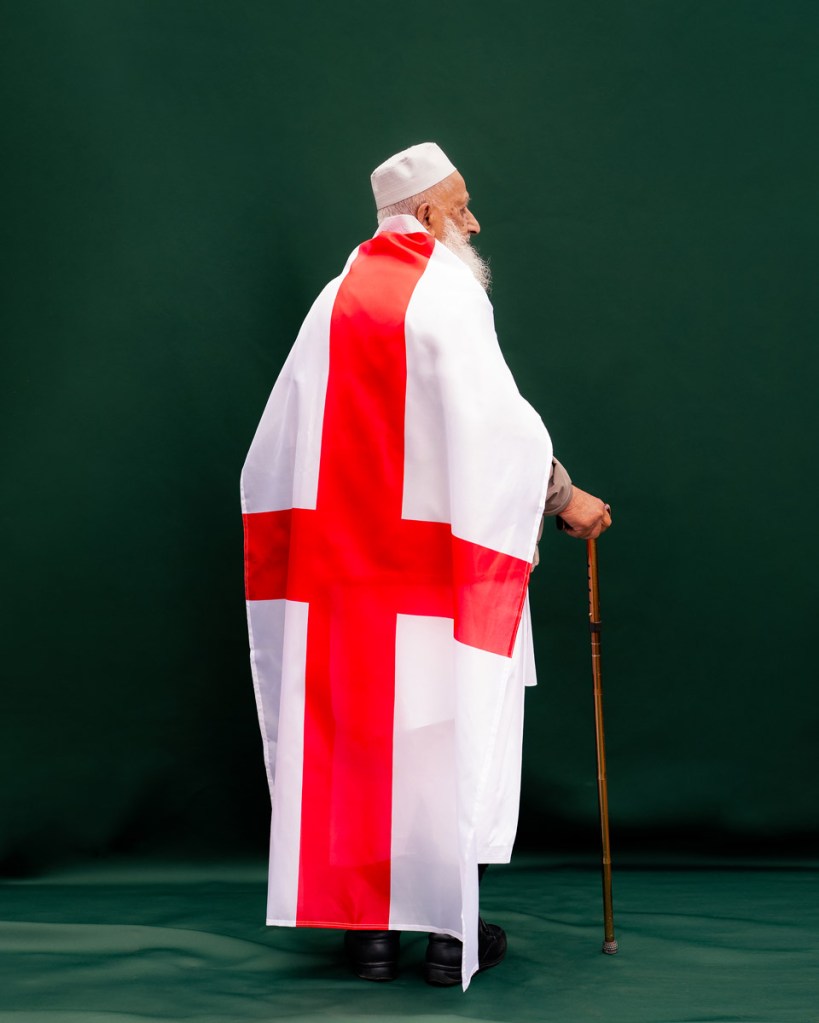
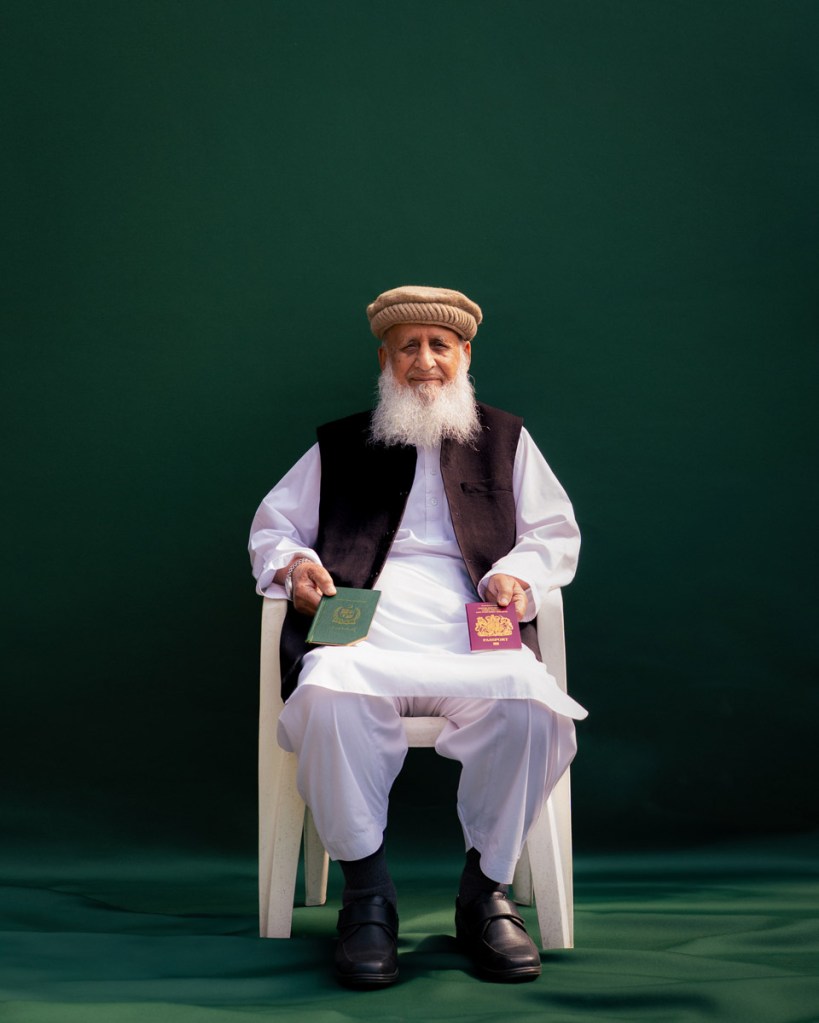
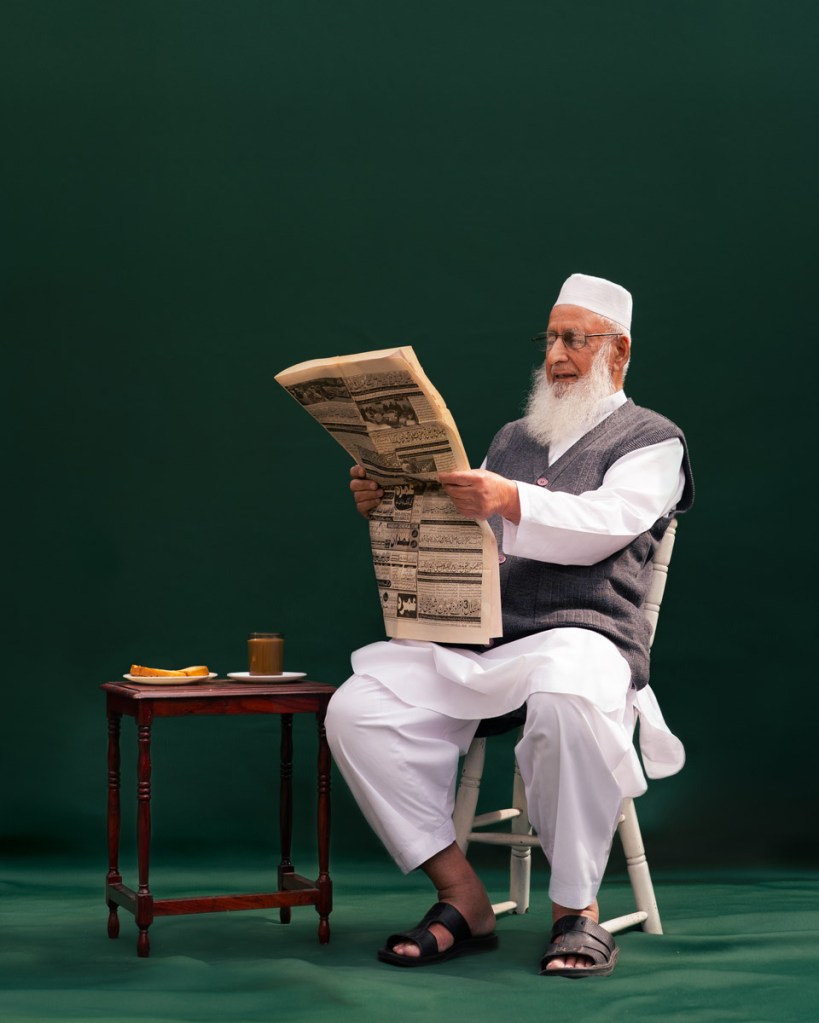
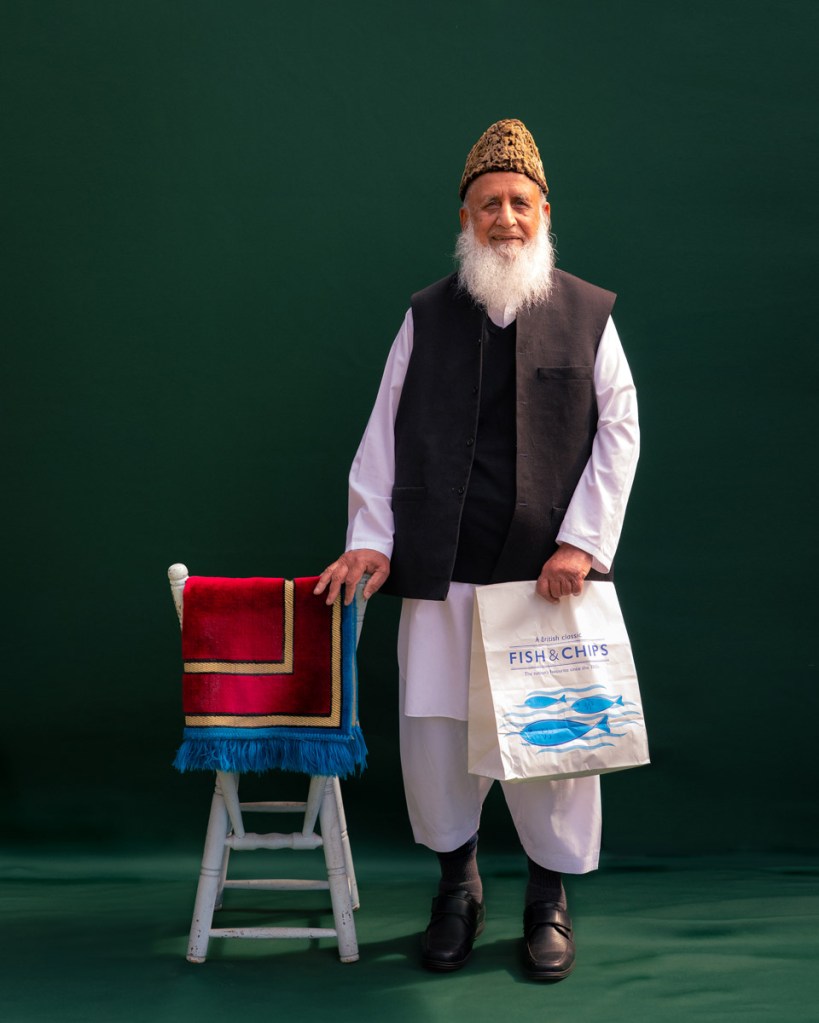
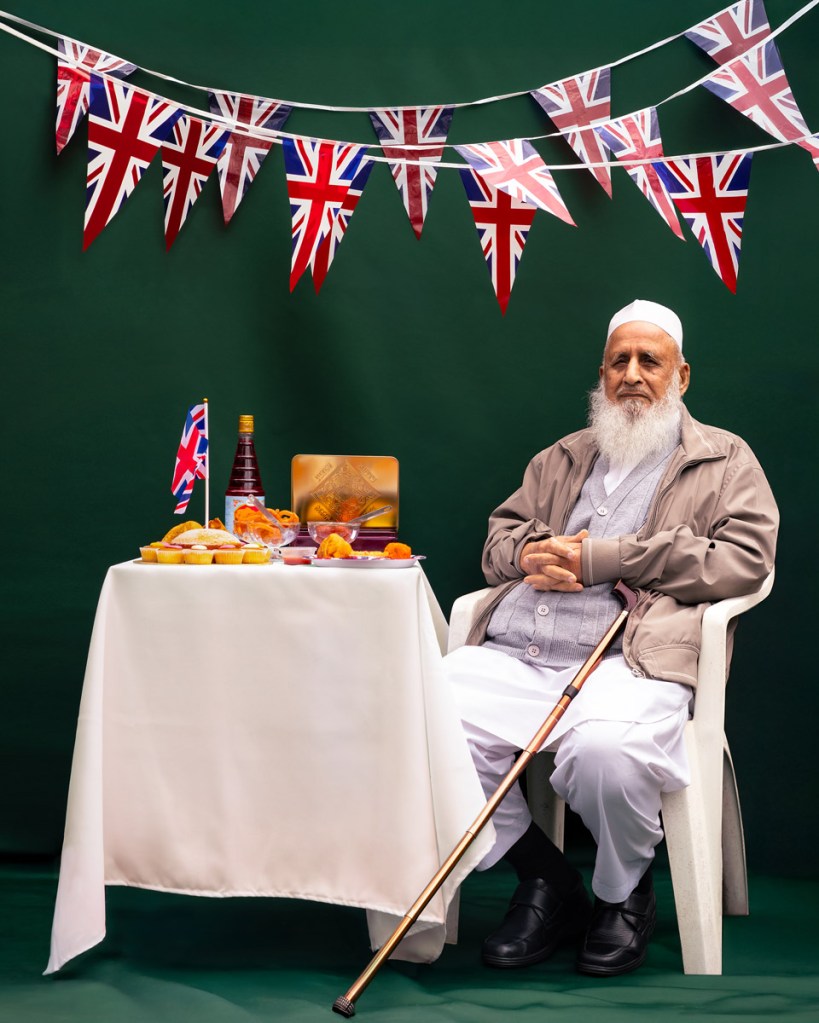
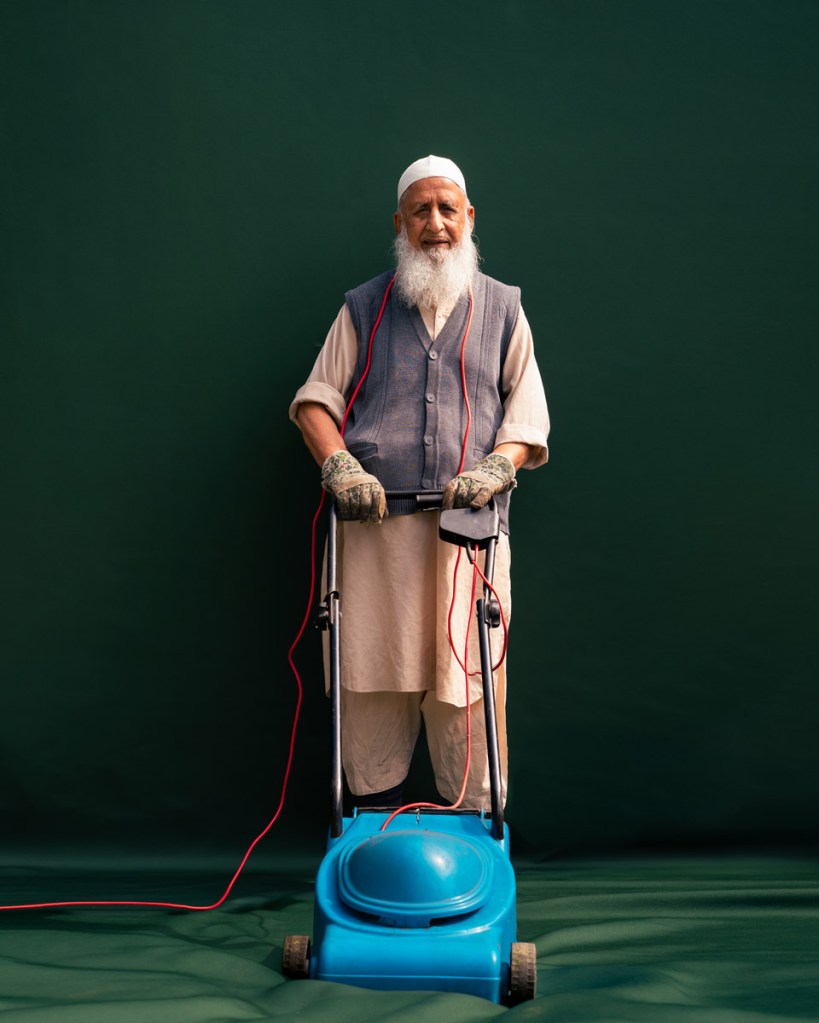
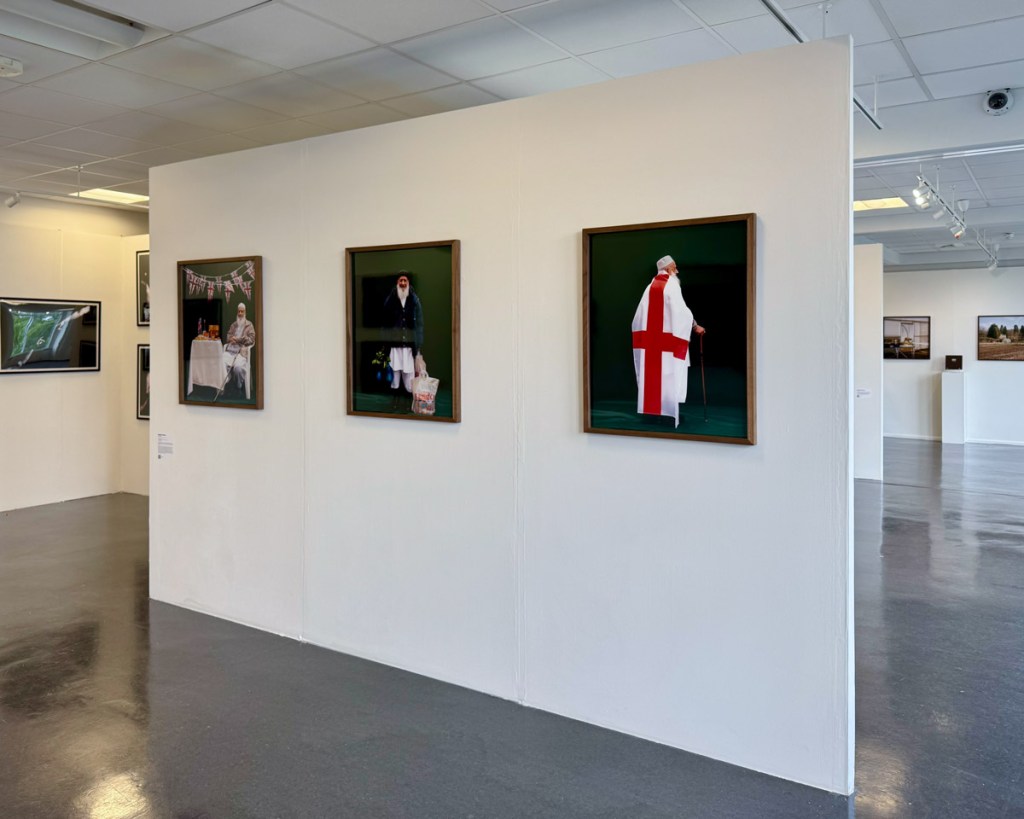
My graduate project is titled ‘Babaji’s Britain’, which I created in collaboration with my grandfather. Through a series of portraits, we explore how more than 60 years of life in Britain have shaped his sense of self and what that identity looks like today.
My grandfather migrated to Britain from Pakistan in 1962 in search of work. Originally intending to earn money and return home, he ultimately decided to stay, and East London became the place he now calls home. Over the decades, he has navigated immense change, from learning a new language, adjusting his appearance, and adapting to a completely new culture. Now in his late 80s, this series reflects where he is today.
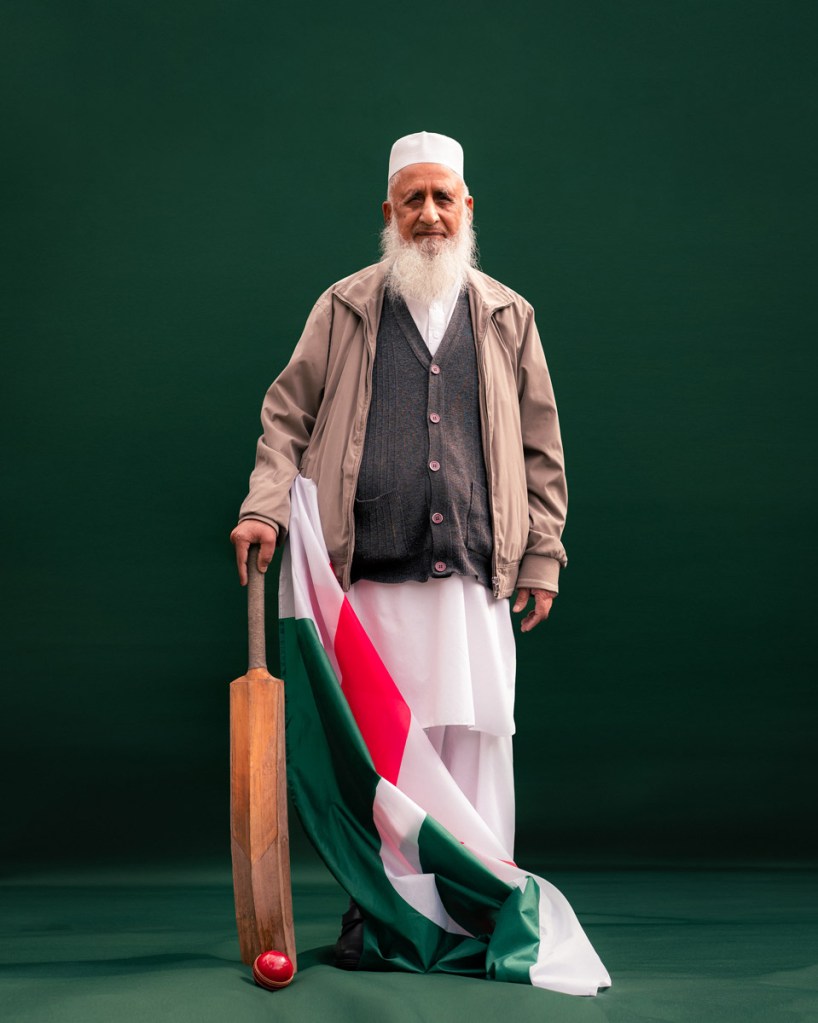
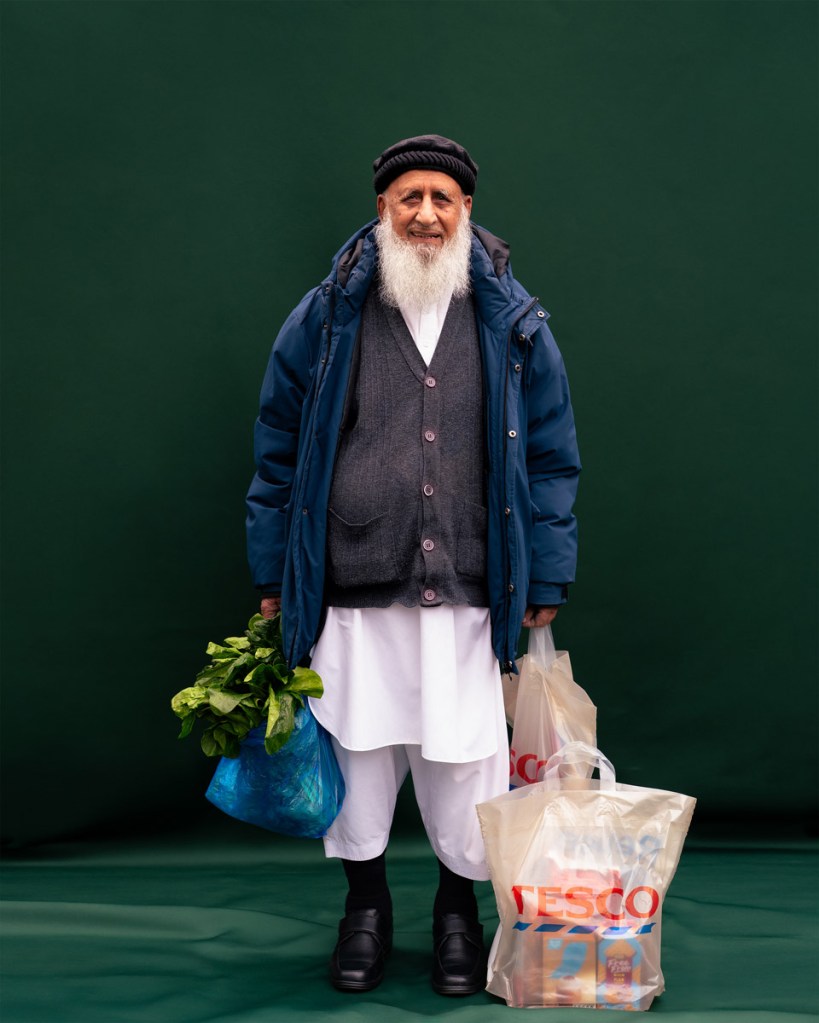
The work plays with stereotypes and draws on experiences personal to him, contrasting elements from both British and Pakistani cultures to playfully visualise his hybrid identity. My favourite image is probably A Familiar Taste. It shows my grandad in traditional Pakistani dress, layered with a blue puffer jacket, holding a Tesco shopping bag in one hand and a bag of groceries from a Pakistani grocer in the other. It was one of the first concepts we developed for the project, and I think it represents a clash of cultures that many people can relate to. I’ve never been to Pakistan, but Pakistani food connects me to it in a way no other experience does.
While the project began simply as a way to spend more time with my grandfather as he gets older, it evolved into a celebration of him and the sacrifices he made, and almost by accident became a celebration of migration as a whole.
What kind of reaction has it had?
The series has received a much bigger reaction than I ever could have imagined. When I was creating the work at university, I was so absorbed in the nitty-gritty details, everything I thought was wrong, what I wanted to fix, and simply trying to meet deadlines, that I couldn’t really see the images for what they were. It wasn’t until the kind reactions from my tutors and peers that I began to view the work differently, which encouraged me to start submitting it to competitions.
The work went on to be shortlisted for and even win prestigious photography awards, as well as being recognised by people I admire within the industry, which was an incredible experience. At one point, the images even went viral on social media, which was definitely a surreal moment for me. But what meant the most to me was hearing from so many people who saw themselves, or their families, in my grandfather and connected with the story. It seemed to transcend age and ethnicity in a way I never expected. I think I’m still trying to take it all in even now.
What has been your biggest photographic obstacle to date?
The biggest obstacle I’ve faced, and something I definitely still struggle with at times, is imposter syndrome. In the age of social media, it’s so easy to constantly scroll and compare yourself to other people’s work and achievements, and to feel like you’re not doing enough or don’t deserve to be in the same spaces as others. It has definitely led to huge creative blocks for me.
I try to combat it by staying off social media as much as I can. Even when you know people are only posting their highlight reels, it can still be difficult not to internalise what you’re seeing, and, more importantly, what you’re not seeing. I always feel far more creative when I’m offline and focused on my own work.
I also think being honest with other creatives about how I feel has helped a lot. At the beginning of the year, I joined a creative group where everyone is from different disciplines within the creative industry, from circus performers to playwrights and photographers like myself. We meet monthly, and we not only learn from one another but also talk about the harder parts of the industry. Most of the time, when you open up about those insecurities, you realise so many other people feel exactly the same way, and it’s helped me be kinder to myself.
What equipment do you use?
The main camera I use for my work is the Sony A7 III. I’ve had it for just over a year now, although the Sony interface does drive me a little insane sometimes, I am really enjoying it! I like to pair it with my Sigma 50mm f/1.4 art lens most of the time; I find prime lenses work best for the kind of images I like to make.
When I shoot on film, I use a Mamiya RB67. It produces insanely beautiful images, and I definitely don’t pull it out enough, so this is definitely a reminder to myself to dust it off a bit more often.
Another camera I always have in rotation is the Ricoh GR III. I fell in love with it instantly; it’s so compact but produces such high-quality images. It feels really intuitive to use, and I love that I can just keep it in my pocket or throw it in my bag. I’ve definitely shot an editorial on it before, and nobody was any wiser.
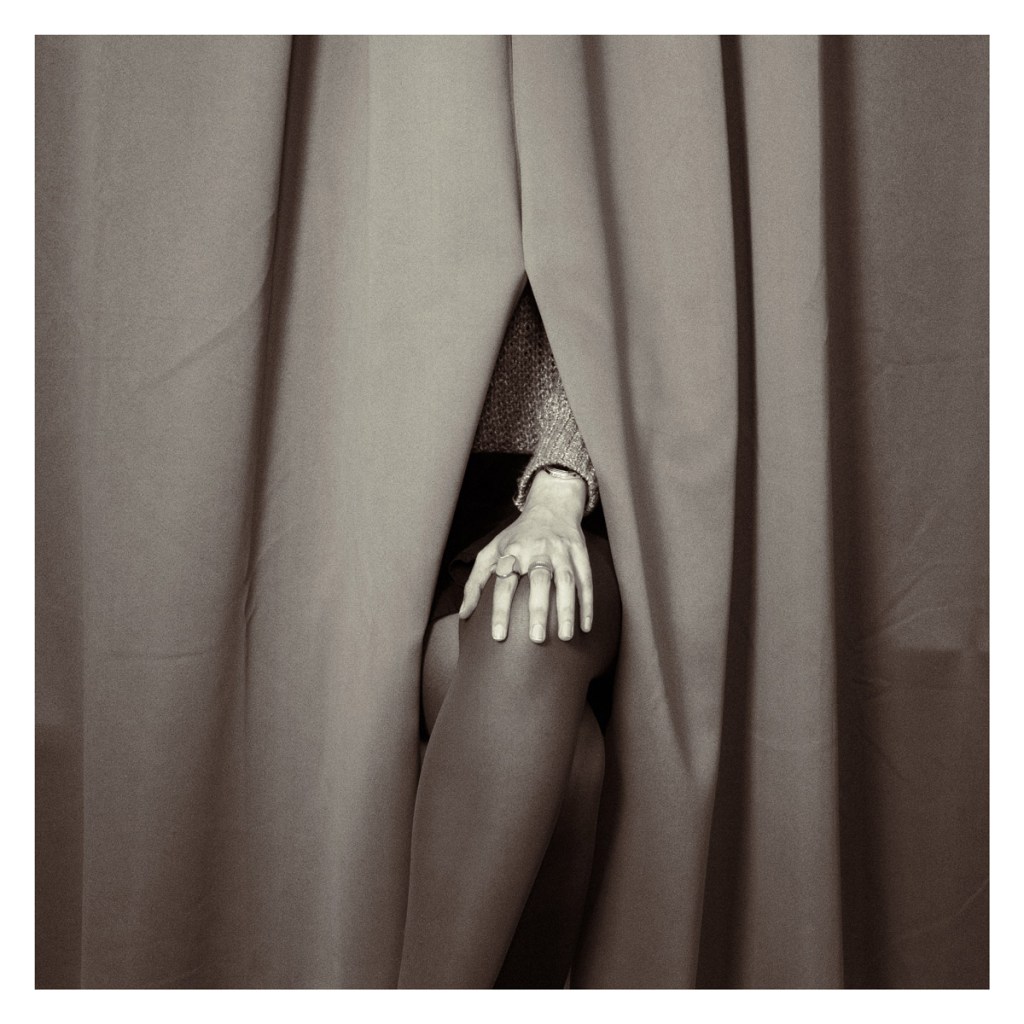
What would be your dream equipment to work with?
I would love to try a Hasselblad 500 C/M medium-format camera. It’s such an iconic camera with a beautiful design, and it’s been a dream of mine to work with it for a long time. Although I know it’s not always about the gear, I’m really in awe of the kind of imagery it produces. I do really enjoy my Mamiya RB67, but it’s quite heavy to use handheld, which is how I prefer to shoot, so I don’t use it as much as I’d like to. The Hasselblad feels like it would suit the way I work much better. I also really like that it’s a 6×6 camera; I find that having less “space” to work with forces me to be more creative with compositions in the moment.
Another camera I’d love to get my hands on is the Ricoh GR IV. The Ricoh GR III is already a dream camera for me, so I’d love to try out the next iteration. What’s one more camera to the collection!
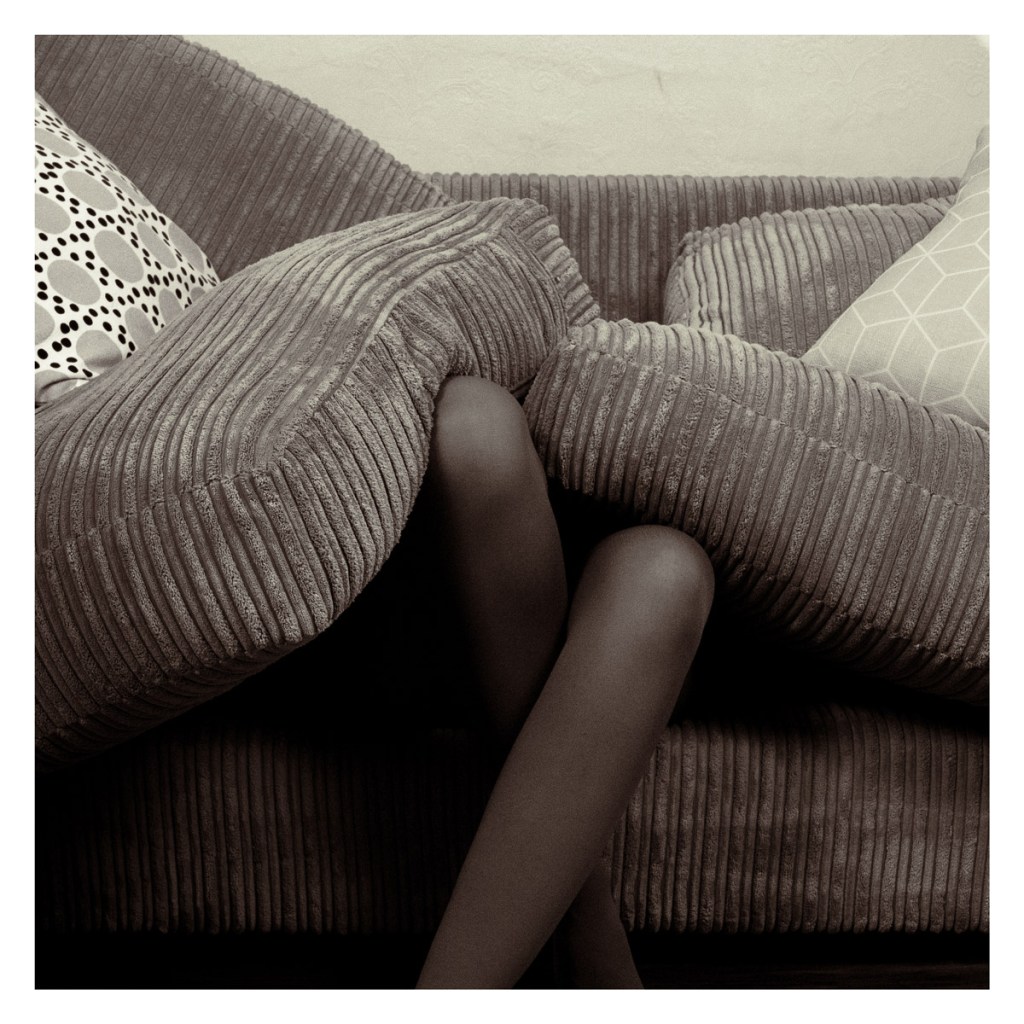
What have been the highlights of your photography career so far?
I feel very lucky and very grateful that since graduating from my Photography degree last year, I’ve achieved a lot in such a short space of time. At the top of the list would definitely be having one of my images from my graduate project ‘Babaji’s Britain’ featured on a billboard with Autograph ABP in Central London. I have to admit I visited the display an embarrassing number of times because I couldn’t quite believe it was real. It was always a career goal of mine to have my work up on a billboard in some capacity, and for it to happen so soon was a massive shock!
I’ve also been really fortunate to have my work shortlisted for a few photography awards, such as the 40th Association of Photographers Awards, Royal Photographic Society IPE 167, and the British Journal of Photography’s Portrait of Britain Vol. 8, as well as being awarded the Madiha Aijaz Prize at the Royal Over-Seas League Photography Awards 2025.

Achieving so much in such a short space of time, especially at the very beginning of my career, has been amazing but also quite overwhelming at times. I’ve definitely had periods of imposter syndrome, which is something I mentioned earlier that I struggle with. I’ve questioned whether things have come from luck and whether they’ll ever happen again. But I’m learning to sit with my achievements, enjoy them, and then keep focusing on making work for the reasons I started in the first place.
What are your hopes for your photography career in the future?
Right now, I’m still experimenting quite a bit with different genres and styles in my practice. I certainly don’t want to ever lose that sense of exploration, but at the same time I would like to start refining my voice and developing a clearer vision so that, eventually, the work feels recognisably mine.
Alongside that, I also want to keep pushing my photography beyond traditional image-making and challenge myself to step outside of what I already know. I’ve been really inspired by a lot of work I’ve seen in exhibitions recently, and I think that will be really important for my growth as an artist.
In terms of bigger goals, I’d love to be represented by an agency. A solo exhibition is also a huge goal for me, as well as publishing a book of my work one day. But more than anything, I just hope I’m still as excited about photography in the future as I am now, and that I continue to enjoy the process of making work.
Do you have any dream assignments?
I have a few dream assignments. One would be to be commissioned to travel somewhere I’ve never been and make work documenting an individual/community I know nothing about. I’m really drawn to the idea of learning through photography, about cultures, skills, and ways of life outside my own experience. So far, a lot of my personal projects are very centred around experiences I can relate to, but I’d love to step outside of that a bit more and challenge myself creatively and personally.
Another dream assignment, which is a little different, would be to shoot a fashion editorial commission for a major brand. I’d love to just have a lot of fun with it, and combine my own personal style with a brand’s vision, and collaborate to create something visually exciting. I also think it would be so cool to see the images in magazines and on billboards. I don’t think you could ever get tired of seeing that!
What piece of advice would you give to other aspiring photographers?
A piece of advice I’d give to other aspiring photographers is to “outsource” your inspiration, close the social media apps and start conceptualising ideas through other mediums. Maybe take a different route home, slow down, and notice things you might normally overlook. I find a lot of inspiration just from everyday life — things like certain smells or words I’ve overheard in conversation, rather than from doomscrolling on Instagram or Pinterest, although I am still very much guilty of that myself!
Instagram: @shizzamajeed
Website: shizzamajeed.com
Success stories
At the 2026 AP Awards, Nick Teo was announced as our Emerging Talent winner for this documentary-fashion work. Previous emerging photographer award winners include Ethan Parker, Aliz Kovacs-Zoldi and Tariq Sadu. Si Jubb and Ethan Parker recently spoke at our Festival of Photography: Documentary event.
More reading:
- I guarantee these beautiful dog photos will really brighten up your day
- Award winning photos share beautifully intimate moments of pregnancy and motherhood
- Getting outside with a camera is the best thing for your mental health
- These painterly landscapes will give you some much needed photo inspiration this Spring
Follow AP on Facebook, Instagram, YouTube and TikTok.