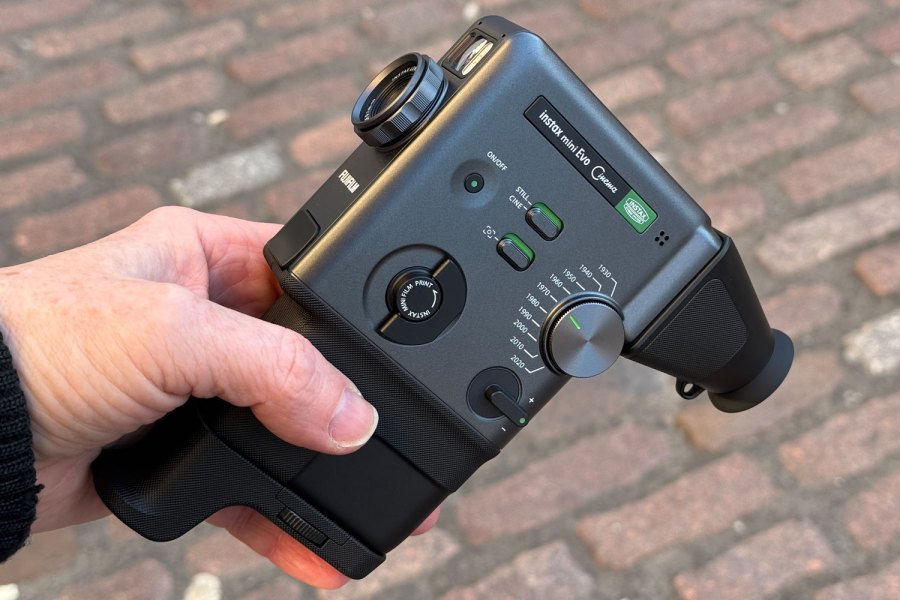
Fuijfilm has just launched the Instax Mini Evo Cinema – a fabulous-looking device that mimics a 1960s cine camera. It crams a surprising level of functionality into its striking gunmetal-grey body: it can shoot still both images and video, and print any image from your smartphone onto Instax Mini instant film. As instant cameras go, it’s truly unique.
Videos can be recorded with a wide variety of effects via an ‘Eras’ dial covering 1930-2020, with each decade coming with 10 different strengths, set using a ring around the lens.
The camera’s real party piece, though, lies in how it allows you to record clips and edit them together to form videos up to 30 seconds long, via the associated smartphone app. You can then share them via Instax prints, using embedded QR codes.
Now if your immediate reaction to this is “but why on Earth would you do that?”, then trust me, you’re not alone. But if your reaction is “brilliant, I want one”, there are a few things you need to know before forking out the $410 / £329 that Fujifilm is asking.
Let’s talk about the good stuff first. I got to try out the camera on the day of its launch, and it feels like a really premium product, with high build quality and lovely tactile controls. It looks fabulous too, and the effects are a lot of fun to play with, thanks to those two control dials. Those effects aren’t just gimmicky either – they’re genuinely nice in a nostalgic kind of way, with the look of such things as old black & white TVs.

To add to the whole vintage cine camera vibe, the camera comes with both an add-on grip extension, and a viewfinder magnifier for eye-level shooting. Both of which add brilliantly to that retro experience.
What are the drawbacks?
First and foremost, I’m afraid we have to talk about the Instax Mini Evo Cinema’s image quality. At this point, Fujifilm would probably argue that if you’re looking at the technical specs, you’re really not the target audience. But the inescapable fact is that it’s re-used the same cheap camera module as in the existing Instax Mini Evo and Liplay models. In other words, it employs a tiny 1/5 type, 5MP sensor that gives sketchy results at the best of times, and is truly awful in less-than-perfect light.

Probably as a result of this, when recording video, the sensor’s output is restricted to 600 x 800 pixels in all but the top-quality ‘2020’ setting. There, you get the luxury of fully 1080 x 1440px resolution. While this camera is all about being ‘lo-fi’, that’s taking it to an extreme. Don’t, in any way, mistake this for a serious video camera.
As for the LCD screen/viewfinder, it’s tiny and horribly pixelated. In practical use, it gives only the vaguest impression of what your framing is going to look like. As for the magnifier hood, while it clips in place magnetically, it’s much too easy to knock off the camera accidentally and send it tumbling onto the floor.
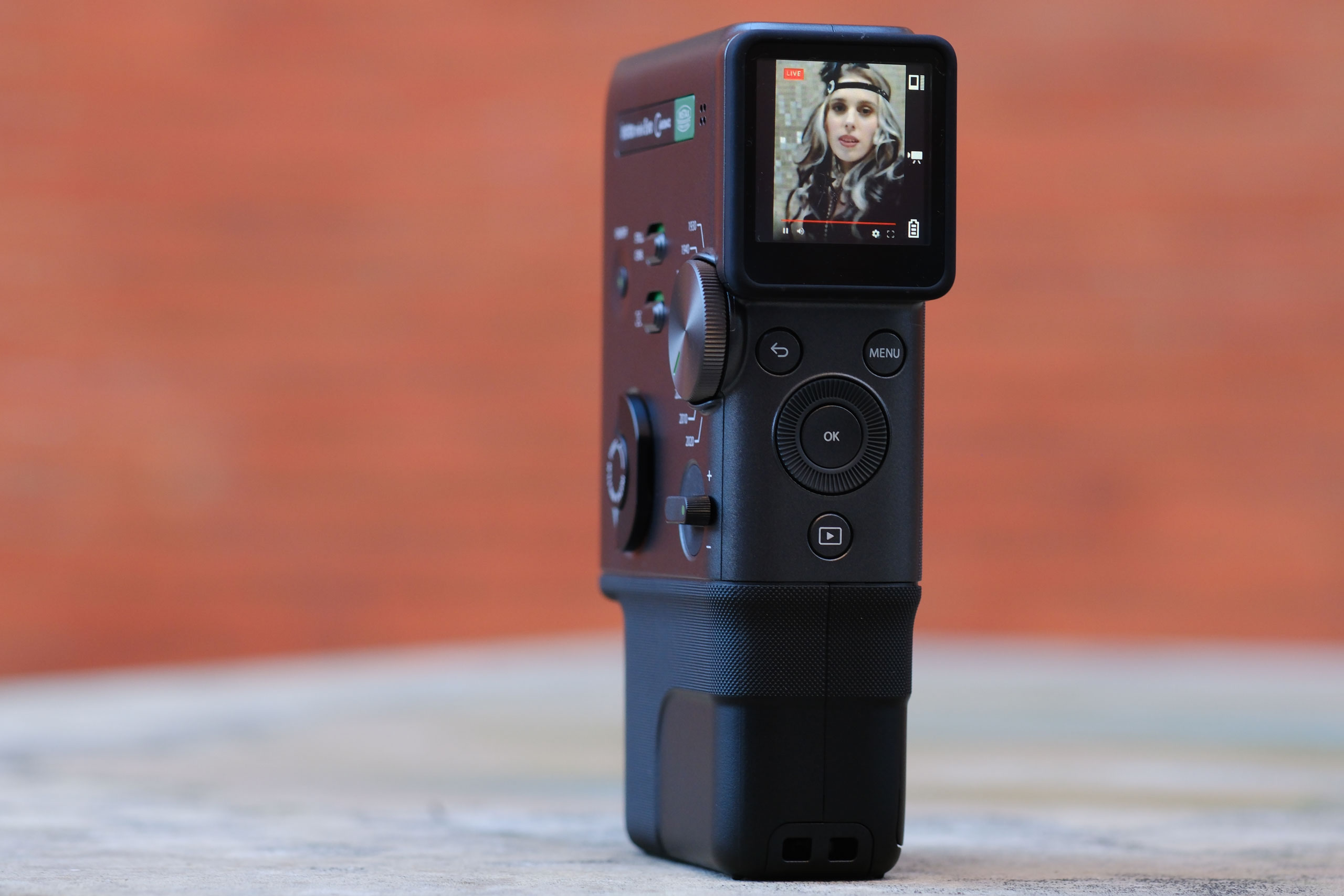
Perhaps worst of all, the camera is slooooooow… as in, incredibly, painfully, almost unusably slow. If you want to record a clip after playing one back, or switch from one era to another, the camera just locks up completely for several seconds, while it gets its little brain around the idea of doing something else. If you opened it up, I wouldn’t be surprised to find it was powered by a tiny hamster rather than an actual processor.
Surely it’s not that bad, really?
I realise at this point I’m coming across as a grumpy old man, which to be fair, isn’t entirely inaccurate. But the thing that gets me about this camera is that the idea of a retro cinema camera with those ‘eras’ effects is so beguiling. And I can’t emphasise enough that it’s genuinely fun to use and those effects are really well-judged. Fujifilm’s designers and engineers have done an excellent job.
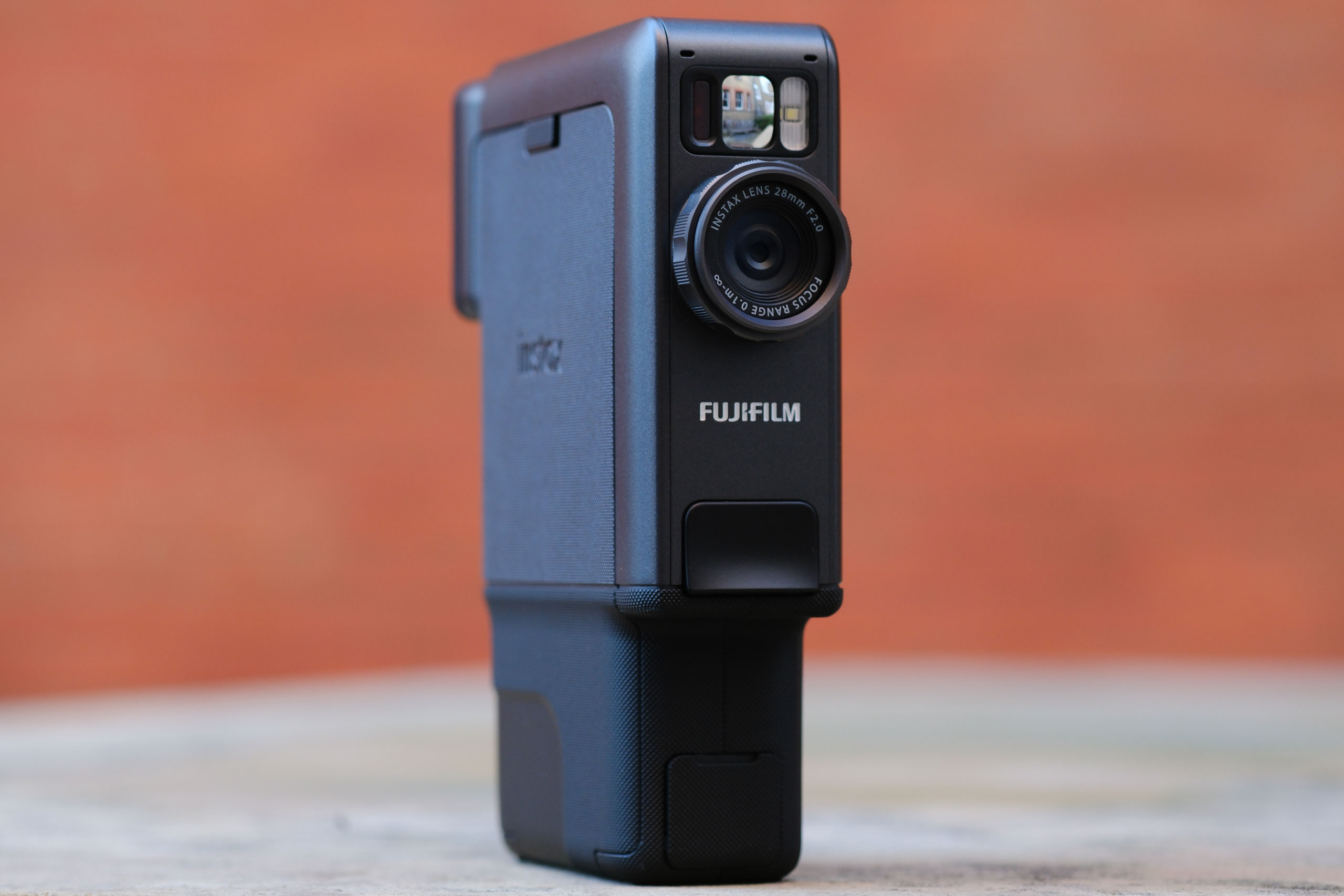
Unfortunately, though, building the camera around an Instax Mini printer, and using a tiny camera module, means that you end up paying a lot of money for what seems to me to be a rather confused concept. Do the words ‘Instax’ and ‘Cinema’ really belong in the same product name? But if Fujifilm could re-make this as an actual video camera, with a larger sensor and a faster processor, it could be a truly great product. There’s genuinely a brilliant idea lurking here somewhere – it just shouldn’t be an Instax.
Fujifilm Instax Mini Evo Cinema sample videos
Here are some short video clips recorded using the Instax Mini Evo Cinema camera, so you can get a feel for what it does. Note that these videos have no sound.
1930 filter (strength 5, frame on)
2010 filter (strength 3, frame on)
The views expressed in this column are not necessarily those of Amateur Photographer magazine or Kelsey Media Limited. If you have an opinion you’d like to share on this topic, or any other photography related subject, email: [email protected].
Follow AP on Facebook, Instagram, YouTube and TikTok.