David Lloyd’s lifetime of African adventures didn’t get off to an auspicious start. Arriving into Zimbabwe in 1995, as a wildlife enthusiast, rather than a pro photographer, he still had high expectations of what he might see and capture in Hwange National Park and the Victoria Falls area. “It was a bit of an anti-climax,” he tells me. “I didn’t see seeing any kind of big cat at all. I took my first African wildlife pictures, of elephants mostly, which were ok without being great. The trip was mostly notable for procuring a magnificent hardwood elephant carving, which still graces my living room.”
He’s made up for the disappointment since, coming home with far more than souvenirs. A trip to South Africa in 2005 marked the start of his life as a professional photographer, when “he got more serious with the idea of entering competitions and had an eye to the future.”
In 2007, he visited Kenya for the first time, and he’s been back to Africa every year since then, sometimes spending four or five months of the year there, whether working on his own images or guiding photography safaris. Known especially for his work from the continent, he’s now one of the world’s most respected and popular wildlife photographers, with around 200,000 Instagram followers.
His connection to monochrome shooting goes back to his teenage years in New Zealand, spending time with his dad, an amateur photographer, in their dark room at home.
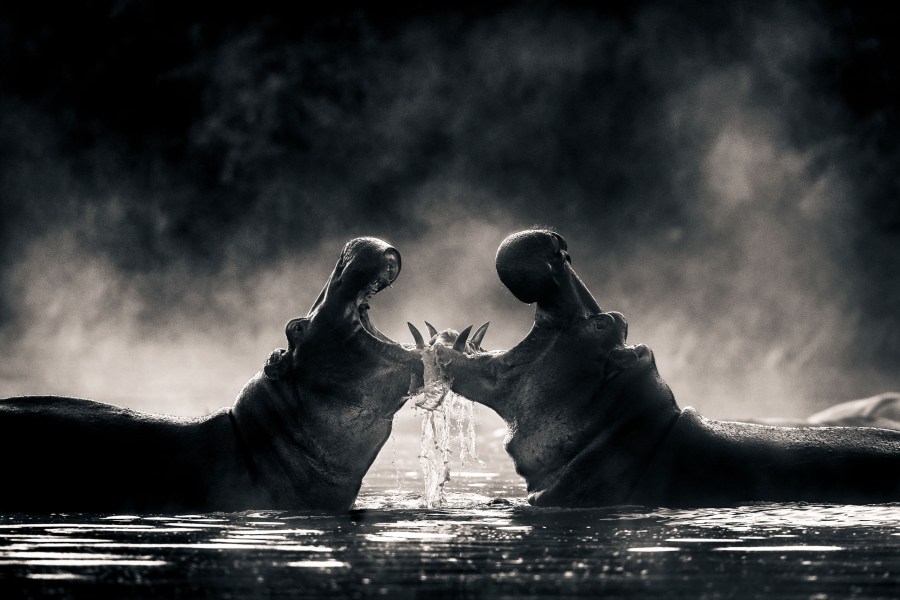
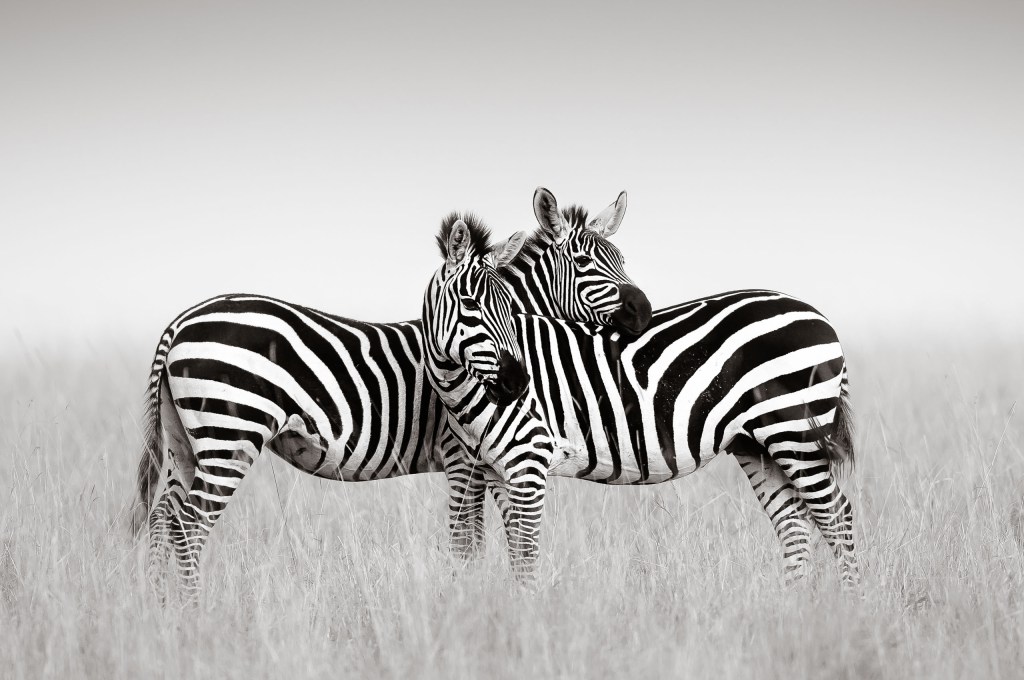
“I’m always far more satisfied with a good black and white picture than with colour. I do take both, and sometimes a photo looks better in colour, so I’ll keep it in colour. But I prefer black and white. I’ve always done black and white. Back in about 2005, I had this idea for black and white wildlife photography, which was almost unheard of then. Nobody did it. Unless you go back to 1950s, with film, it was virtually unheard of. I had this idea, and then I went to a gallery around the corner from my work and saw the work of another wildlife photographer, also doing the same, and that was Nick Brandt. I’ve done it ever since.”
When working, he usually sets his camera’s viewfinder screen at the back to black and white mode, so he can “get an idea of what’s going on”, with the RAW file recording the colour information if he does decide to use it later.
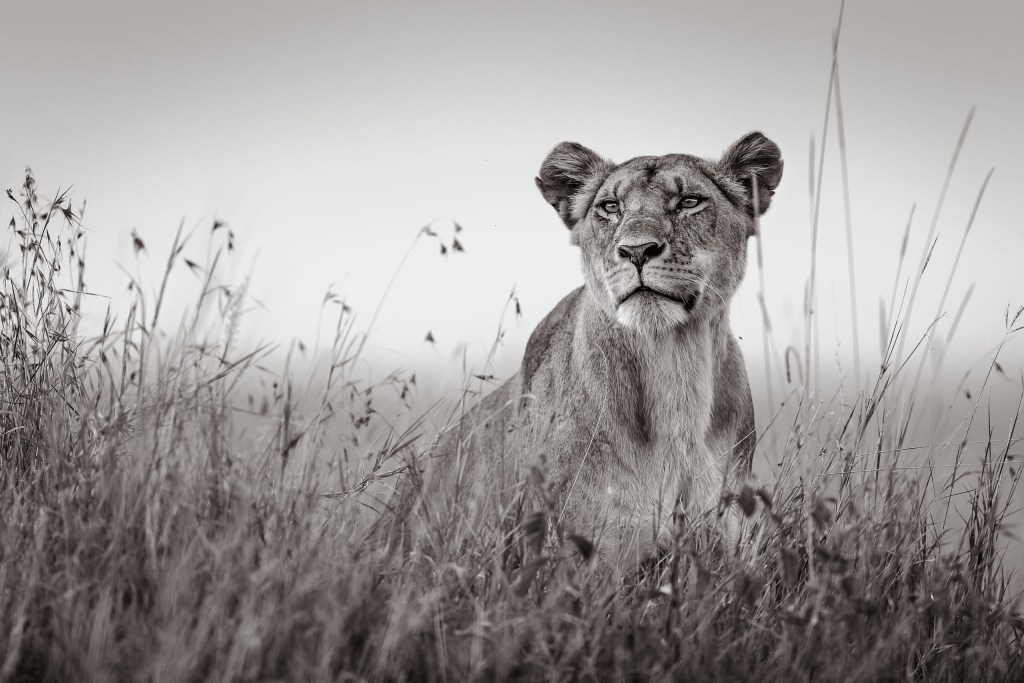
“Black and white is one of those things where you can have a classic old picture on your wall from the 1950s, which never dates at all. One reason it appeals is it’s timeless. I also think it requires a bit more creativity and a bit more knowledge to make good black and white. Most of my favourite photos are black and white.”
Originally from Auckland, New Zealand, Lloyd’s lived in the UK on and off since the 1990s, permanently settling in London in 2003. Having previously worked in Graphic Design, his images has been exhibited at the Royal Opera Arcade Gallery and the Royal Geographical Society, and won awards in Wildlife Photographer of the Year, GDT European Wildlife Photographer of the Year, and Outdoor Photographer of the Year. He’s published books including All Eyes Speak One Language (2022) and As Long As There Are Animals. As well as selling prints and books, he guides photography trips in countries such as Kenya, Uganda, and India.
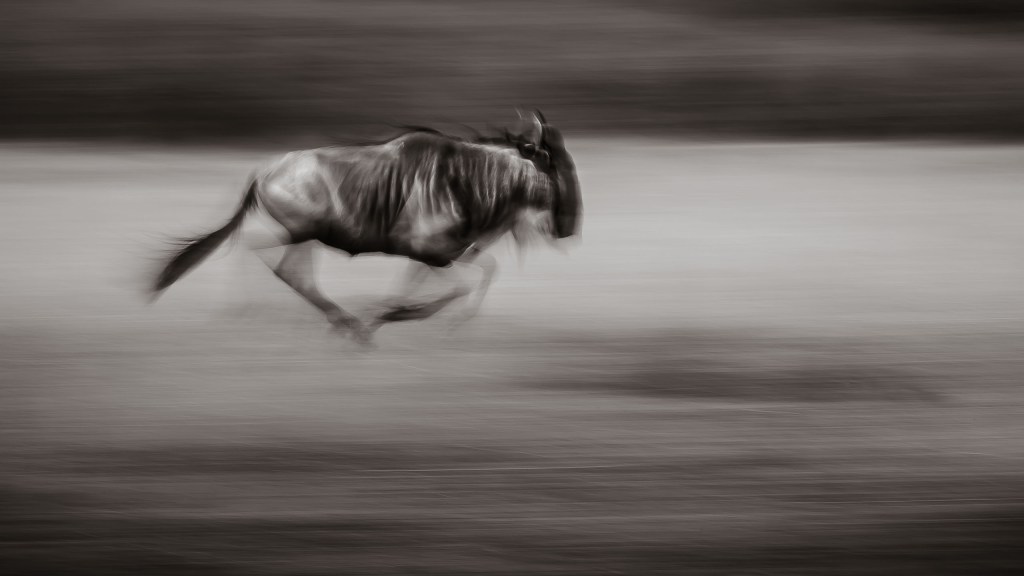
What sets his work apart? Many years ago, David Lloyd received an email from a fan who tried to sum up the photographer’s style. The word he used was “simple”. Lloyd hadn’t previously considered what his personal photographic style was but it seemed a decent fit. “I could see what he meant” he says. “Other people since then have also told me they like the simplicity, shapes and lines in my photos. I hadn’t looked at my work that way but I thought it probably came subconsciously from my time doing Graphic Design: keep it simple, don’t be afraid of white space… But I think it also comes naturally. I always took pictures that satisfied myself, without thinking about it.”
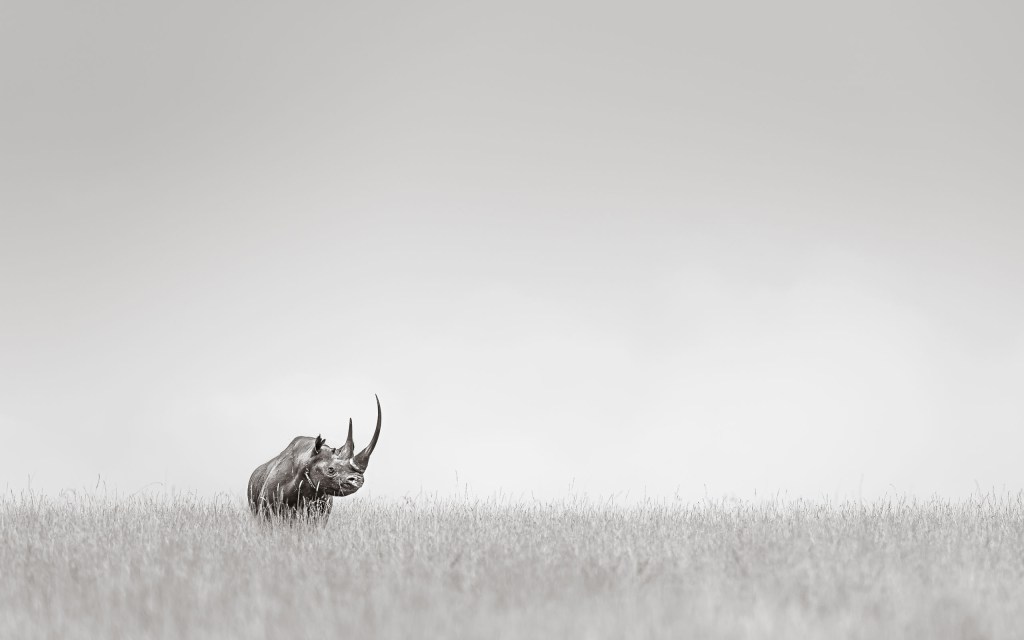
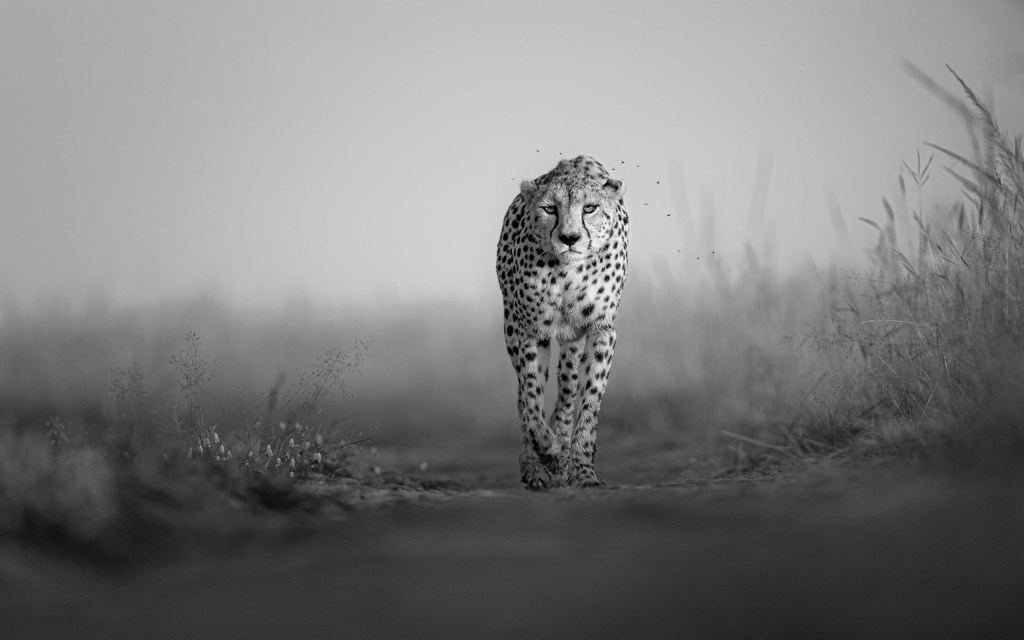
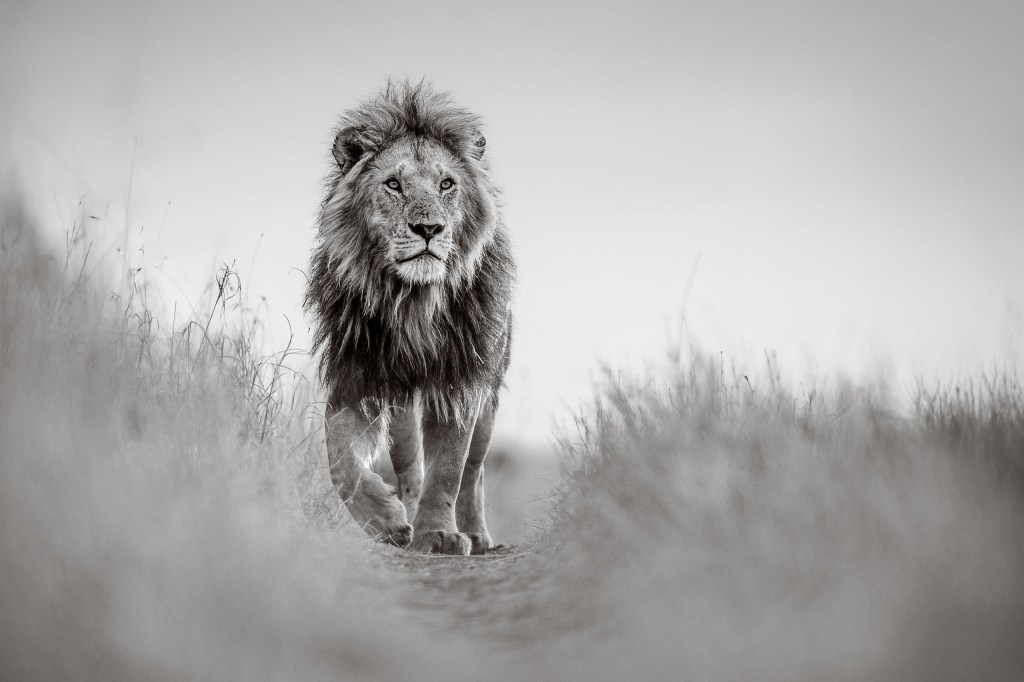
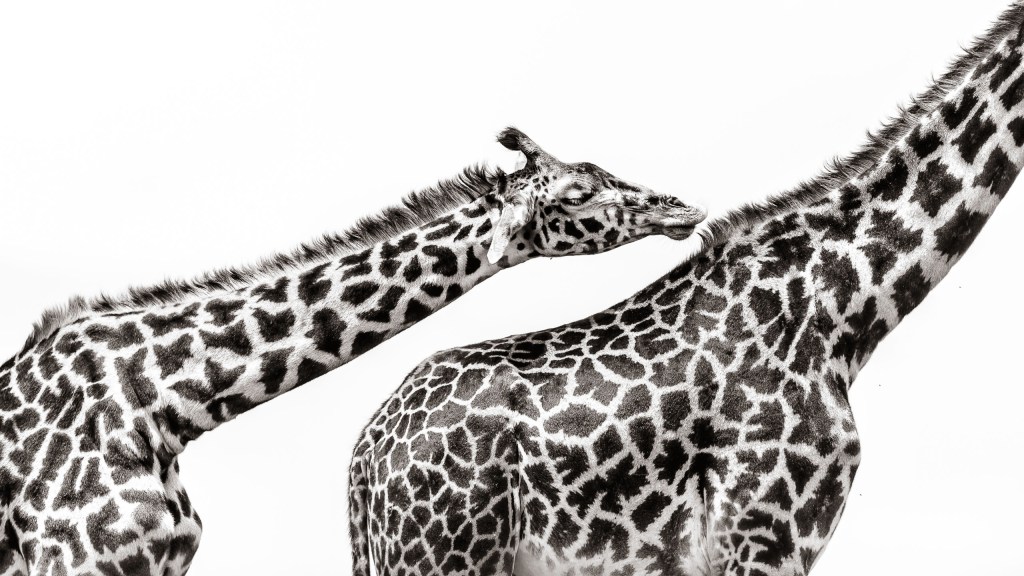
Lloyd’s wildlife photography is wide-ranging, from portraits that focus on the eyes to intimate moments and interactions between animals, or wide, wild scenes with creatures set creatively in their natural environment. Whatever it is, there’s usually a clarity and an uncluttered quality to his photos. “The main rule I have for myself is if it looks good on in a frame on a wall, it makes me happy,” he tells. “My father taught me that. He was a Camera Club photographer – a hobbyist. I credit him with introducing me to photography. He said “In your mind’s eye, picture your photo with a frame on a wall.””
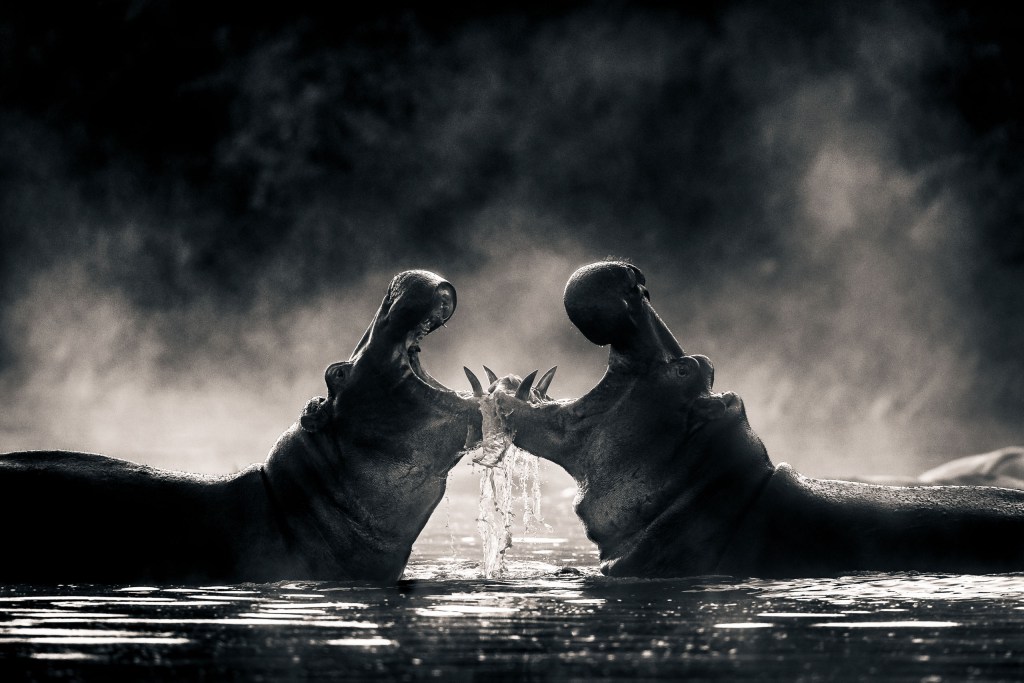
Whether in colour or black and white, composition is key, he explains, citing Marsel van Oosten, Danny Green and Chris Packham as modern masters. “Composition is not about rules,” he says. “A photo just looks right to me in the viewfinder. For me, it’s about ‘weight.’ A bright part of a picture has weight, a texture has weight, whatever the eye directs you to is weight. It’s about the distribution of weight. I tell people to try to forget all the rules. If you like a picture, there’s something in it.”
There are a few rules that he does operate according to, though, especially “All animals wild and free,” as stated on his Instagram account. “As long as it’s declared, I’m not against taking photos of animals in captivity,” he tells me. “But sometimes people have taken photos of captive animals and declared them as wild.”
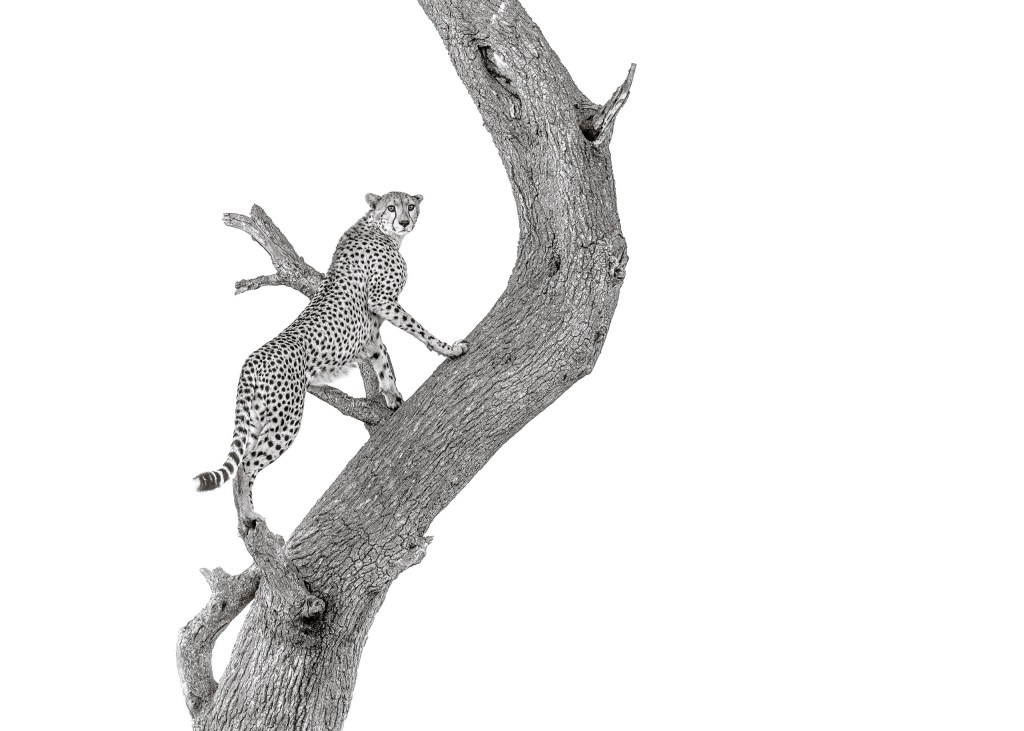
Lloyd also makes it clear on his Insta and website that every image of his is Photoshop-free. He isn’t against people getting creative in the editing suite, as long as they’re upfront and honest about it, rather than trying to trick people into thinking their Photoshop artistry was achieved in-camera. For his own work, though, he sees altering images as a slippery slope. “I’m limited to what I might have done in the film days,” he says.
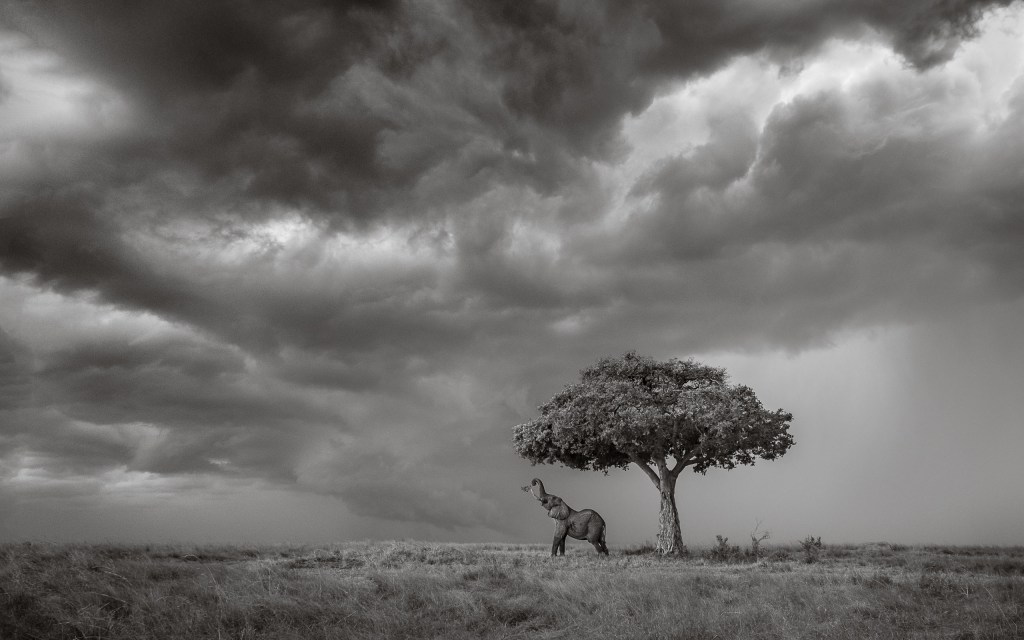
“I don’t add anything. It means I can enter my picture in any competition without fear of it being over-processed. I won’t remove a leaf from a picture, because next time I might take out a twig, or a branch, or the tree… I certainly wouldn’t take a sunny day sky and change it for a stormy day sky, for example. If you see a picture of mine with a stormy sky, that’s because that’s what it was. People often tell me they like what I do because it’s very natural.”
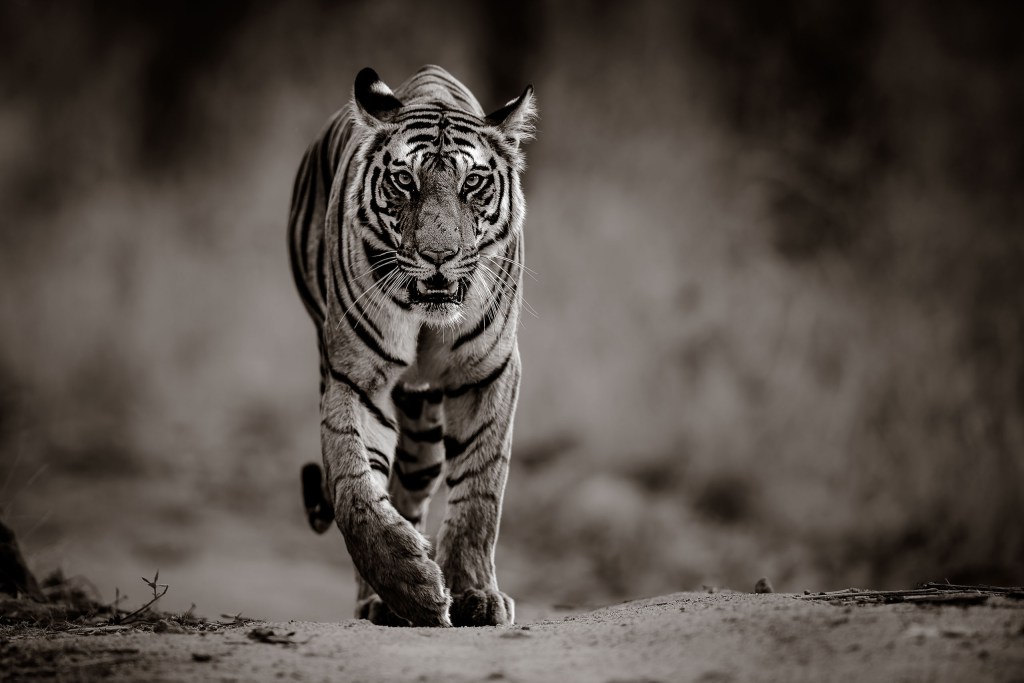
Authenticity, he argues, really matters. He wants people to trust their eyes. “I like to ‘honour the scene’. If you’re going to change things around, you may as well bring out your paintbrushes for that. I like the idea of photography capturing the moment. That’s what it should be about.”
He’s had a few memorable close encounters over the years, including a large adult male gorilla that came towards him (“If I hadn’t moved out of the way, he’d have pushed me over.”) and a unique experience with a curious lion who approached his safari vehicle, stood on his hind legs and placed a paw on Lloyd’s arm – not something he planned or sought out, Lloyd stressing that he doesn’t recommend such close proximity to animals and doesn’t approve of people deliberately trying to get too close for images or experiences.
Spending as much time as he does in prime wildlife tourism locations, he’s keen to see changes in tourist behaviour. “My new mantra for my trips is ‘wildlife without the crowds’. I have a conflict within myself about approaching wildlife too closely or getting too involved. I like to keep a distance these days. I’ve seen a few things that might be harmless but photographers are photographing too closely. If I see a picture of a leopard cub, where it’s been taken looking down, I question that. They’re obviously too close, the car’s too close. I don’t think people need to be so close.”
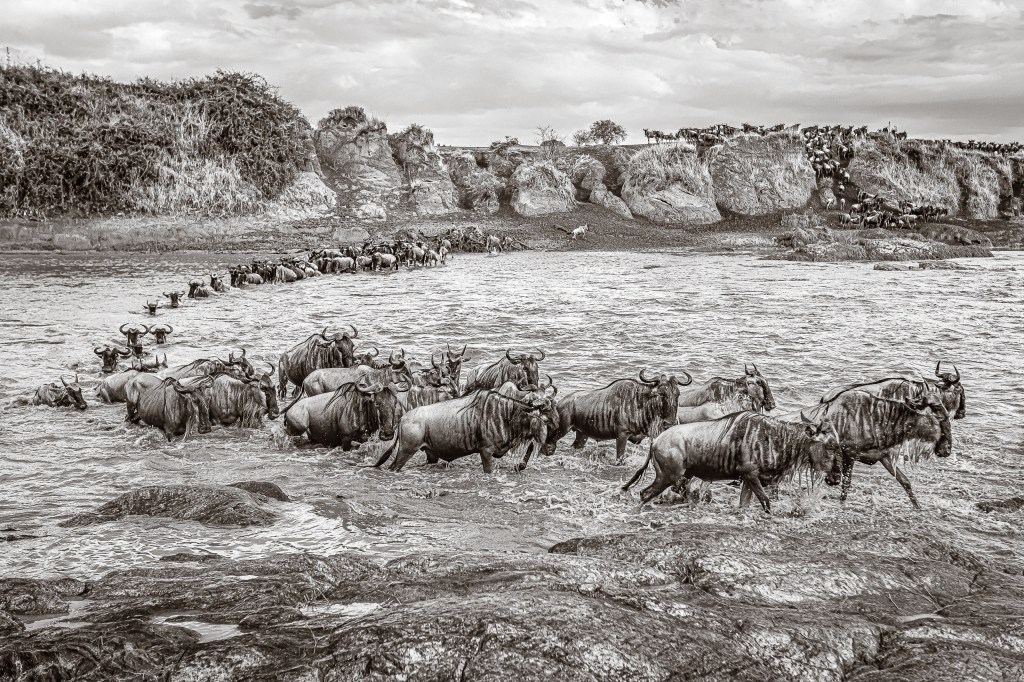
He’s seen examples of reckless behaviour over the years, including overcrowding at the Mara River during the famous Great Migration’s river crossings. “I used to share a crossing with a dozen other cars and now I have to share it with 120 noisy cars,” he tells me. “When you have 120 cars waiting for the wildebeest to cross, they don’t cross, because the cars are there. It doesn’t make logical sense to me.”
Going back just over a decade, the Great Migration provided one of his most memorable photographic moments. “I wanted to get the wildebeest entering and coming out of the river, straight in front of me. It ended up being my favourite wildebeest picture. It was pretty exhilarating. The crossing is always exciting. But on that occasion, it just went on and on for almost two hours – the animals kept coming and coming. It’s about the sound, too, like 10,000 cows mooing, and the sound of the water. There’s so much happening. Anyone who walks away from that kind of thing is always smiling as a result.”
Lloyd’s also used his photography to help various wildlife conservation causes, including my own The New Big 5 project and book, the Remembering Wildlife books, and the global print sale fundraiser Prints for Wildlife, helping raise money for charities such as African Parks, Born Free and Conservation International. “Ever since I was a small child I loved wildlife and nature,” he says. “What comes of that out of that is an empathy for animals.”
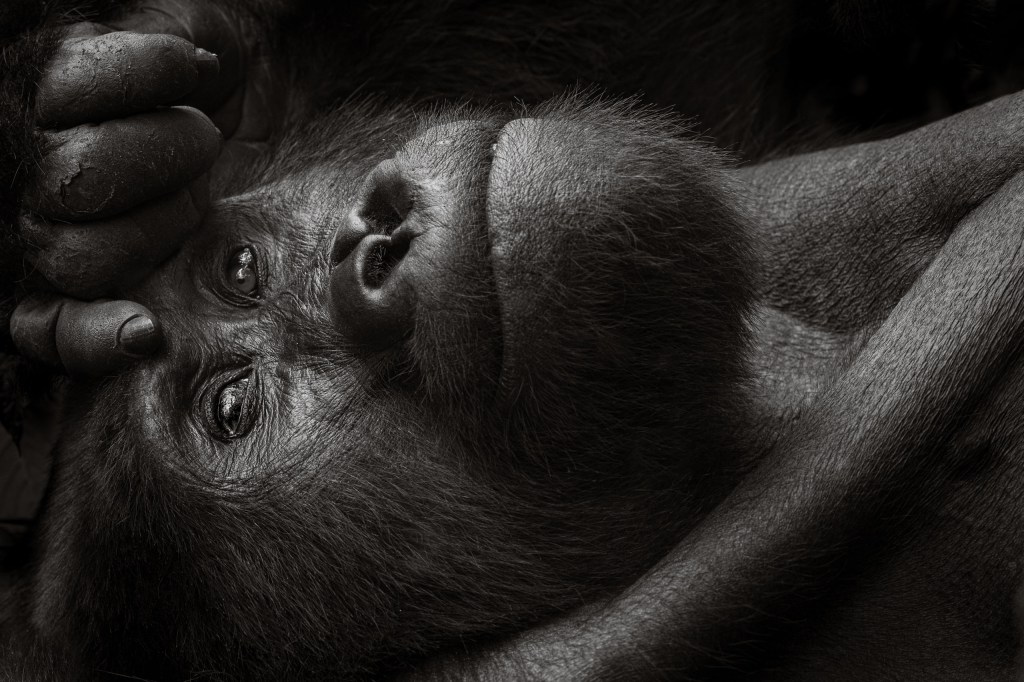
He’d like to see more awareness for wildlife and the threats they face, from habitat loss to poaching. “I don’t always find myself being overly optimistic,” he admits. “I don’t know if we’re winning or losing the fight. In some places, like gorillas, we’re probably winning that fight, but with other places we’re not. There’s always going to be this fight for wildlife.”
For prints, wildlife photography trips and books, including All Eyes Speak One Language and As Long As There Are Animals, see davidlloyd.net and Instagram: @davidlloyd
David Lloyd’s Photography Tips
Wait for your subjects – don’t chase them
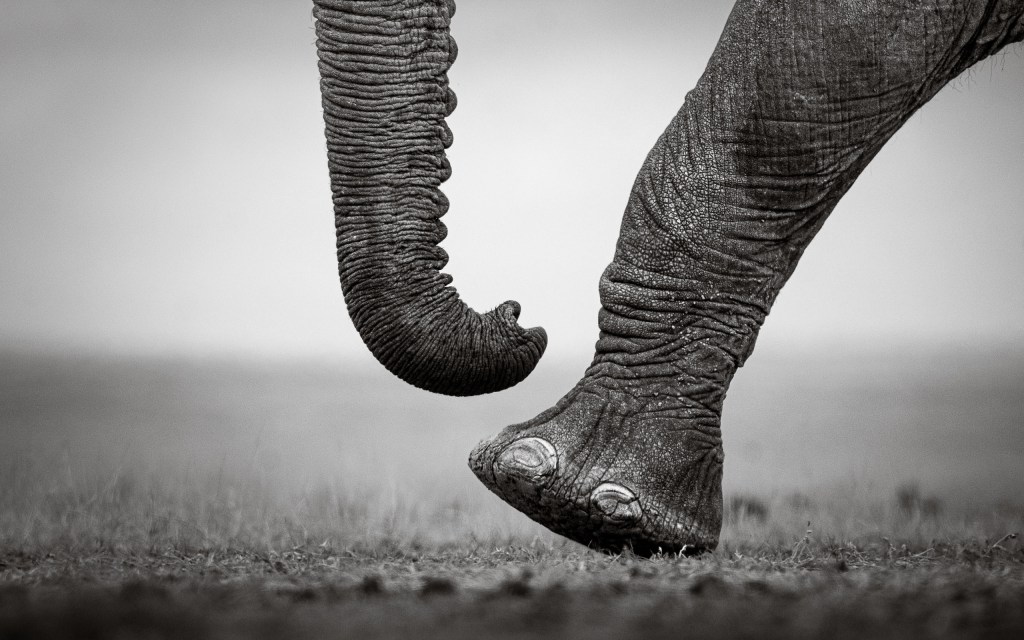
Apart from photographing the rear end of things, chasing your subjects is unrelaxing for both photographer and subject, and can introduce stress for both parties. Chasing animals results in unnatural behaviour and often fleeting encounters. Waiting on your subject to become aware of and used to your presence will bring more rewards.
Prioritise experiences over gear
Should you need to decide between the next generation lens or camera or a photo safari, choose the latter. A next generation camera is not going to advance your photography significantly, whereas a photo safari most certainly will. The better you are as a photographer, the less reliant you will be on technology.
Make the picture in-camera, not afterwards
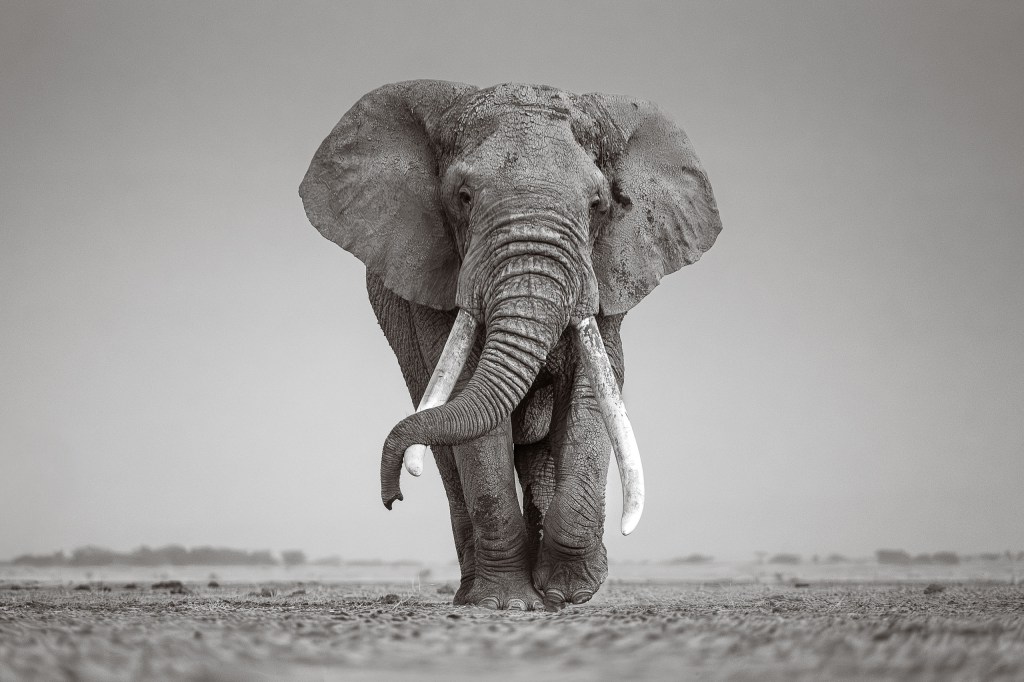
Endeavour to establish your picture in-camera, which means exposure, composition, depth of field and so on. Applying these attributes afterwards can make your pictures feel forced or artificial and possibly date them in time. Processing should not take more than about ten minutes. If silhouette or high-key is your aim, that will succeed naturally in-camera, whereas a processed solution may look overcooked.
Black and white is not a conversion of colour
Good black and white is not a conversion of a processed colour picture. It’s better to leave the colour variant aside and start from scratch for black and white, as tones and contrast are often different. Explore using the RGB colour channels to create distinction between the colours of your picture. A ‘conversion’ from an already processed colour picture is often what makes black and white picture appear flat and lacking depth.
Don’t be afraid of using high ISO settings available
Consider that high ISO noise is likely to be invisible in the final output, ie print. The noise you are seeing is likely upon a great magnification on the camera rear screen or on your computer. We do not naturally view pictures this way and your audience won’t either. Otherwise, do not be afraid to embrace noise, as it can add some atmosphere or drama to a black and white picture. Always leave a little noise in the picture – too much removal of it can make the picture look shrink-wrapped in film as a result.
David Lloyd’s Gear
“I currently use two FUJIFILM cameras: an X-H2 and an X-H2s. I put an older FUJIFILM X-E4 to good use too, with shorter lenses. My most prominently used lens is a FUJIFILM 200mm f/2, with a 50-140mm on the other camera and a couple of wide angle primes too. For very long focal lengths, I use a Canon 200-400mm via an adapter. I’ve used Nikon for many years, up until about 2020. I still have all that – I won’t say I’ve switched, but I just find the smaller system suits my needs better as its far more manoeuvrable for transport and it alleviates the need for bean bags. My prime output is print and I find there to be no discernible difference between the two. I’ve always held the view that 24MPS is all you really need.”
Related reading:
- Tadpole migration image wins Wildlife Photographer of the Year 60!
- Complete guide to wildlife photography
- You won’t believe these incredible wildlife pictures were taken by a 10-year-old!
Follow AP on Facebook, Instagram, YouTube and TikTok.