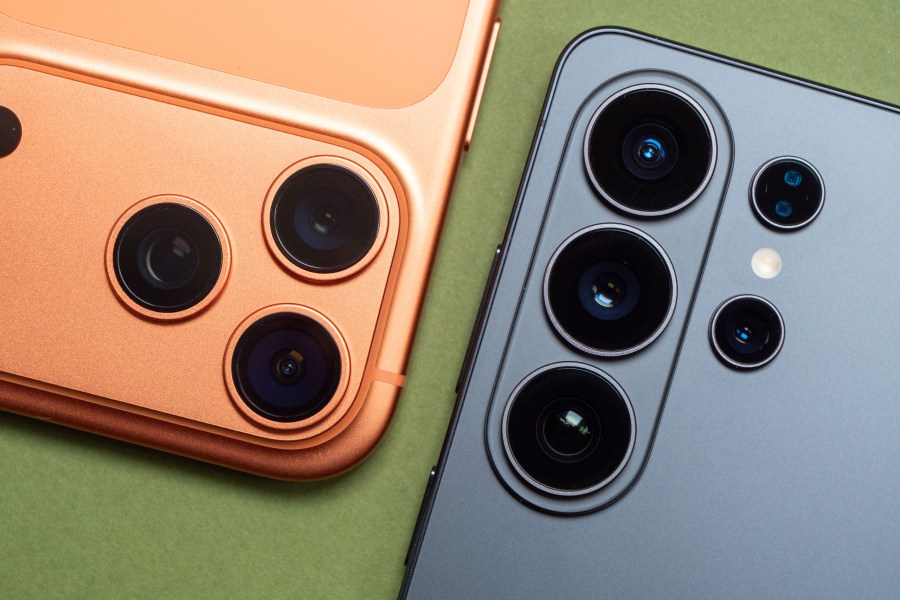
The two biggest smartphone manufacturers in the world both have fantastic flagships which both sit in our list of the best smartphones for photographers. The latest of those models is the iPhone 17 Pro, and the Samsung Galaxy S26 Ultra. With both of these excellent models, you’ll be able to get great shots in a range of different shooting conditions, including low light, portraits and macro.
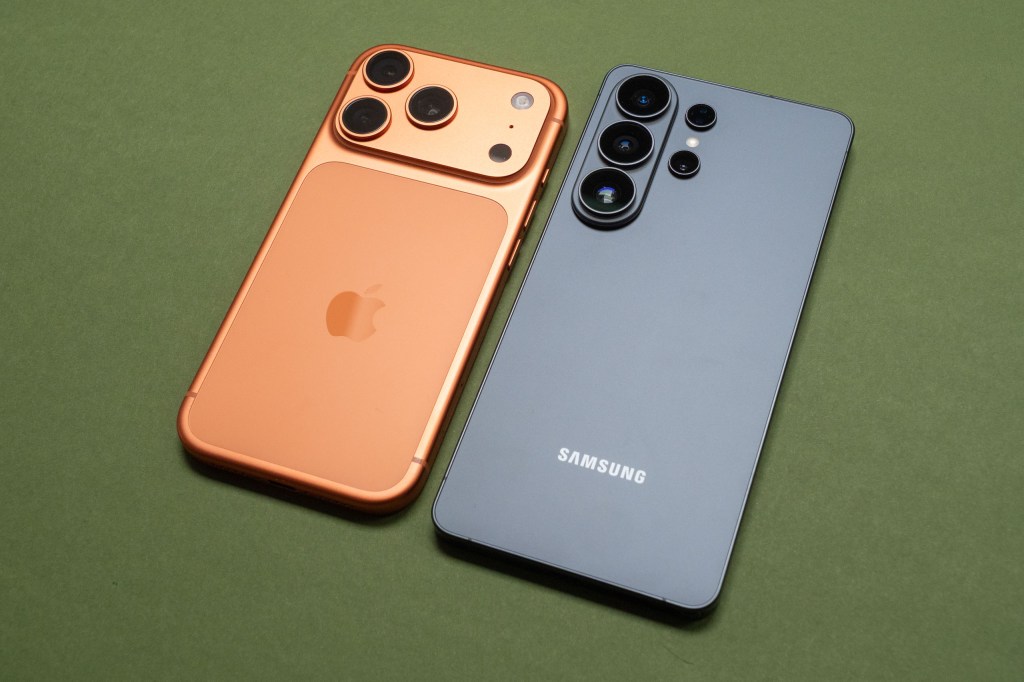
But, we’re interested in finding out which one is ultimately better, because apparently that matters. We can look at specs on paper to see which one seems like the better choice, but I’ve also shot the same scenes with each of the models to directly compare them. I’ve been using the iPhone 17 Pro, but as the camera system is exactly the same on the iPhone 17 Pro Max, this is also a comparison with that model, which is a closer match in size for the Samsung Galaxy S26 Ultra.
iPhone 17 Pro vs Samsung Galaxy S26 Ultra: Specs
Have a look at the table below. In it, I’ve listed all of the main specs that should be relevant for photographers. On paper at least, there’s pros in both columns, suggesting that these phones are relatively evenly matched.
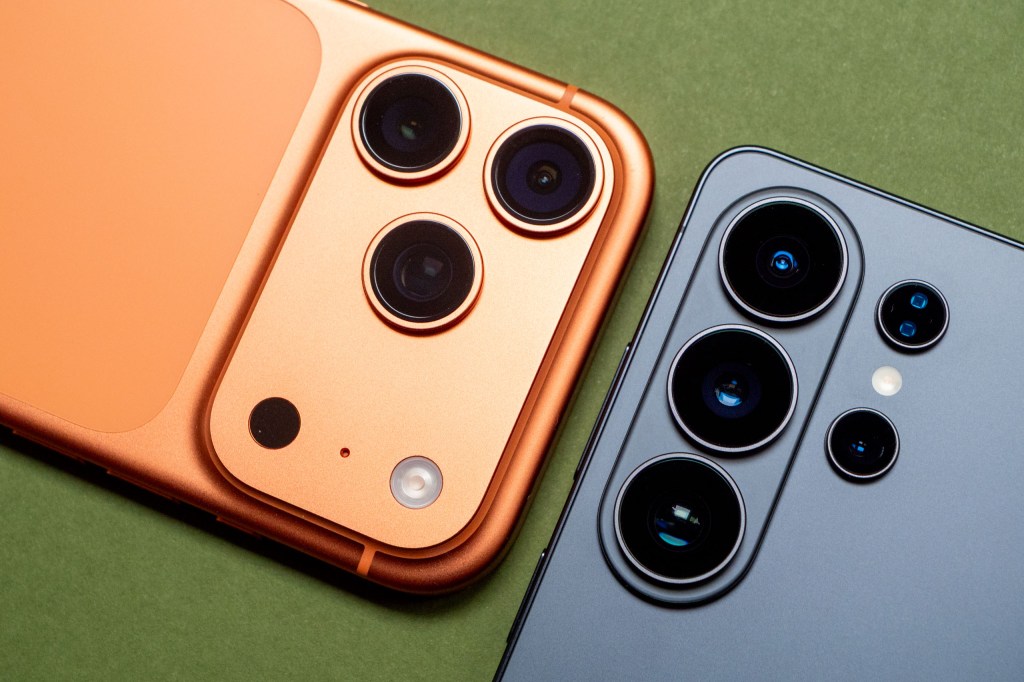
Looking only at the specs, you get four cameras with the S26 Ultra, while there’s “only” three with the iPhone. The main sensor for the S26 Ultra is 200MP, while the iPhone’s is 48MP – but the iPhone outputs at 24MP, compared to 12MP for the Samsung (default resolutions).
Both of the phones have an ultrawide lens, both featuring high-resolution sensors. Where things depart a bit more is with the telephoto offering. For the iPhone 17 Pro you get a high-resolution 4x lens, while the Samsung has a 10MP 3x camera, but, crucially, it also has a high resolution (50MP) 5x lens as well. Apple would probably argue that its single 48MP telephoto lens is better than having an additional lens, but we’ll see how the pics stack up later.
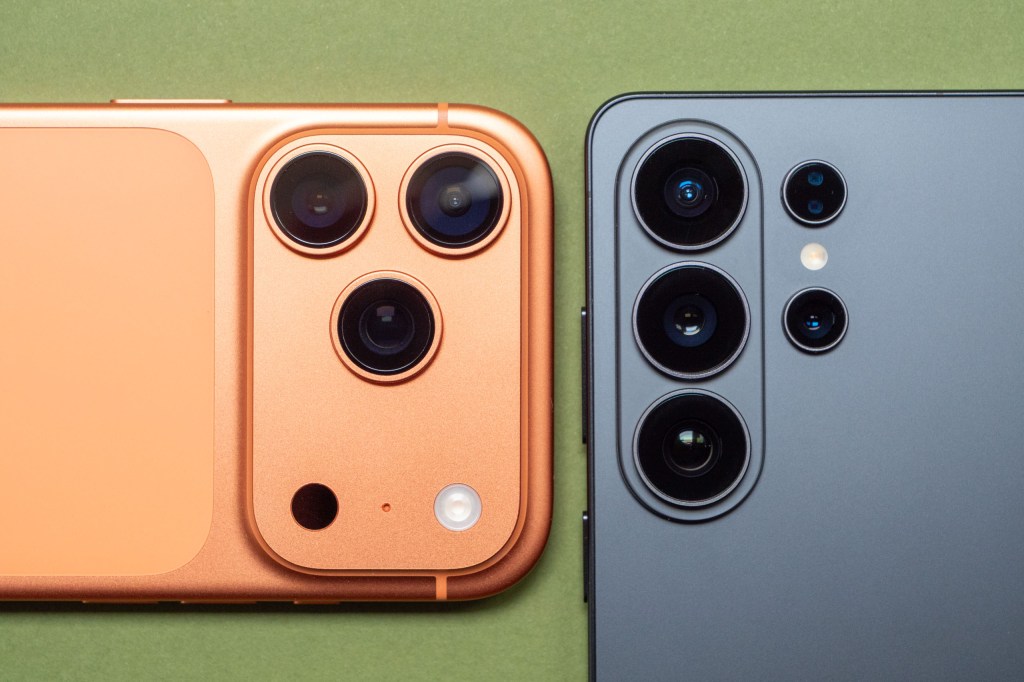
Other photography specs and differences include 4K video for the iPhone, but 8K for the Samsung. There’s raw shooting for both models, but only the Samsung has a pro mode directly in the native camera app itself. Both have AI editing tools, but the Samsung has slightly more options for changing things than the iPhone (you could argue that that’s not a bad thing for the iPhone, since that keeps things a little more realistic.)
| Specifications | iPhone 17 Pro / Max | Samsung Galaxy S26 Ultra |
|---|---|---|
| Main camera | 48MP f/1.78 main camera, OIS, 24MP output, 24mm | 200MP f/1.4 main camera, OIS, 12MP output, 23mm |
| Ultrawide camera | 48MP f/2.2 ultrawide camera, 24MP output, 13mm | 50MP f/1.9 ultrawide camera, 12MP output, 13mm |
| Telephoto camera (1) | 48MP f/2.8 4x telephoto camera, 100mm, 8x “optical quality” crop | 10MP f/2.4 3x telephoto camera, 67mm |
| Telephoto camera (2) | N/A | 50MP f/2.9, 5x telephoto camera, 111mm |
| Selfie camera | 18MP f/1.9 selfie camera with square sensor | 12MP f/2.2 selfie camera, AF |
| Image formats | HEIF, JPEG, raw (DNG) stills | JPEG, raw (DNG) stills |
| Video | 4K 120fps video | 8K 30fps |
| Screen | 6.3-inch / 6.9-inch XDR OLED Super Retina 2622 x 1206 / 2868 x 1320 pixels, 3000 nits max brightness, 120Hz | 6.9-inch 3120 x 1440 pixels, 2600 nits brightness, 120Hz |
| Toughness | IP68 splash, water and dust resistant | IP68 splash, water and dust resistant |
| Processor | Apple Intelligence, A19 Pro Processor | Samsung Galaxy AI, Qualcomm Snapdragon 8 Elite Gen 5 |
| Battery life | 31 / 37 hour battery life, wireless (30W) and fast charging (40W) available | 31 hour battery life, wireless (25W) and fast charging (60W) available |
| Storage | 256GB/512GB/1TB/2TB | 256GB/512GB/1TB |
| Dimensions | 150 x 71.9 x 8.75mm, 204g / 163.4 x 78 x 8.75mm, 231g | 163.6 x 78.1 x 7.9mm, 214g |
Elsewhere, other specs worth thinking about include the screen sizes. Both the iPhone 17 Pro Max and the Samsung Galaxy S26 Ultra have 6.9-inch screens. The Samsung is slightly higher in resolution, but, the iPhone is slightly brighter. So swings and roundabouts there. Both have anti-reflective coatings, but only the Samsung has the new “privacy” filter, making it harder to read the phone from any other angle than straight on. If you’re somebody that uses your phone in public a lot this might be appealing. The iPhone has the added benefit of being available in a smaller size, so if you prefer something more pocket-friendly then it’s great that you don’t get penalised with a worse camera system.
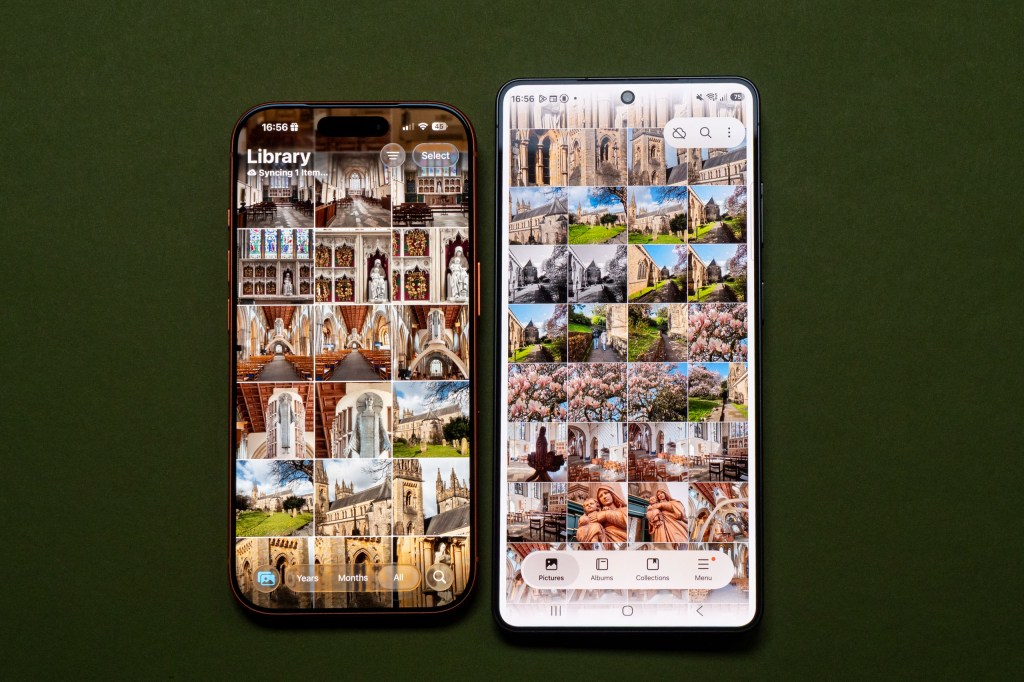
Other physical attributes to consider include buttons that you can use to operate the camera. The iPhone has a “Camera Control” button, which you can use to access various settings, and you can also use the volume buttons to fire off the shutter release.
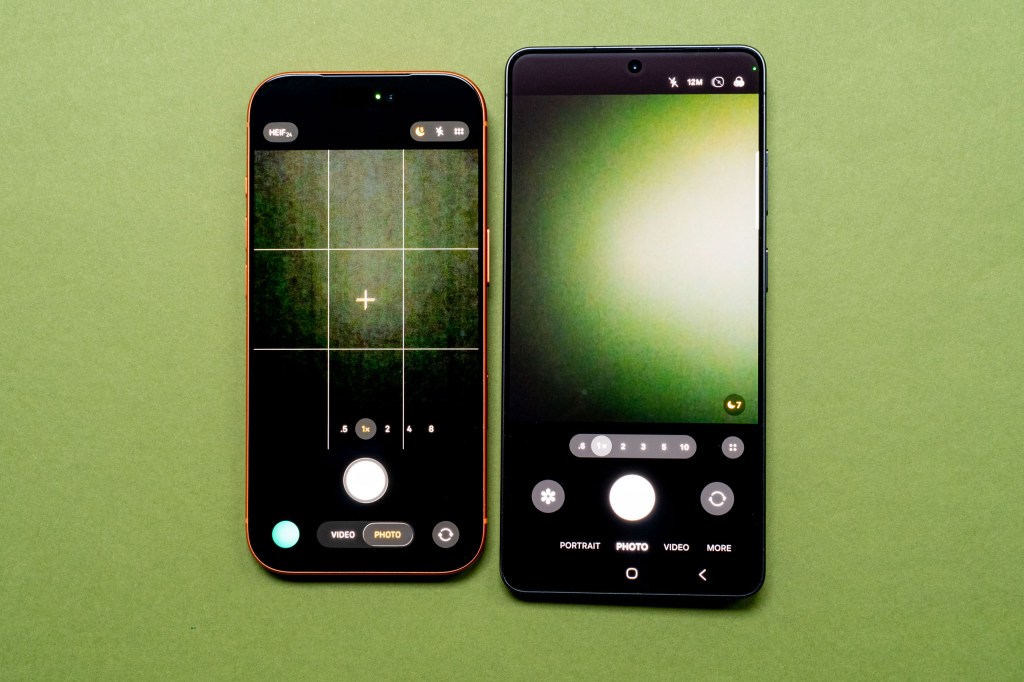
Samsung doesn’t have the Camera Control button – but in all honesty I personally never use it on the iPhone anyway, so this wouldn’t be a deal breaker for me. You can use the volume buttons for the shutter release, though.
iPhone 17 Pro vs Samsung Galaxy S26 Ultra: Image Quality
I used both of these phones across a range of different shooting scenarios to ensure a fair judgement of the image quality of both models.
Please note that the iPhone 17 Pro is always the first image to be shown, with the Samsung Galaxy S26 Ultra following afterwards.


In this comparison, both models put in a great performance. Using the 1x lens always produces the best results, so it comes as no surprise. There’s plenty of detail in both. I prefer the colours of the iPhone shot, with the Samsung being a little paler – but the Samsung’s exposure seems to be a little bit more balance. I’d call this a draw.


It’s a very similar story with the ultrawide lenses. Both have plenty of detail, and both are generally very attractive shots. Again, I prefer the iPhone’s slightly warmer tone, but there’s more detail in the shadows with the Samsung. Another draw.


In both cases here, the phones use the 1x lens, but crop into the central portion of the sensor to recreate the look of a 2x lens. With very high resolutions for both, it still results in a good sized image, with a good amount of detail retained in both. You guessed it, another draw.


The Samsung has two zoom lenses, so here I’ll include the 3x zoom, and compare it against the iPhone’s only zoom lens – a 4x option. Obviously you’re getting a little closer with a 4x lens, so you could argue that’s better (though obviously, the Samsung has another lens if you want to do that). Both of these I’d be happy to use on social media and the like, but we can see there’s some detail starting to be lost with the iPhone shot.

Here’s a look at the Samsung’s 5x lens, this is perhaps a bit more similar to the iPhone’s 4x lens, in terms of detail output. It’s still pretty good, but again, we’re starting to see a little bit of a drop off in some areas of the image.


Both models offer an “optical quality” zoom which goes beyond the physical specifications of the lens. For the iPhone, it’s an 8x zoom, for the Samsung it’s a 10x. Here I think the Samsung is doing a better job – there’s better colours and greater detail. I’ll give Samsung the win here.


The furthest digital zoom reach here is 40x for the iPhone, and 100x for the Samsung. I wouldn’t really be inclined to use either image for anything seriously – but the iPhone by being a bit more moderate at least produces something somewhat usable.


Both models use the ultrawide lens for close-up shots. I see better results from other Androids, such as the Xiaomi 17 Ultra, where you can use the telephoto lens. But that’s by the by. Both are pretty good, with a decent amount of detail and bright colours. I’m struggling to pick a winner here as they’re so similar.
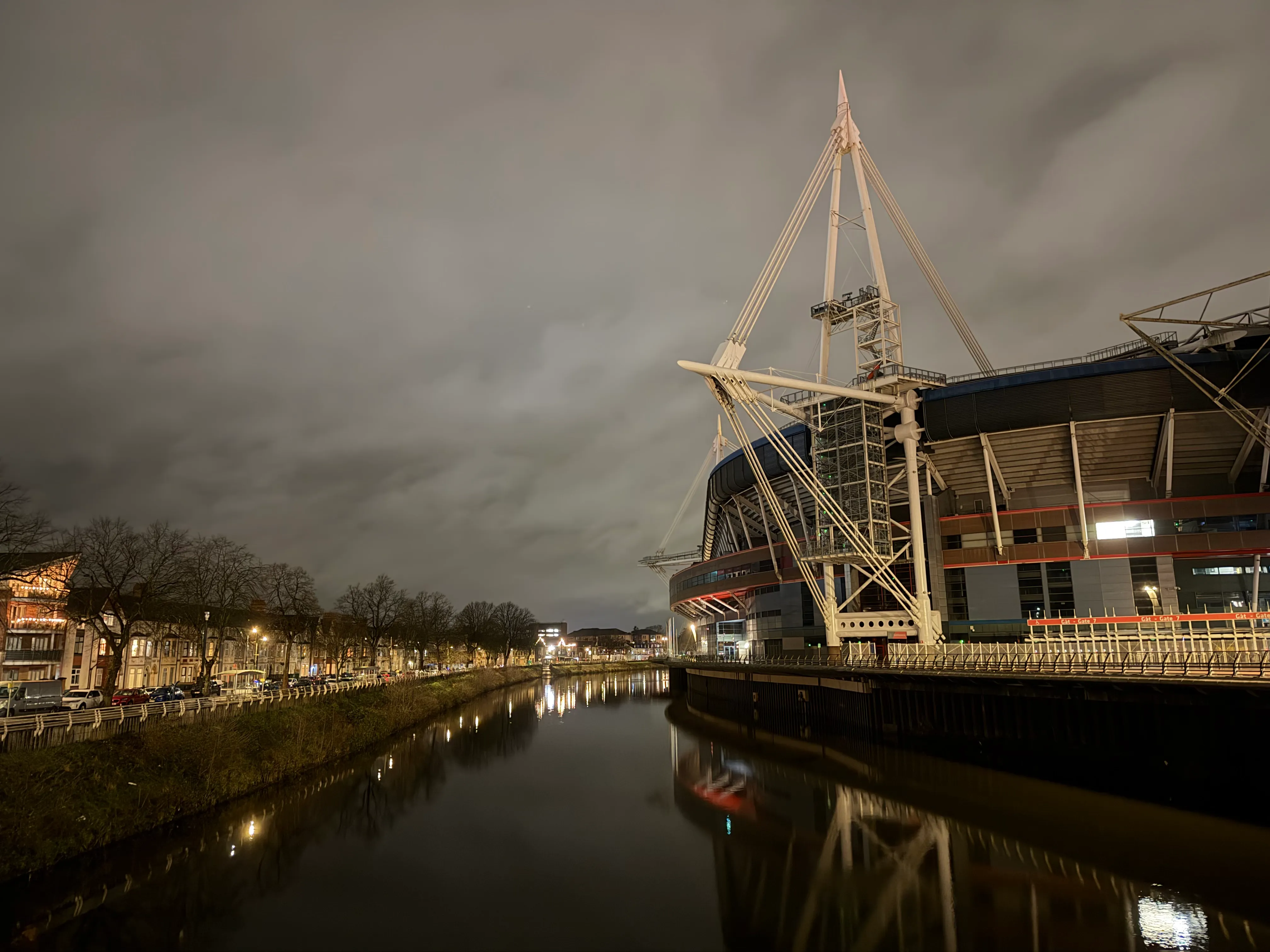

Both models have a Night mode which kicks in should low-light be detected. With the Samsung, you can also select it manually. Here we see what both phones are capable of when using the 1x lens. Both have done well in what was a very low light situation, but I much prefer the Samsung’s output. The colours are better, and don’t have a slight yellow cast. There’s also slightly more detail. Another point for the Samsung. The results are bit closer when looking at the ultrawide lens, but the Samsung still edges it for me. Finally, the telephoto lenses produce good results from each device, but again the Samsung is a little bit sharper.


There is a dedicated Portrait mode on both models, though with the iPhone, it will by default capture portrait information when recording in the normal Photo mode, too. Both have produced a nice and fairly natural result here. There’s slightly more of a noticeable outline in the iPhone picture here, but it’s only particularly apparent if you zoom in quite closely. The iPhone colours are warmer / more flattering, but the Samsung ones are possibly slightly more realistic.


Both models have fairly staid specs when it comes to the selfie camera, but the iPhone has had an overhaul recently with a new 18MP square sensor that can be used when holding the phone vertically to shoot horizontal landscapes. It still doesn’t have AF though, so the Samsung is a touch sharper – you could easily argue that you don’t necessarily want ultimate sharpness for a selfie however!
iPhone 17 Pro vs Samsung Galaxy S26 Ultra: Value for Money
It used to be received wisdom that Apple phones were overpriced and expensive. Arguably they still are, but these days they’re actually cheaper than a Samsung.
Neither of these should be on your shopping list if you’re on a strict budget, but if you want to pay the least money, then Apple is the one to go for. Things get even cheaper when you consider that you could always pick up a smaller iPhone 17 Pro for even less money.
The cheapest price of a Samsung Galaxy S26 Ultra is $1279/£1299, while the cheapest price of the iPhone 17 Pro Max is $1199/£1199. This is for 256GB models in both cases. That falls to $1099/£1099 if you’re happier (or even prefer) the smaller screen.
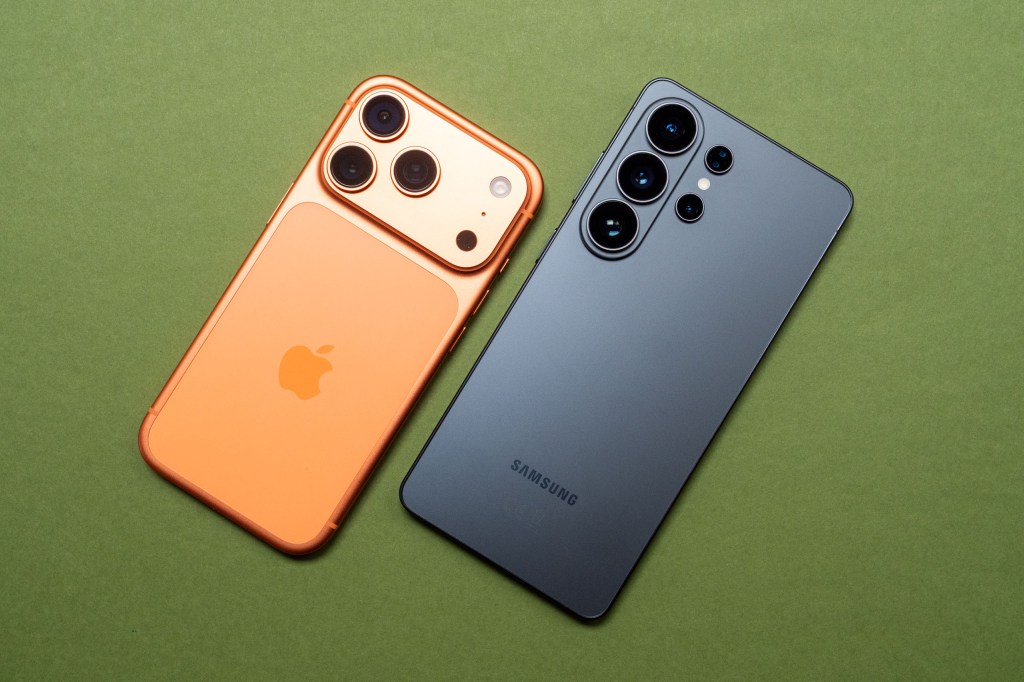
Differences in prices remain comparable throughout the storage options. For 512GB you’ve got $1449/£1499 for Samsung, or $1399/£1399 for iPhone. For 1TB you’ll pay $1799/£1699 for an S26 Ultra, or $1599/£1599 for iPhone 17 Pro Max. There is a 2TB iPhone option at $1999/£1999, but this isn’t something you can get for the Samsung.
Now, you could perhaps argue that the Samsung being slightly more expensive still represents good value for money because you get more for your cash. It’s true that you get an extra lens, but I’m not entirely convinced that’s worth the extra outlay in this case.
We should also consider that while both models will very likely hold their value well in the second-hand market, iPhones tend to hold their value best of all the brands, so when you come to sell it in the future, an iPhone will probably be worth a little more than a Samsung.
Verdict
As ever with these comparisons, it’s difficult to give one definitive winner, as it often depends on lots of factors.
However, after shooting lots of different scenarios, there’s one phone which has consistently produced slightly better shots – and that’s the Samsung Galaxy S26 Ultra.
Don’t get me wrong, the iPhone 17 Pro has also done a very good job, so don’t worry if you simply prefer an iPhone, but it’s interesting to see these direct comparisons.
It costs more for the Samsung Galaxy S26 Ultra, and you also have one screen size only, so there is more to a comparison piece than just the quality of the photographic results.
If I had to pick one of these phones based on the output phones alone, it would almost certainly be the Samsung Galaxy S26 Ultra. But, as someone who prefers smaller phones, and enjoys features such as the ability to convert regular images into Portrait shots, then I have to pick the iPhone 17 Pro.
Both are fantastic smartphones for photographers – which would you pick?
Related reading:
- Samsung Galaxy S26 Ultra Review: a minor upgrade, but still class-leading
- iPhone 17 Pro review – Apple’s best camera, but is it worth upgrading?
- iPhone vs Android: Which is better for photography?
Follow AP on Facebook, Instagram, YouTube and TikTok.