Travel photography demands a particular kind of camera. It must be small enough to carry all day, and light enough to slip into a jacket pocket. It should also be capable of handling any subject, from fast-moving street scenes, to low-light cityscapes, engaging portraits and more. Few brands cater to this combination of size, capability, and tactile appeal quite like Fujifilm.
With their retro-inspired controls, compact APS‑C bodies, and excellent colour science, Fujifilm’s cameras have long been favourites among travellers and street photographers. But choosing the right one can be overwhelming. Within the X-series alone are several bodies well suited to travel, including vlogging-oriented models such as the X‑M5 and X‑S20. Yet for photographers who value classic dials, tactile shooting, and a more traditional stills‑first design, the real contenders narrow to three: the X‑T30 III, the X‑T50, and the X‑E5.

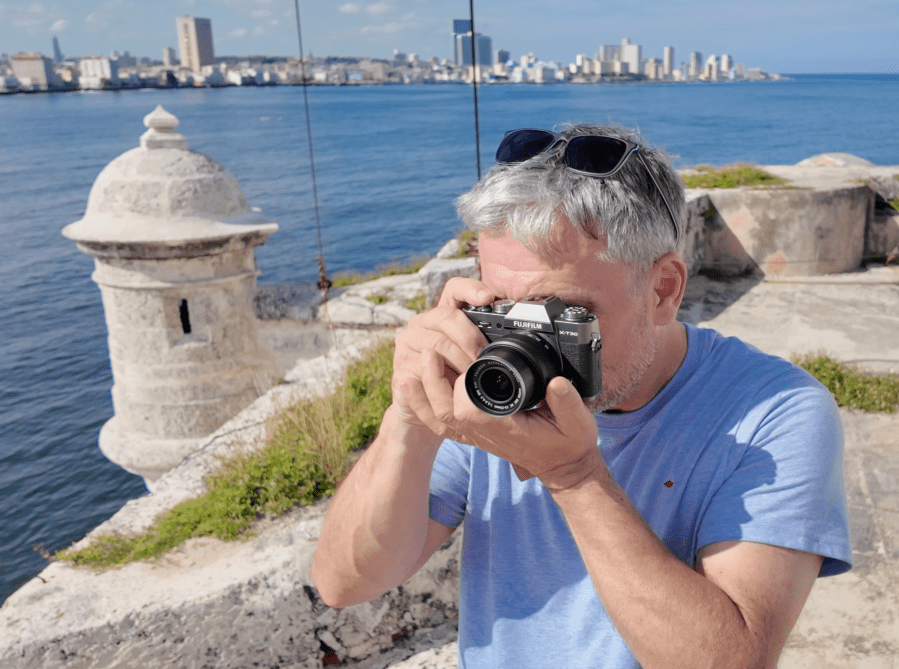
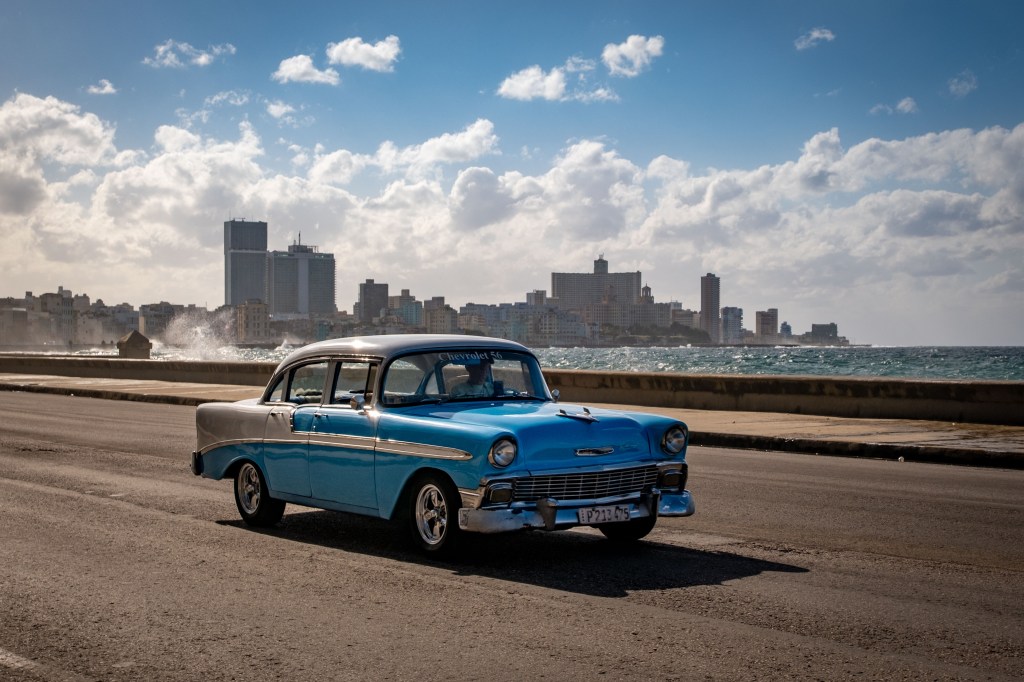
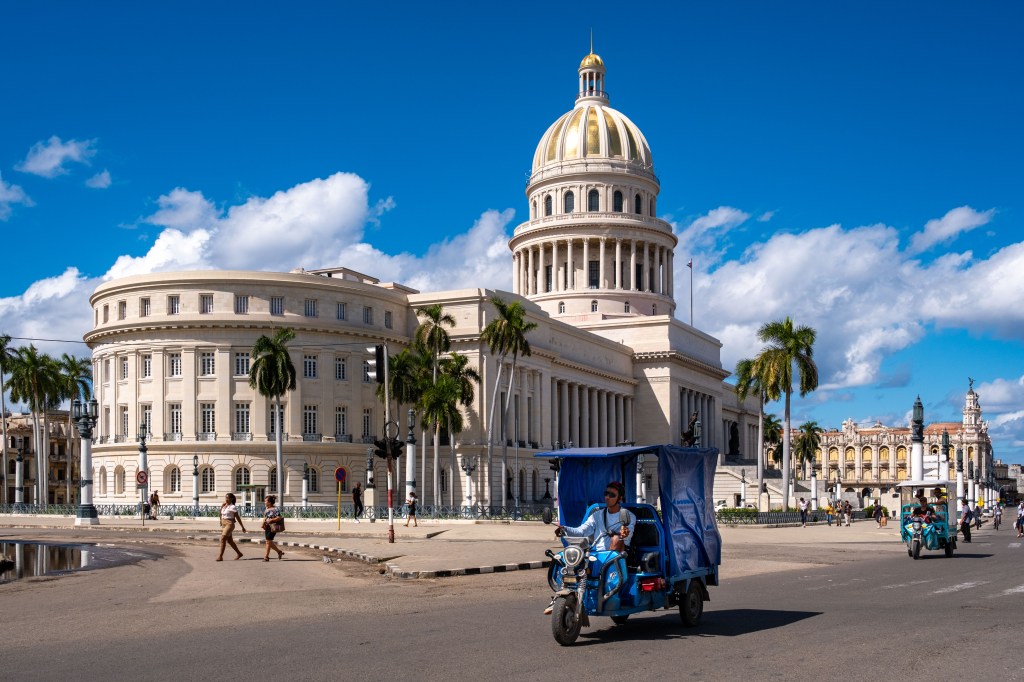
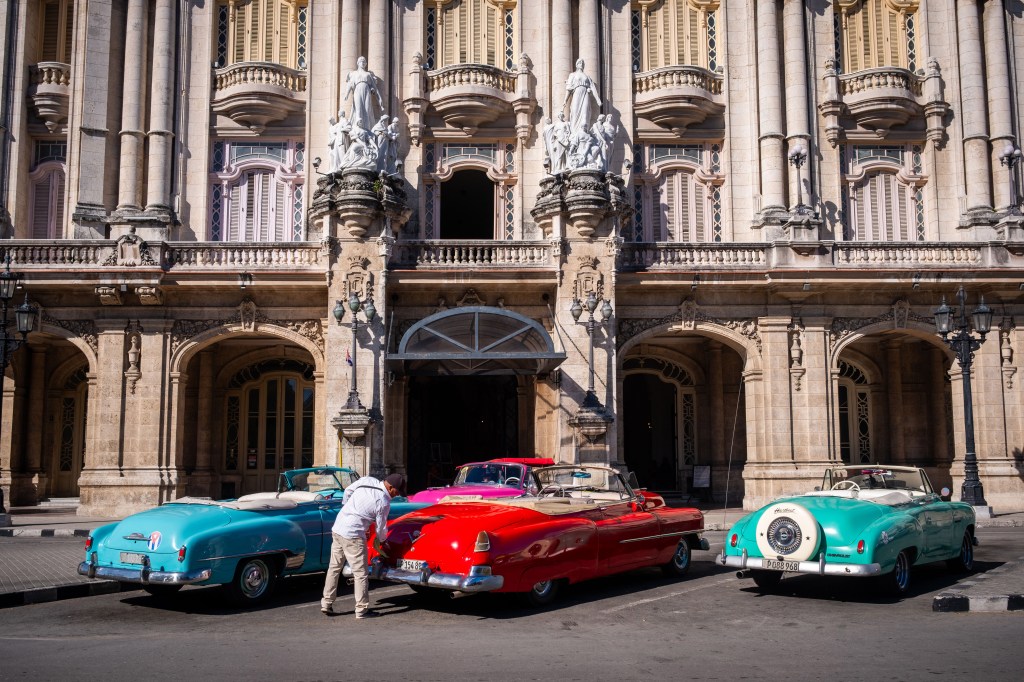
I decided to take all three to one of my favourite cities in the world: Havana, Cuba. The combination of faded Spanish colonial architecture, 1950s American cars, beautiful people and wonderful salsa music is as intoxicating as the Mojitos. It is also one of the few places that, thanks to the 60-year US embargo, is mercifully free of modern American chains like McDonald’s and Starbucks that plague almost everywhere else. But I sensed (correctly as it has turned out) that with Trump 2.0’s aggressive foreign policy agenda, that state of affairs might not last much longer. I was hoping that this article may encourage a few people to experience the magic of Cuba for themselves and spend some much-needed tourist money there, but with a new US blockade starving the population of food, fuel, power and medicine, it seems that tourism will be off the agenda there for a while.
Let’s take a closer look at those cameras.
Fujifilm X–T30 III
The newest camera of the trio, the X‑T30 III, is the smallest, lightest, and least expensive – traits that immediately give it an advantage for travel. Weighing just 378g, it is genuinely pocketable, especially when paired with Fujifilm’s new 13-33mm kit lens. With the lens turned to its retracted position I was able to slip this camera into my blazer pocket when I went to see the famous cabaret show at the Hotel Nacional de Cuba, and get some great shots without needing to bring a bag.
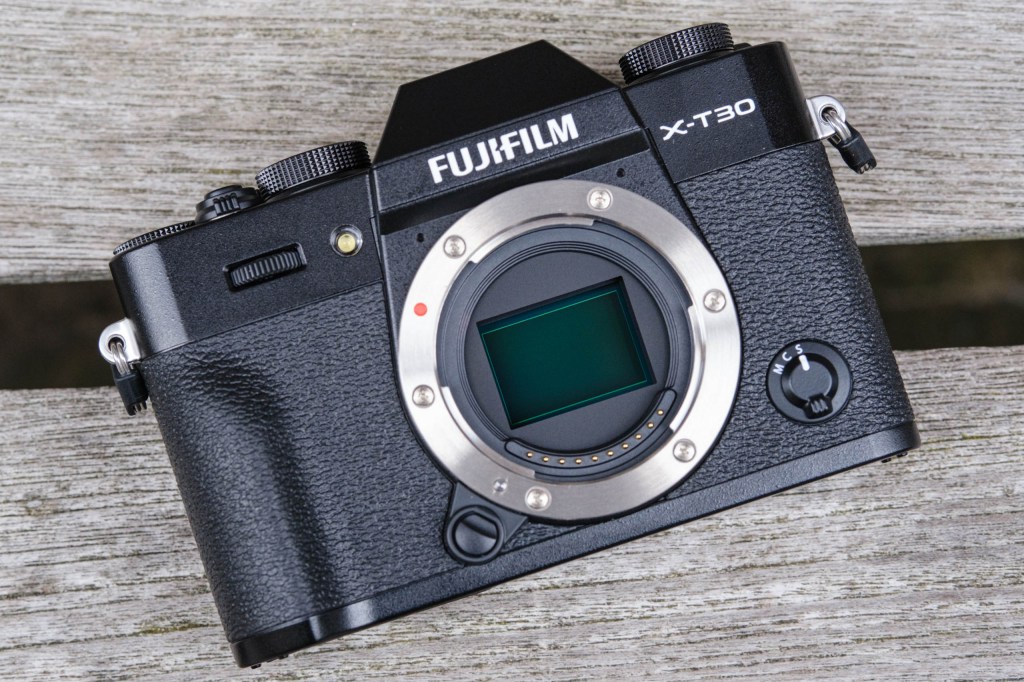
The camera’s lower price is partly due to the retention of the 26MP APS‑C X‑Trans sensor used in the X-T30 II, instead of the newer 40MP sensor used in the other two, but the resolution is more than sufficient for most photographers. Fujifilm has however upgraded the new camera with the X‑Processor 5, bringing faster autofocus and subject recognition AF.
The other reason for the lower price is the omission of IBIS (In-Body Image Stabilisation), which the other two cameras have. While IBIS is undeniably useful – allowing slower shutter speeds, steadier handheld video, and extra latitude in low light – it isn’t essential. Photographers relied on steady hands for generations before stabilisation existed. Moreover, the 13-33mm kit lens has optical stabilisation, which helps offset the lack of IBIS, particularly at slower shutter speeds.

The 13-33mm kit lens
My first impressions of the 13-33mm f/3.5-6.3 were not very positive. With such a small maximum aperture, especially at 33mm, there would be no real hope of the shallow depth‑of‑field that enables subjects to ‘pop’ from the background. But I took it with me anyway because, hey, that’s the lens most people will buy it with. Yet in practice, its compact size and usefully wide 20-50mm full‑frame equivalent focal range made it unexpectedly versatile.
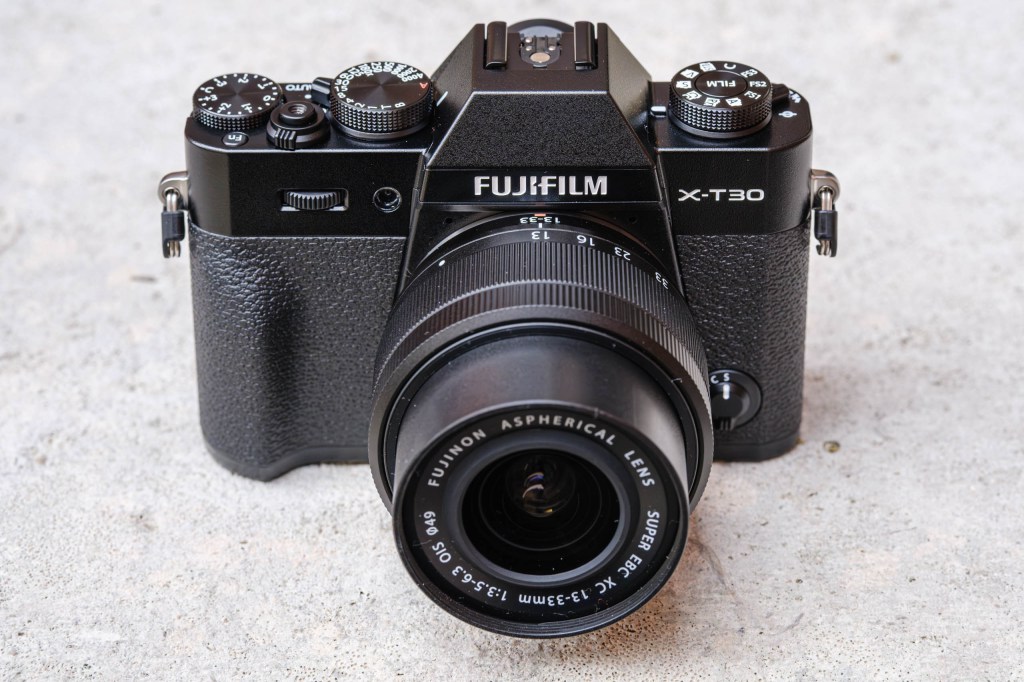
The wide end of the lens enabled me to capture tight interiors, sweeping façades, and the tops of tall buildings, and achieve that dramatic perspective that very wide lenses are known for. All things that the highly regarded but much larger and less wide 16-50mm f/2.8-4.8 (which I also took with me) couldn’t match. There are of course lots of small, relatively fast prime lenses available, both from Fujifilm and third parties, so it certainly isn’t a case of choosing one or the other. But more on that later.
Fujifilm X-T50
Step up to the X‑T50, and the upgrades become immediately apparent. Priced roughly £400 above the X‑T30 III, the X‑T50 brings under‑the‑hood enhancements that elevate it into a different category, though it still maintains a compact, lightweight form at 438g.
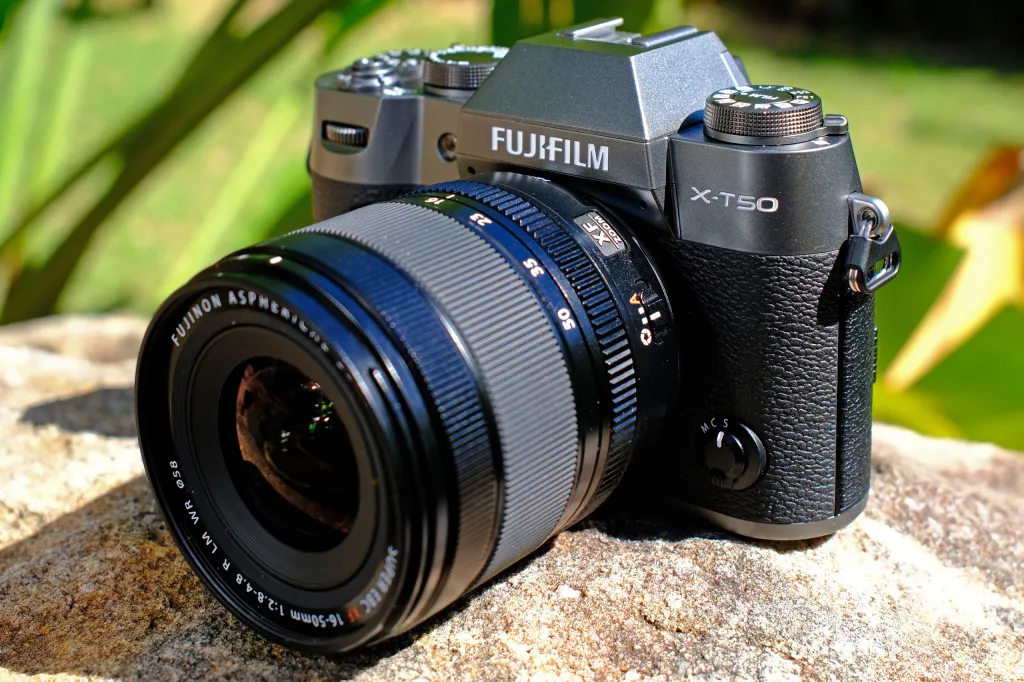
The X‑T50 is built around Fujifilm’s latest 40MP X‑Trans CMOS 5 sensor, also used in the flagship X‑T5. The additional resolution provides extra flexibility for cropping afterwards, which is useful when travelling with a limited lens kit. The X‑T50 also gains 7-stop IBIS, which significantly aids handheld shooting, especially in low light or with telephoto lenses. In Havana’s dim cafes and dusk-lit cobbled streets this was handy to have.

Fujifilm X-E5
The X‑E5 body carries the same £1299 RRP as the X-T50 and features an almost identical spec, but rather than the ‘DSLR’ based design of the X-T50 it’s a rangefinder style camera. Anyone who considers the Fujifilm X100 series of compacts to be beautiful (which seems to be most people, judging by how well it sells) will immediately fall in love with the X-E5. It is, after all, to all intents and purposes an X100VI with interchangeable lenses, especially if you get it with the new 23mm f/2.8 – although the 23mm lens on the X100VI is a stop faster. The X-E5 also lacks the X100’s hybrid viewfinder and full weather sealing, as well as a built-in flash (which the X-T50 and X-T30 also possess) plus a few other fairly small differences.
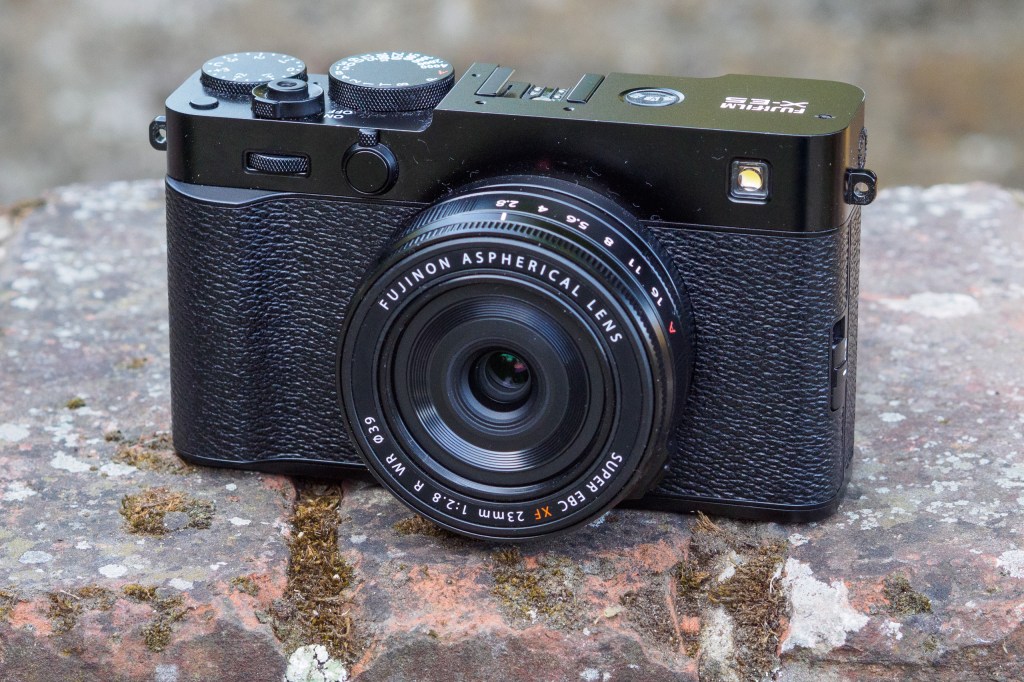
On the other hand the X-E5 has a couple of additional controls on the body that the X-T50 lacks. The button and lever on the X100VI that switches between hybrid and EVF viewing has been retained on the X-E5 and can be customised. I set the centre button as a playback button because I found the one on the back, to the right of the eye-piece to be a little awkward to reach. Flicking the surrounding lever to the left or right provides two more customisable options.
Like the X100VI the X-E5 comes in a choice of black or silver (the X-T50 and X-30 III are also available in a third, charcoal option). Judging by sales most people seem to prefer the black version, but to me the silver version is prettier and offers the full retro camera experience, evoking the romance of classic rangefinders.

Film Simulation dial
All three cameras feature a dedicated Film Simulation dial on the left side of the top plate, in place of a drive mode dial on older models, which is now a button on the back. On the X-E5, Fujifilm has placed this dial beneath the top plate, visible through a small window and controlled by a rear thumbwheel. Not everyone is thrilled about this, but I rarely use the continuous mode or the self-timer so it doesn’t bother me, and it does place Fujifilm’s popular colour profiles (including Velvia, Classic Chrome, Nostalgic Neg and Acros) right in front of your nose. In a colour-filled city like Havana, Velvia was my natural default choice for its saturation, though for portraits I switched to Astia for softer tones.
Lens choices
With the 13-33mm lens on the X-T30 III, and the 23mm f/2.8 pancake on the X-E5 I found myself lacking a telephoto option for portraits. Although the 16-50mm offers the equivalent of 75mm, I wanted something with a wider maximum aperture that could blow out backgrounds with aplomb, like Fujifilm’s bokelicious 56mm f/1.2. But not that actual lens, because while it’s one of my favourite optics it’s a bit of a beast, and not the best choice for an article about travel kit.

The final lens in my kit bag was the 27mm f/2.8 pancake which I took as a prime alternative to the 13-33mm. This is a great lens which is similar in size to the 13-33mm but faster, and the 40mm equivalent focal length is perfect for street photography.
Controls and ergonomics
Despite the aforementioned stylistic differences, all three cameras share certain common Fujifilm hallmarks: a physical shutter‑speed dial, exposure‑compensation dial and film simulation dial; a joystick for AF point selection; a Q button for quick access to a customisable menu of commonly used functions; and an LCD screen that tilts up and down but doesn’t fully articulate. However, the X-E5 is alone in this company in having a screen that tilts up 180% degrees, so it can be viewed from the front of the camera. This makes it the only one of the three that’s remotely suitable for vlogging. Though it must be said that none of them are video-centric cameras and if this is important there are much better options both inside and outside of the Fujifilm system.

None of the cameras has an especially deep handgrip like Fujifilm’s X-S20, but given how light the cameras are the grips on the X-T30 III and X-T50 are deep enough, in conjunction with the substantial thumb rest on the back – as long as you don’t attach heavy lenses. The front grip and thumb rest on the X-E5, on the other hand, are very minimal, in keeping with the rangefinder styling. So this isn’t a camera to use with long lenses, unless you invest in something like the Smallrig L-Shape grip.
When three isn’t a crowd
Taking three cameras may defeat the object of travelling light, and this is certainly not something I would dream of doing if I was using full-frame cameras, but the fact that these bodies, and their lenses, are all so small, meant that I never felt weighed down. The advantage of having the three was that I didn’t need to switch lenses (though I did, purely for the purposes of writing this feature). I typically kept the X-E5 with the 23mm lens around my neck and the other two in my bag. If I wanted a wider lens than 23mm I would reach for the X-T30 III with the 13-33mm, and if I needed a longer lens, say, for a portrait, I grabbed the X-T50 and 56mm Sigma.

Very few people are going to be doing that, but I can see many travellers rocking two of these bodies, and in that scenario, as a prime lover I’d be inclined to put the 23mm on one and the 56mm on the other, which would cover most eventualities – with maybe something wider in the bag for emergencies.
Verdict
So which of these is the best choice? All three are fantastic cameras that were a pleasure to use and all delivered great results with very few duds. If you are ruled by your head then the X-T50 is probably the most practical option. You get the flagship sensor and processor, plus IBIS, and the ergonomics are slightly better than the X-E5, especially if you have any plans to use longer lenses at any point.
If you’re ruled by your heart you’re more likely to go with the one that looks the coolest hanging around your neck – the one that you’re most likely to keep in a glass display case on your mantlepiece when you’re not using it – the X-E5. This was the one that most persistently begged me to pick it up. Who needs a built-in flash anyway, and if you want to use long lenses the Smallrig L-Shape grip is less than £40 and there are cheaper alternatives available.
But if you are ruled by your wallet then the obvious choice is the X-T30 III. I’m not sure how many people actually need 40 megapixels, and while the ability to crop and still maintain decent resolution is certainly useful, innovations like Adobe’s Super Resolution feature make this less of a deal than it once was. As for IBIS, none of the photos I took on the X-T30 III suffered from noticeable camera shake, despite using it indoors, and in low light. The high ISO performance is good enough to make slow shutter speeds less necessary.
Crucially though the X-T30 III body is about £400 cheaper than the other two, which is a tidy saving. If you can afford an X-T50 it means you could also buy an X-T30 III plus an additional lens. I’d be inclined to buy it with the stabilised 13-33mm kit lens, which is almost half price if you get it with the camera rather than on its own. And then to go with it I would buy a prime lens with a physical aperture ring, because that’s when these cameras are at their best. Perhaps the 23mm f/2, or 27mm f/2.8. Or the 50mm f/2 if you want something longer.
Finally, you might want to consider tracking down a used X-T30 II, which uses the same sensor but the older processor. This means you miss out on things like Subject Detect AF and the Film Simulation dial, but you’d save even more money and its otherwise almost the same camera.




Related reading:
Follow AP on Facebook, Instagram, YouTube and TikTok.