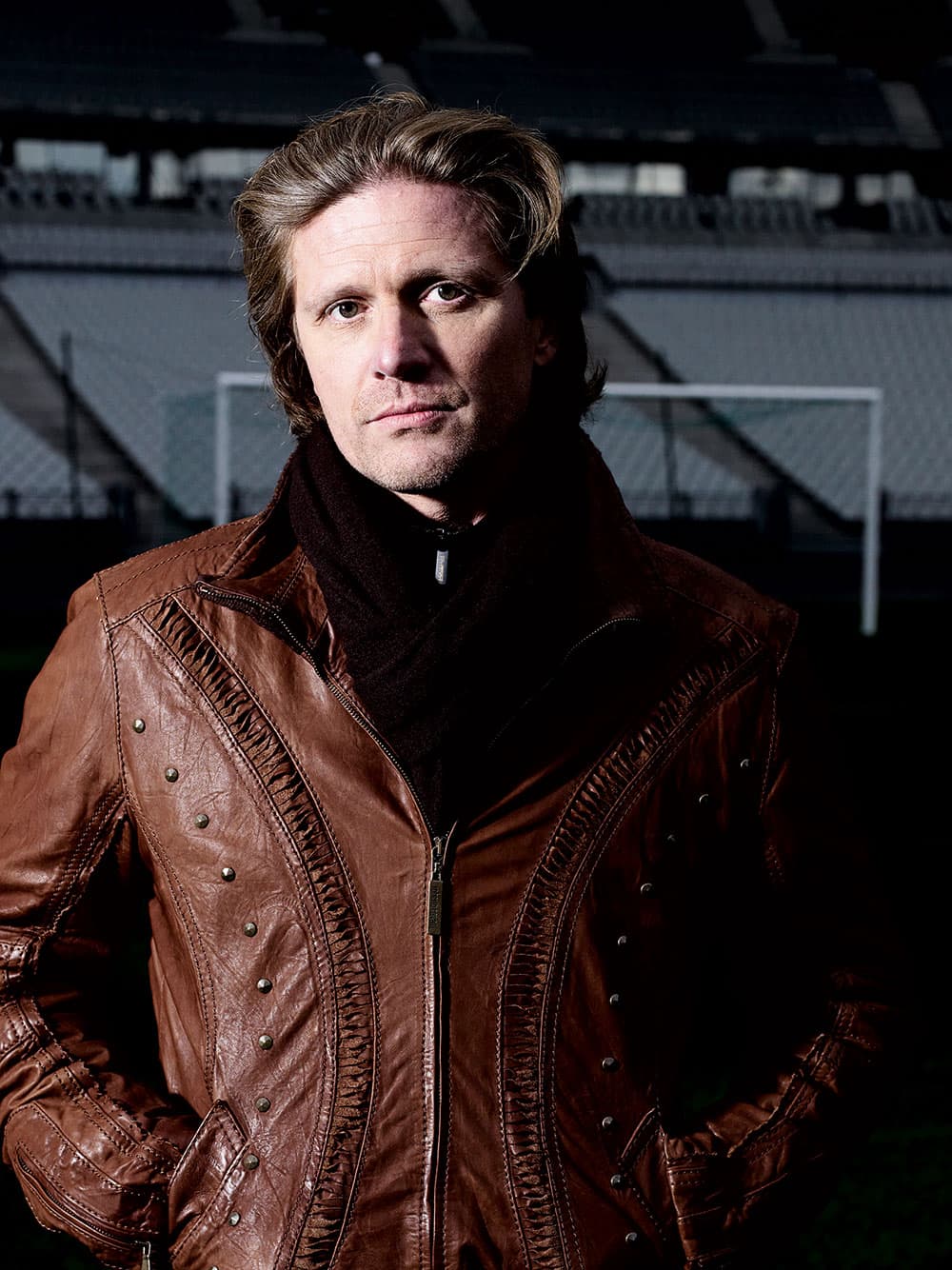
Michael Donald is not scared of a big challenge. His book, GOAL!, was six years in the making, comprised 34 different shoots in 11 countries, and has the accompanying Emmy-nominated ESPN documentary, ‘I Scored a Goal in the FIFA World Cup™ Final’, to boot. The idea was actually in Donald’s brain some 15 years ago and he reveals, “I’ve always wanted to tell stories. Whenever I come up with an idea that I’m excited about, it has no bearing on whether it has any financial outcome or not.”
It was while he was researching a project on football managers that the idea originated. He explains, “I worked out how few people had ever scored a goal in a World Cup™ Final and it blew my mind. I thought it would be an amazing book and tried to track them down – 34 were alive – but on my own it was just impossible. I didn’t really have the clout to get the players to fall in line, so it sat on the shelf for a while.”
After chatting the premise through with some film industry contacts, Donald presented the idea to Academy Award-winning filmmaker John Battsek (of Passion Pictures Films), who, in Donald’s words, “laughed out loud and told me to ‘go away and do one’.” Undeterred, Donald went away and made a short film with Dick Nanninga – a Dutch footballer who scored in the 1978 World Cup™ Final – and soon afterwards the sports broadcaster ESPN provided the money to make a film, which Donald co-directed.
Editor’s Note
Back in 2017, Michael Donald had just released his book GOAL!. To celebrate the 2026 FIFA World Cup, we’re revisiting this old interview and adding some pictures that we didn’t share at the time. Michael hasn’t photographed any World Cup final scorers since 2015, and is often asked why that is. While discussing the republishing of this article, Michael told me, “The answer is something in the narrative arc would flatline. The book and film starts in 1950 with Alcides Ghiggia telling stories about a different world. He was a very old man living a humble life in the hills of Montevideo. I interviewed Iniesta, who scored for Spain in 2010 Gotze who scored for Germany in 2014. They were both delightful young men but they were 20 something years old multi millionaires. If I were to the continue the project it would be the same thing every four years. It would flatline and the narrative arc would die.” We hope you enjoy reading this classic article.
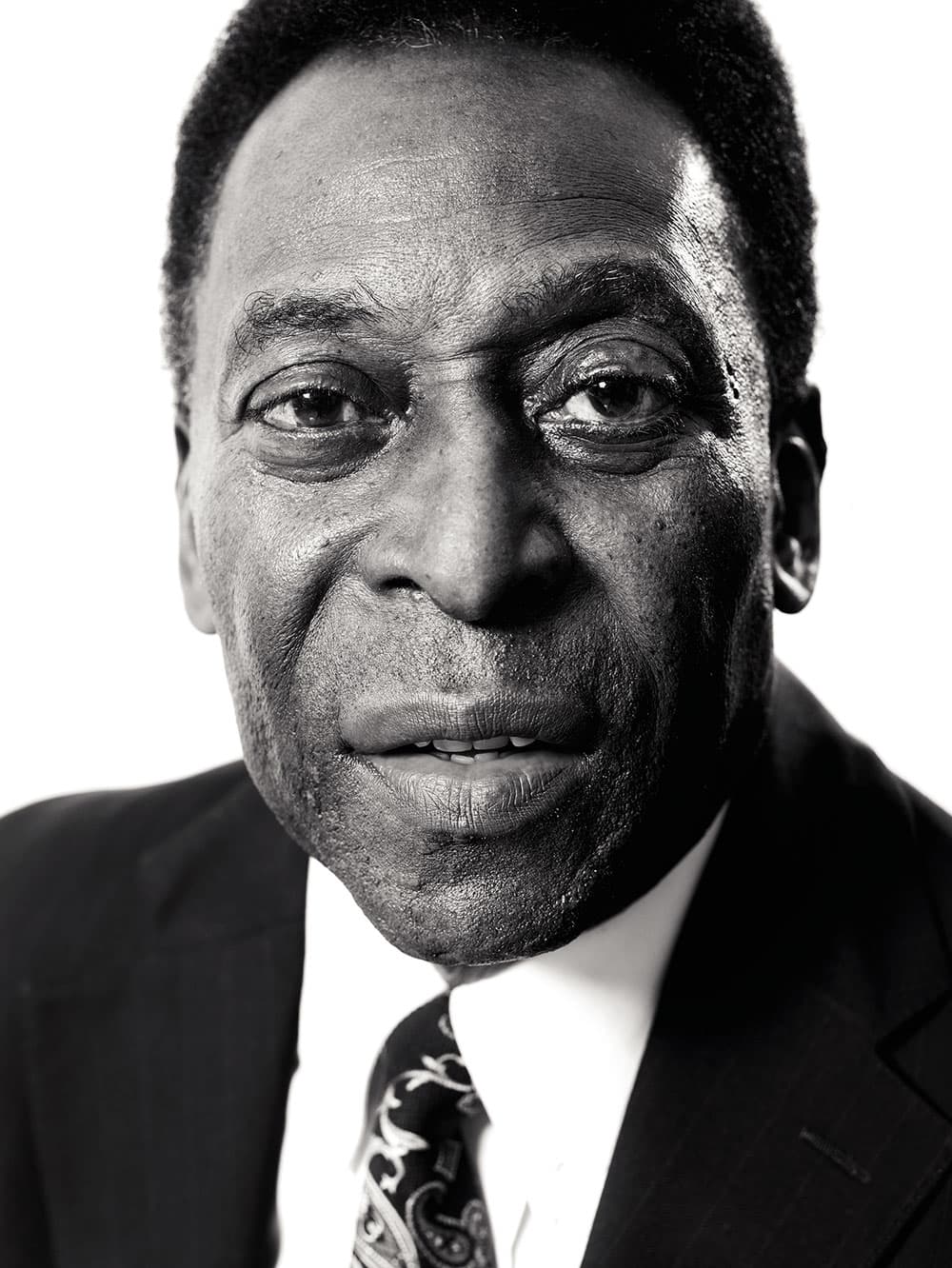
He admits, “Once it was green-lit by ESPN, they wanted the whole thing done like that [immediately]. When they gave us the money, we had about 40% of the players signed up and we were sh***ing ourselves. They had given us this money to deliver the entire thing and we didn’t have all the players signed up, so it was nerve-wracking.”
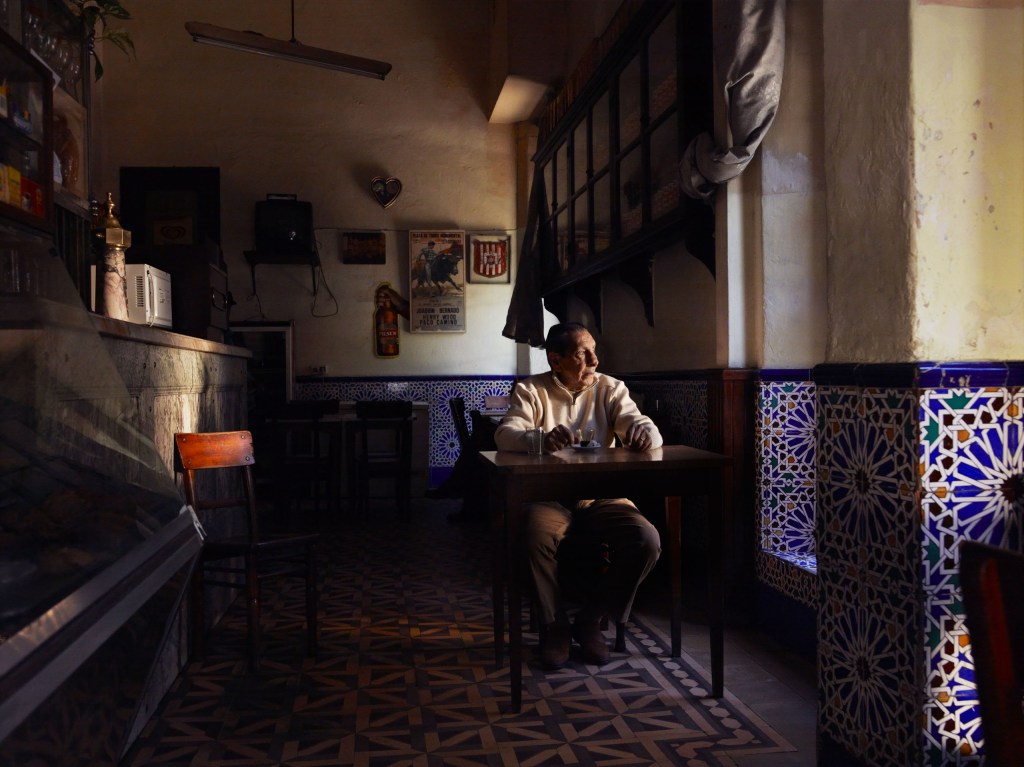
In 2009, with the players finally all on board, it was then a case of arranging shoots around the world, which had to include both filmed interviews and portrait sessions for stills. Donald reveals, “I shot the whole thing on a Hasselblad 503 with Phase One P45 and P65+ backs, but you had to crank it. People wondered why you were doing that if it was digital, because that usually winds on the film, but it also cocks the shutter. When somebody takes your photograph with a Hasselblad you know you’re having your photograph taken and it slightly changes the atmosphere in the room which, to me, really makes a difference.”
He continues, “I just used battery lights initially – the big, heavy battery packs – but they just weren’t practical to fly around with, so we used little Quantum ones. You couldn’t light a room with them but you could use them for portraits – we just used a couple of heads.”
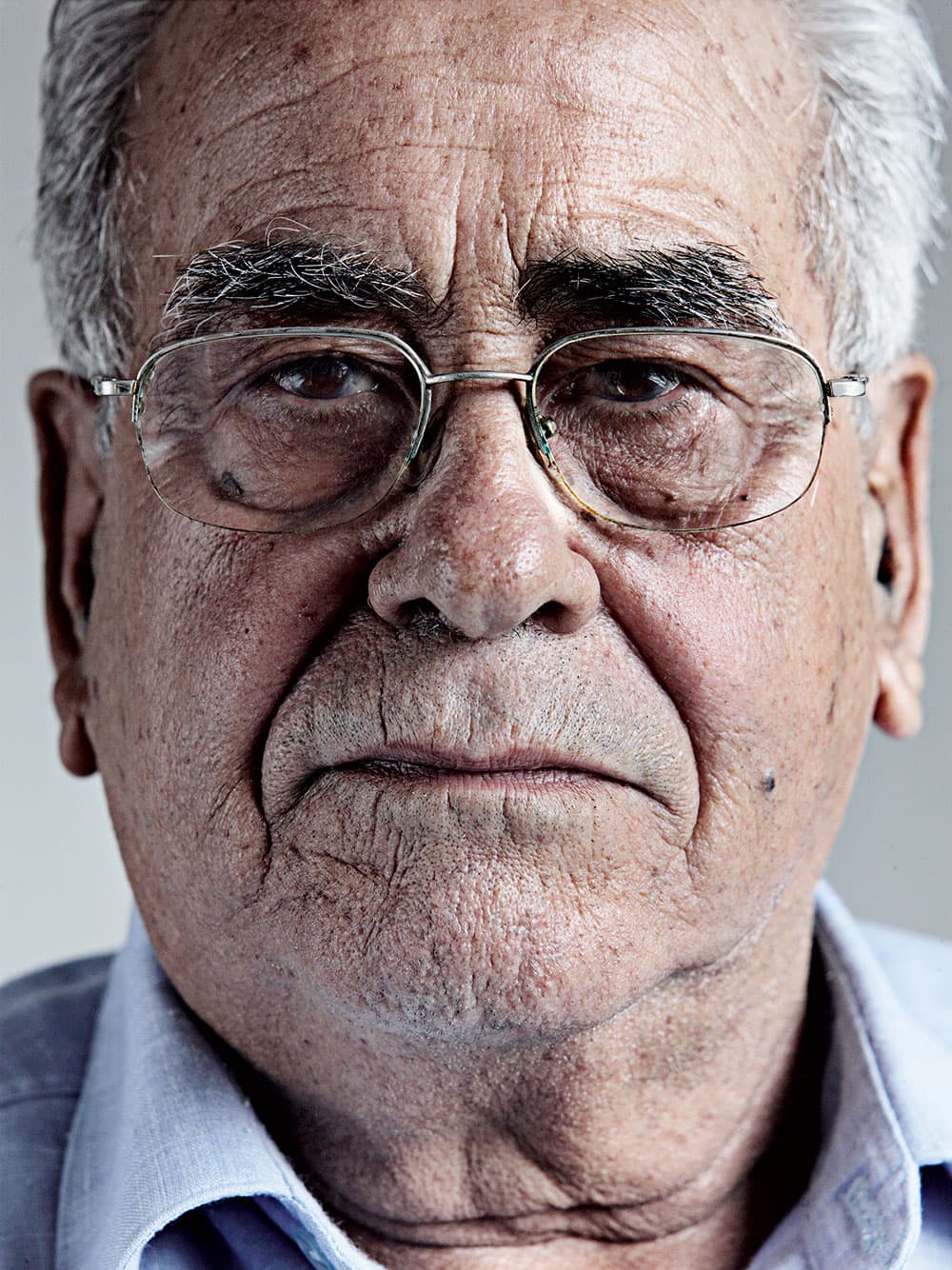
Donald shot with some Hasselblad V System lenses and admits, “I never use what people describe as ‘portrait lenses’; never have done. So, it would tend to have been an 80mm, which translates to a 50mm [lens in 35mm format], and a 45mm, which I think is about 28mm, for the wider context shots.”
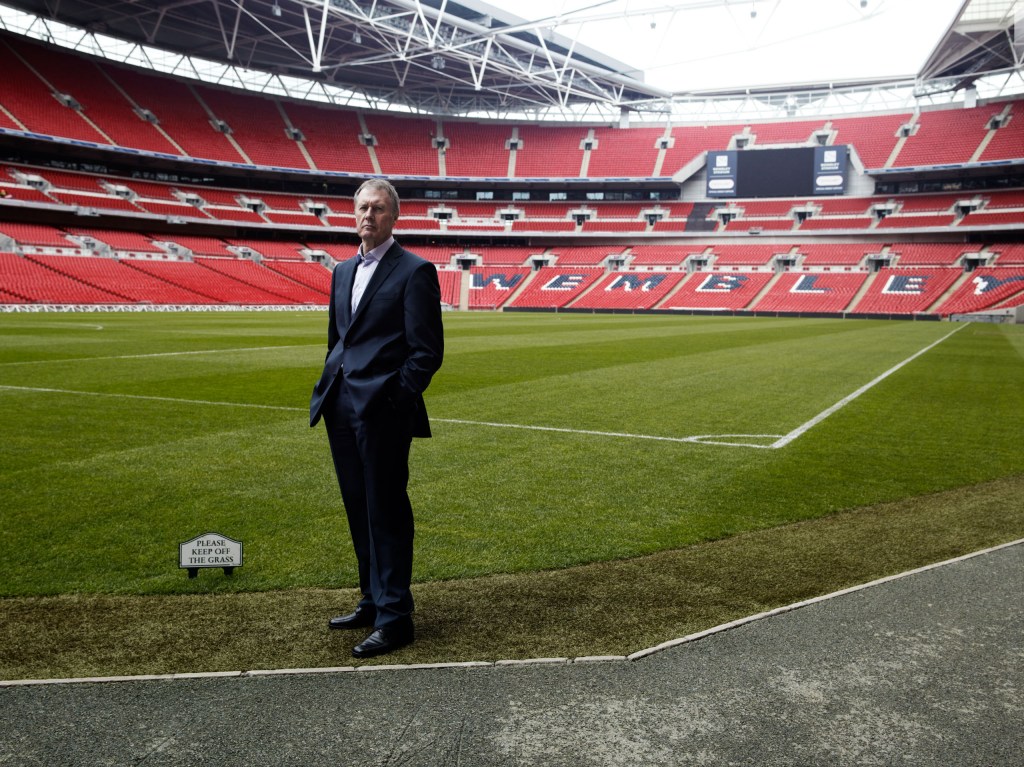
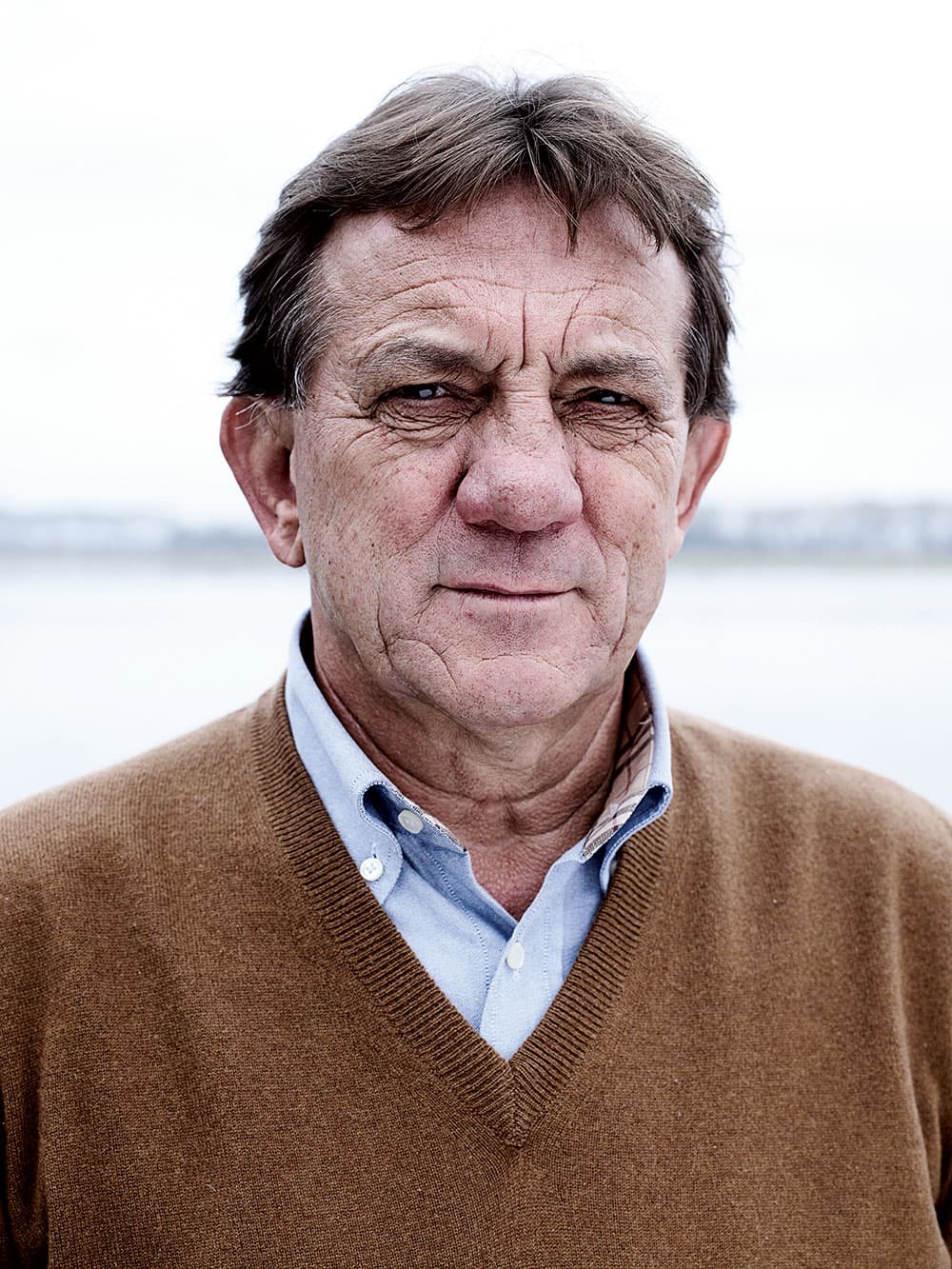
He adds, “The one thing I was very conscious of the whole time was to make sure, because I always had the book in the back of my mind, that we had the options for both tight and wide shots. Photographically, I wanted it to have a very consistent feel. I think the book works, but, for me, in an ideal world they would all have been either tight portraits or portraits with the context; like Carlos Alberto in the Maracanã or Geoff Hurst in the room he stayed in Hendon Hall the night before the 1966 World Cup™ Final. But some of them gave us a day and some of them only gave us 20 minutes. So, in some instances, you just get what you can.”
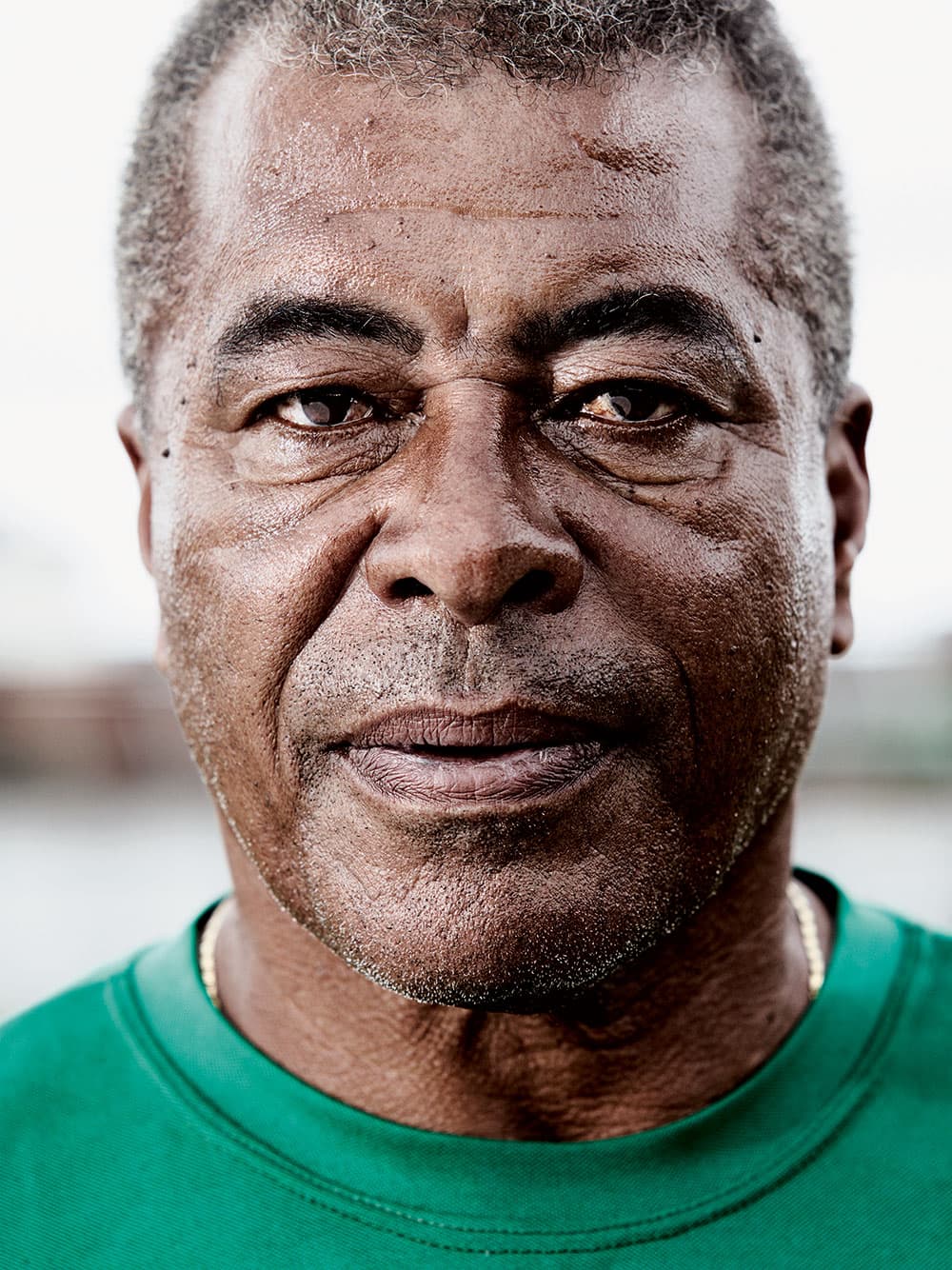
Stories from the shoots
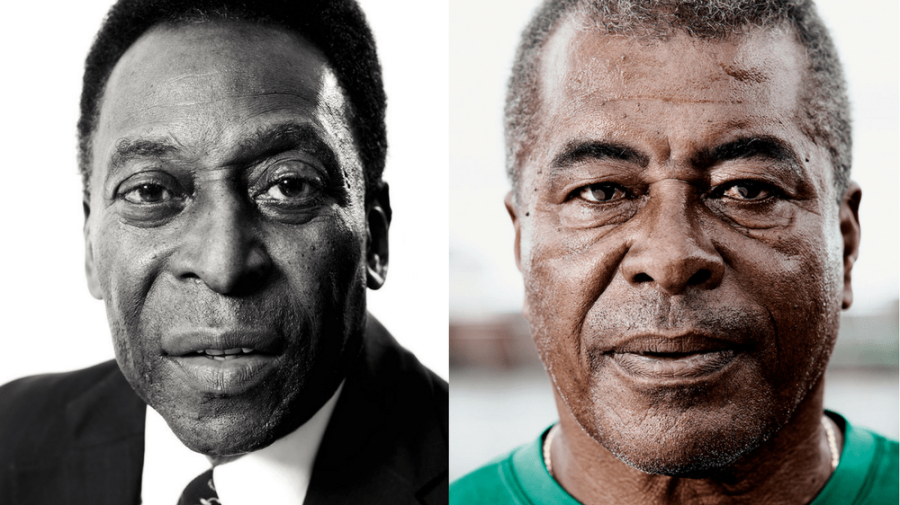
Unsurprisingly, the shoots had more than their fair share of behind the scenes stories. For example, during a shoot with Brazil’s Jairzinho in Rio’s Manguinhos favela, known locally as the ‘Gaza Strip’, unbeknownst to Donald a local hood had pulled a gun on his Brazilian producer.
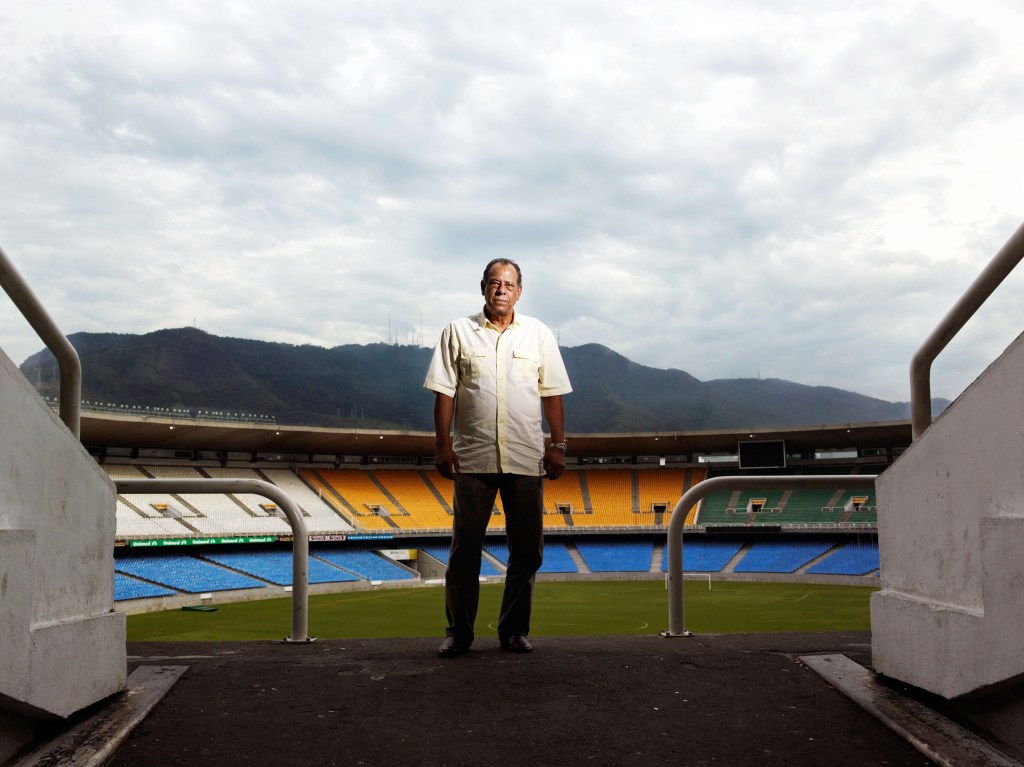
A more heartwarming story from Brazil came courtesy of the late Carlos Alberto. Donald reveals, “Whenever you see those endless pantheons of the greatest goal ever scored in a World Cup™ Final number one is always Carlos Alberto’s. When we gave him his money at the end of the shoot, he didn’t know why we were giving him money. He wasn’t expecting any and didn’t want any. At the end of the shoot our truck was at the other side of the [Maracanã] stadium and his mate had come down to the stadium to give him a lift home in a white van. So the crew, Carlos Alberto and his mate got in the van and he drove us round the stadium to our car. [If there was] a more self-deprecating human being… I just don’t know.”
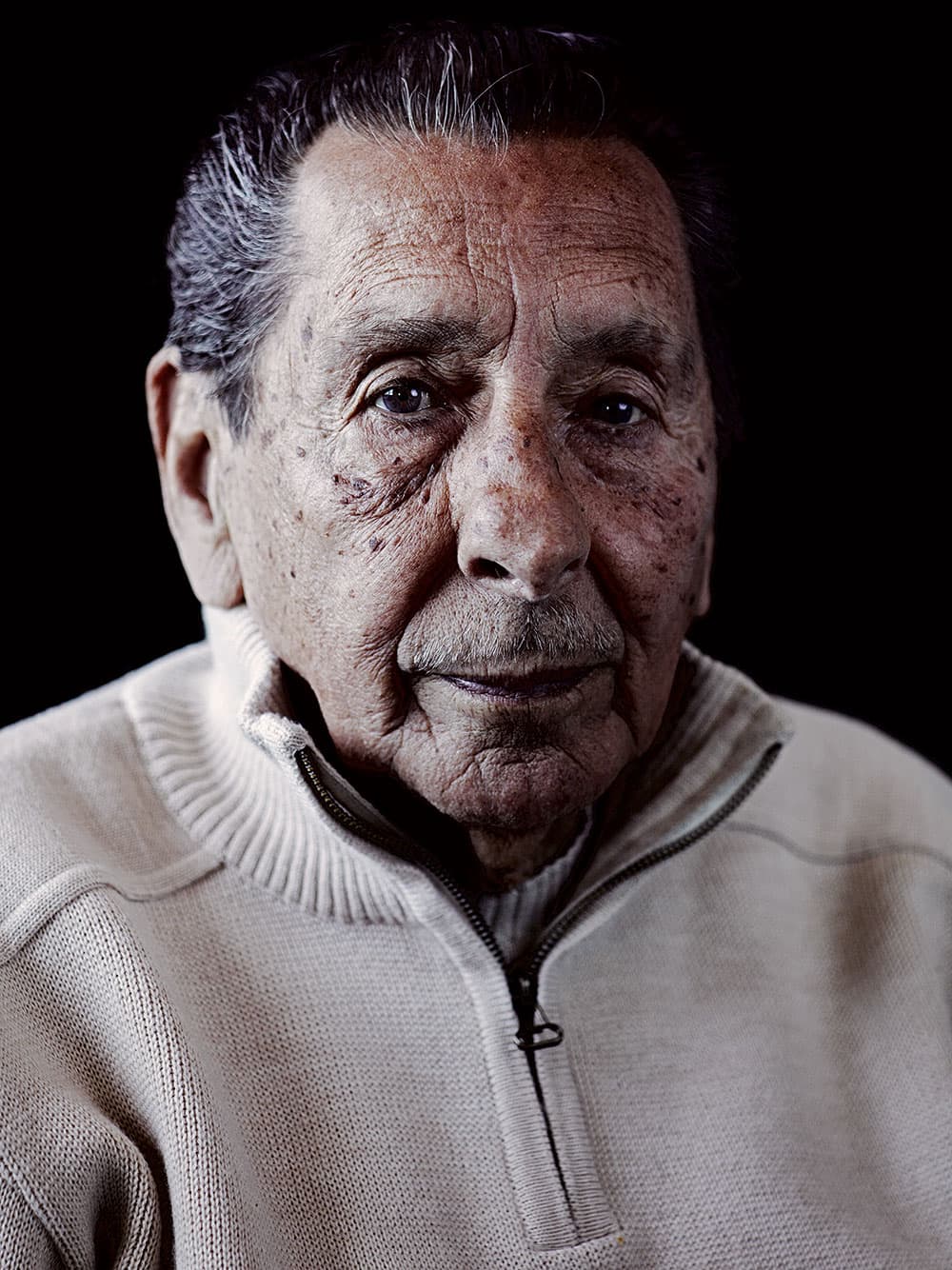
Similar fascinating tales pepper GOAL! and, despite their sporting achievements, Donald notes, “With all of them, none of them had any swagger – they all thought they were blessed to have found themselves in a position in front of goal and were just lucky to have been able to deliver.”
The shoots were all finished in 2015 and by then included Mario Götze of Germany, who scored the only goal in the 2014 World Cup™ Final. Donald did the book’s picture edit with Steve Macleod, creative director of the pro lab Metro Imaging, which also prints for the likes of Mario Testino, David Bailey and Terry O’Neill.
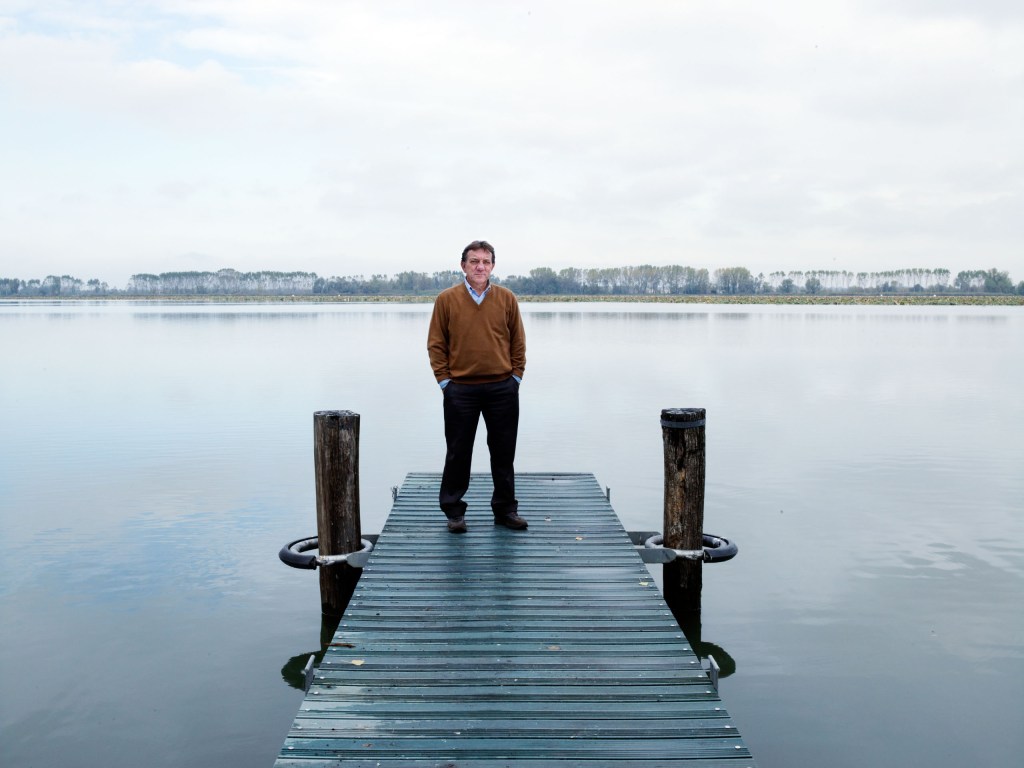
Donald explains, “Initially all the post was done in Phase One and then in Photoshop. The only reason I did that was I think Phase One is amazing but historically Photoshop is my language. I learnt how to do Photoshop sitting over the shoulder of people who do it for me and asking a million stupid questions. It’s a means to an end – I derive no pleasure from it whatsoever and I treat it as a digital darkroom.”
FIFA involvement
GOAL! became FIFA’s official book for the 2018 World Cup™, as Donald explains, “FIFA are right behind it because this book is everything that’s good about the World Cup™. It’s about the legacy, the heritage and the magic of the World Cup™.”
He concludes, “To my mind, it’s not a photography book – it’s a sports book with some brilliant photographs in it. It’s not a football book; it’s a book about people that have done something amazing. We think, ‘Oh my God, these people are fabulous and they live in this ‘golden world’,’ but they’re sort of normal people who happen to be very, very good at a certain sport and they find themselves in this moment that has changed their lives beyond recognition. To have some tiny insight into that is amazing.”
Born in Belfast, Northern Ireland, Michael Donald is an award-winning commercial and celebrity photographer and filmmaker. His work has featured in publications such as the Sunday Times, the Telegraph, the Observer and the Guardian, and has been exhibited in Berlin, Los Angeles, Paris, London, Belfast and many other cities. His celebrity portraits have included the Rolling Stones, Leonard Cohen, Van Morrison, Martin Scorsese, Carl Lewis and Jilly Cooper. To find out more, visit www.michaeldonald.com.
GOAL! by Michael Donald (Hamlyn, ISBN 9780600635086) features photographs and interviews with all of the living goalscorers from FIFA World Cup™ Finals. It’s currently out of print, but you can find it online and in second-hand stores.
Related reading:
- What are the best cameras for action and sports photography? Top cameras for speed
- See the best sport photographs from World Sports Photography Awards
- Gerry Cranham on his legendary sports photography career
Do you want to win some great prizes for your photography? Enter your photos in our International Amateur Photographer of the Year competition. Free entry for photographers aged 13-21.
Follow AP on Facebook, Instagram, YouTube, TikTok and Irys.