Mention the name Ilford and you think of film and printing papers. In those fields, Ilford once stood shoulder-to-shoulder with Kodak. But the Ilford name also appeared on a small but select range of cameras, renowned among professionals and amateurs alike. Ilford, however, didn’t make the cameras. Some were straightforward rebadged versions of other companies’ products. Several were commissioned by Ilford from outside designers, then built by independent engineering companies. But whatever their origins, the Ilford name on a camera offered guaranteed quality, regular innovation and inevitable ease of use. Here’s a selection of the company’s best-known cameras.
The Ilford Magazine Hand Camera
Alfred Harman was an English photography pioneer who began making photographic dry plates in 1879 at his Britannia Works Company in Ilford, then a village in Essex, these days part of a Greater London Borough. Then, in 1899, Harman took on a camera offered to him by its designers and patentees, Arthur Charles Smith and Albert Arthur Smith. He called it the Ilford Magazine Hand Camera, it was made in Germany and it went on sale in 1902. Which was when Harman changed the company name to Ilford Ltd.
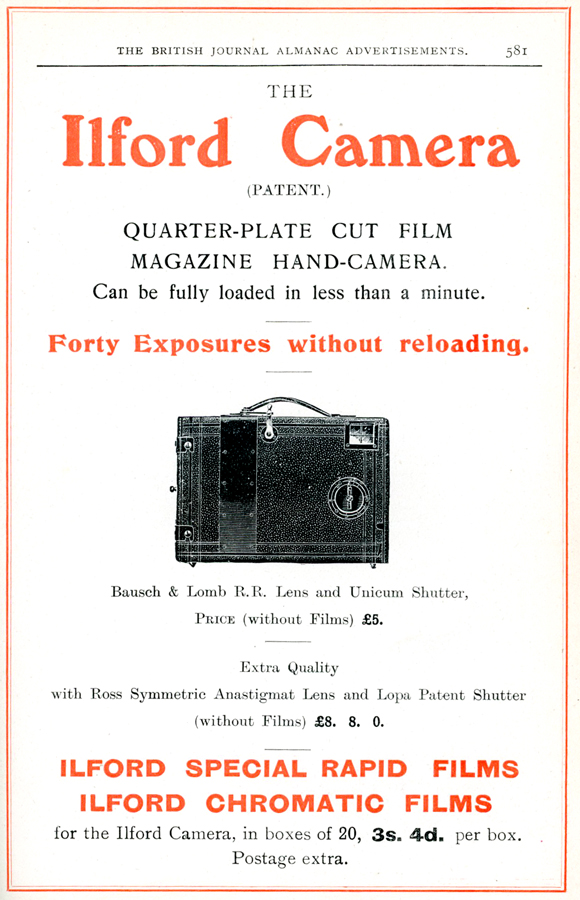
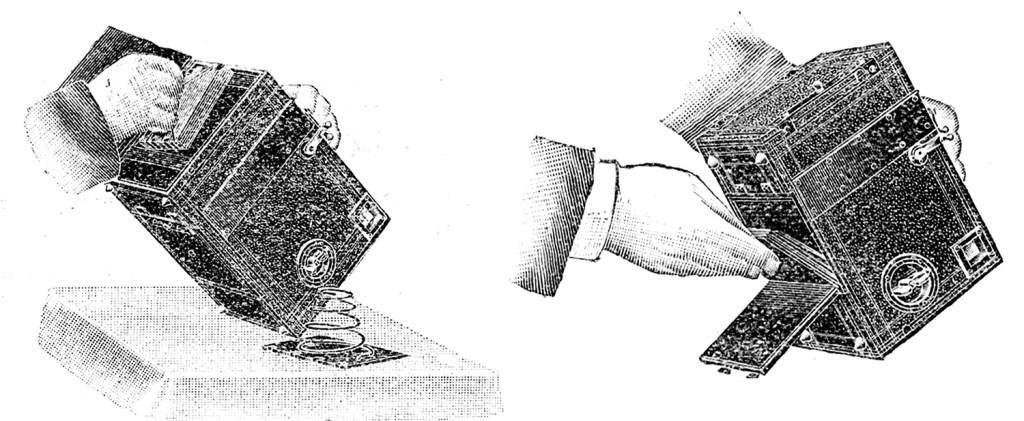
The camera was box shaped, and took 40 sheets of quarter plate size (4¼x3¼in) cut film at a single loading, which needed to be loaded and unloaded in a darkroom. Like similar so-called magazine cameras of around this time, an internal mechanism, operated from outside the body, allowed individual sheets of film to be moved and stored after exposure as a new piece of film was positioned ready for the next picture. The camera was sold with either a Bausch & Lomb or a better quality Ross Anastigmat lens.
- Original cost: £5 or £8 8s (£8.40) according to the lens. Value now: £60-100
Ilford Witness
Before World War II, Britain had never made a 35mm camera. Following the war, Ilford stepped up to be the first. The camera was designed by two Jewish refugees from Germany, Robert Sternberg and Werner Julius Rothchild, who had previously worked for Leitz and Zeiss Ikon respectively. Their camera adopted and combined the best features from their previous employers’ designs. It was called the Ilford Witness.
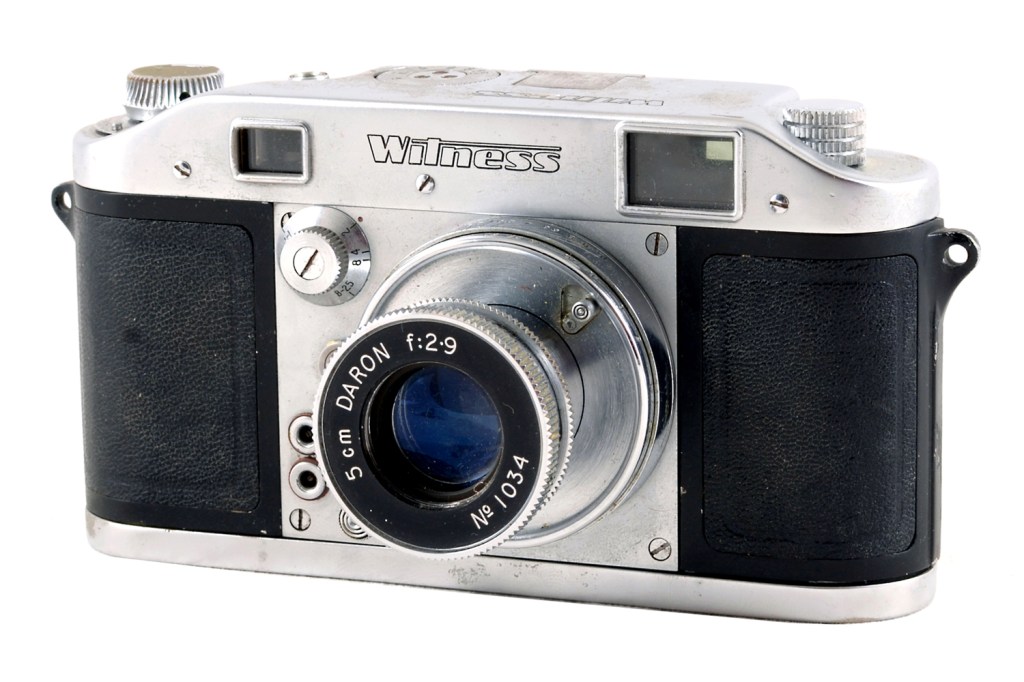
The Witness was a coincident image coupled rangefinder camera with an extra-long rangefinder base for more accurate focusing. The body was sleekly designed with a dust cover that slid into place over the accessory shoe flush with the top plate when not in use. A combination of screw and bayonet lens mount was taken from Leica and Contax designs. The screw part of the mount used a 39mm thread so that it accepted Leica lenses, but three slots cut into the thread meant that Witness lenses could be removed and attached quickly with a bayonet movement. The focal plane shutter was speeded 1-1/1,000sec, the slow speeds from 1/25sec down operated by a separate control on the front of the body, similar to the Leica.
Camera production was initially carried out at Rothchild’s own company, Northern Scientific Equipment Ltd in Lancashire, where the camera’s first lens, a 5cm f/2.9 Daron, was also produced. Once production got going, manufacture was shifted to Peto Scott Electrical Instruments, a television and radio maker in Surrey, and the lens was changed to a 2in f/1.9 Dallmeyer Super-Six.
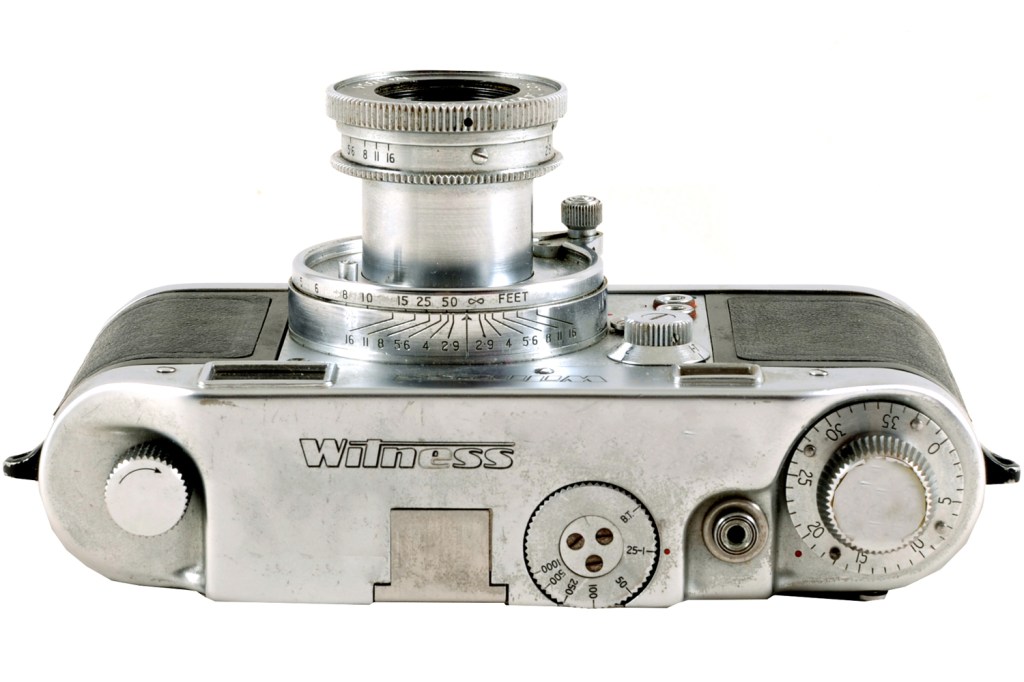
Although designed in 1947, it was 1951 before a working prototype was produced and the camera didn’t hit the market until 1953. Less than 350 were made and, even before it first appeared, Ilford had turned its attention to a more practical and less complicated 35mm camera designed to appeal to a larger, and less sophisticated, audience.
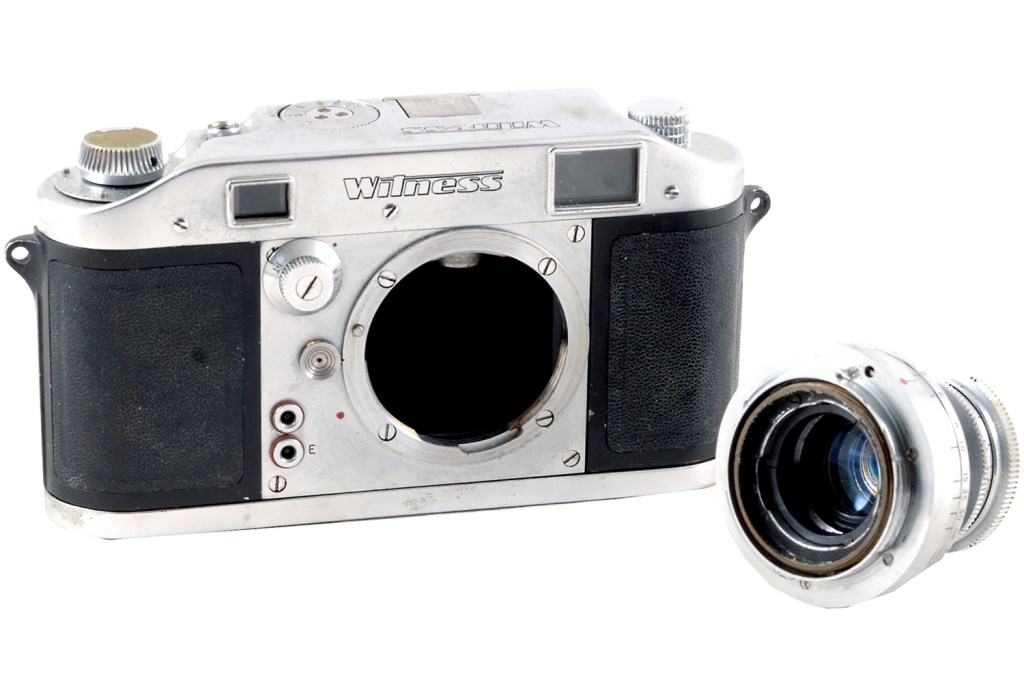
- Original cost: £121 16s 8d (about £121.83). Value now: £4,000-10,000, depending on condition and lens.
Ilford Advocate and variants
Although designed after the Witness, the Advocate reached the market four years before in 1949, making it the first British 35mm camera. It was made, under contract from Ilford, by Kennedy Instruments whose works were at Balham in South London.
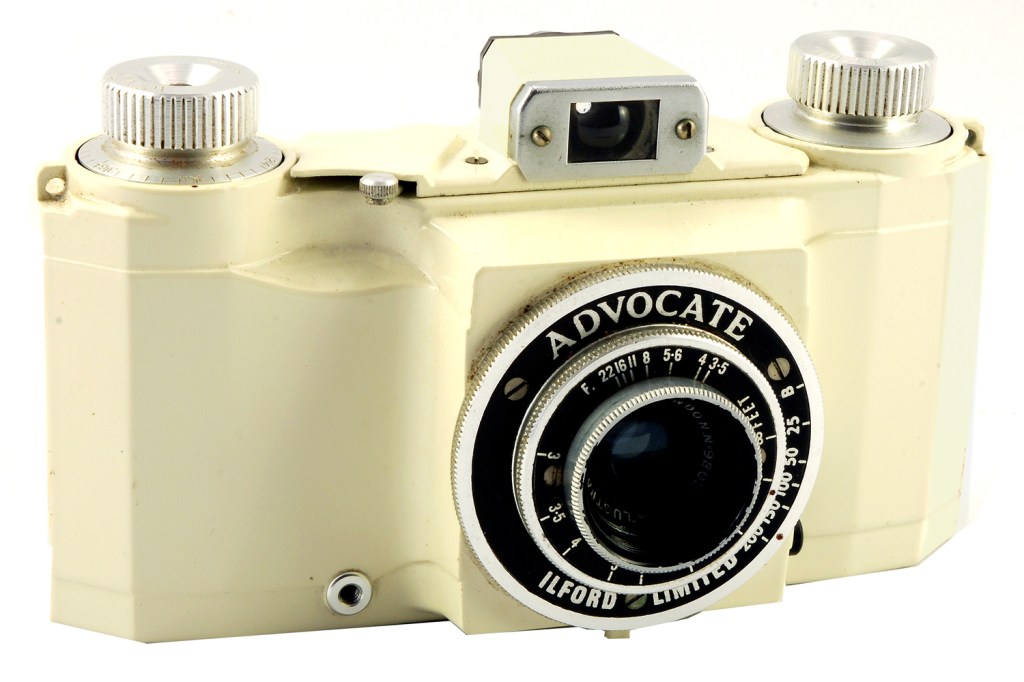
This was a 35mm camera with a die-cast aluminium silicon body in an attractive ivory colour. The first model used a Dallmeyer f/4.5 lens, but when the Advocate II was launched with a synchronised shutter in 1953, some now rarer models were equipped with Wray Lustrar f/3.5 lenses. Rarest of all is the Advocate with an f/3.5 Ross lens. Apart from these differences, the basic specification of all Advocate models is much the same. Lenses were of 35mm focal lengths, which gave a wide-angle, rather than a standard view on 35mm film. When, at the end of shooting a 35mm cassette the film needed to be rewound the mechanism was freed, not by pressing the usual button on the base of the body, but by depressing the film wind knob. The shutter, speeded 1/25–1/200sec, was released by an unusually-placed lever at the front of the top plate, and the cable release connection was in an equally unusual position at the base of the front of the body to one side of the lens.
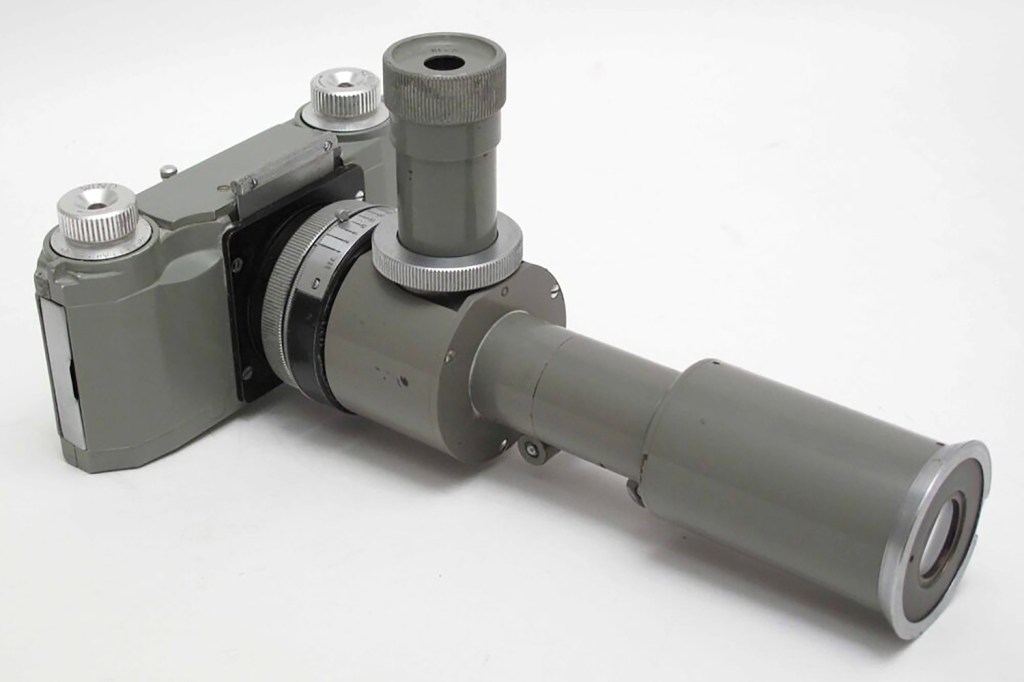
The Advocate was also adapted by other manufacturers to make specialised models. Among these, the London firm of R.J. Beck took the body, removed the lens and replaced it with a threaded mount that accepted a microscope adapter. This contained its own shutter and a beam splitter that directed light to the film as well as to a periscope type reflex viewfinder. Another variation, this time made by Kennedy instruments, used a huge and very fast Wray f/1 lens, made to fit to, and photograph the screen of, an oscilloscope. Full frame and half frame versions were produced. A very few now super-rare Advocates with all-black bodies were also made by Kennedy Instruments employees for their own use. Kennedy Instruments became a wholly owned subsidiary of Ilford Ltd in 1958.
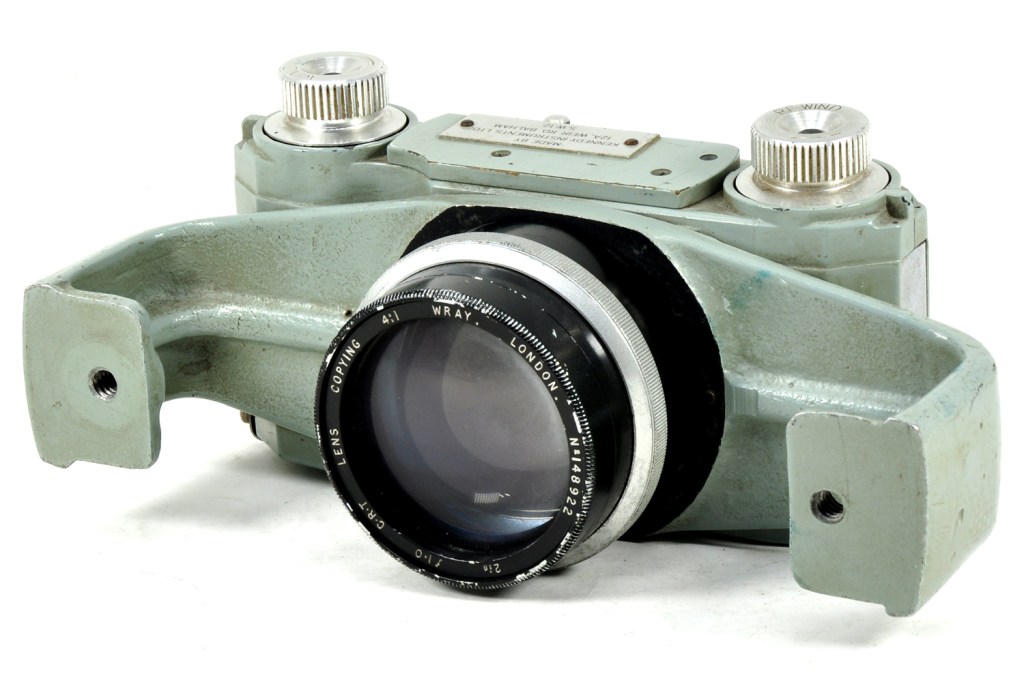
- Original cost: £26 17s 6d (£26.87½). Value now: £150-250 – more with Wray lens
Ilford Craftsman
In the same year that the Advocate was launched, Ilford also introduced the nearest it would get to a twin lens reflex (TLR). Although looking a lot like a true TLR, the taking and viewing lenses were not linked for focusing, the upper one being there merely to reflect its image to a bright lens-type viewfinder under a hood on top of the body. The lower lens focused down to 4ft and offered only two apertures of f/9 and f/18. Shutter speeds were limited to 1/25sec and 1/75sec.
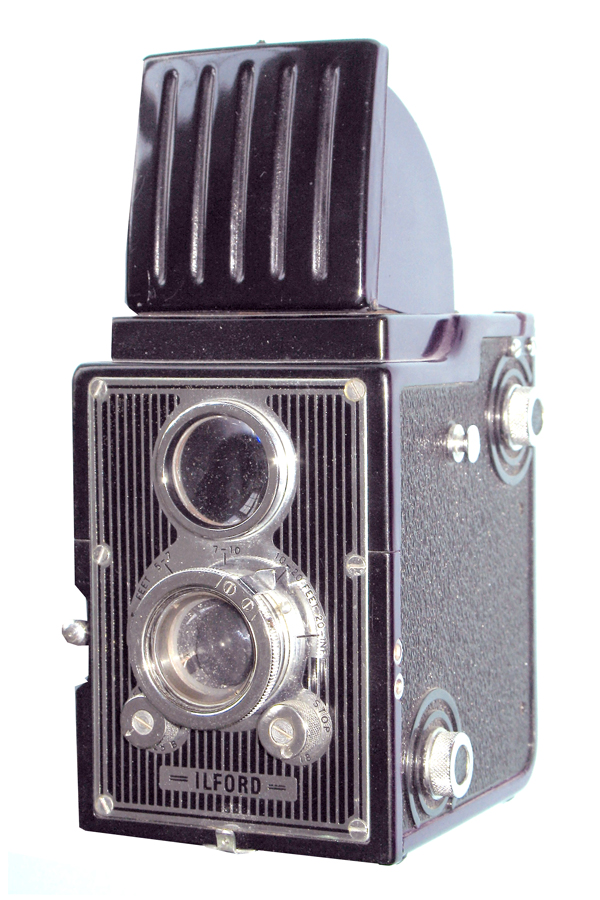
Despite its meagre specification, the Craftsman was a handsome camera, made of shock-resistant plastic grained to look like leather and with an attractive art deco styled metal faceplate. It accepted both 120 and 620 size roll films to produce 12 6x6cm pictures. Evidence suggests that this camera was actually made by Ilford.
- Original cost: £7 10s 6d (£7.52½), Value now: £20-30
Ilford Sportsman and Sportsmaster
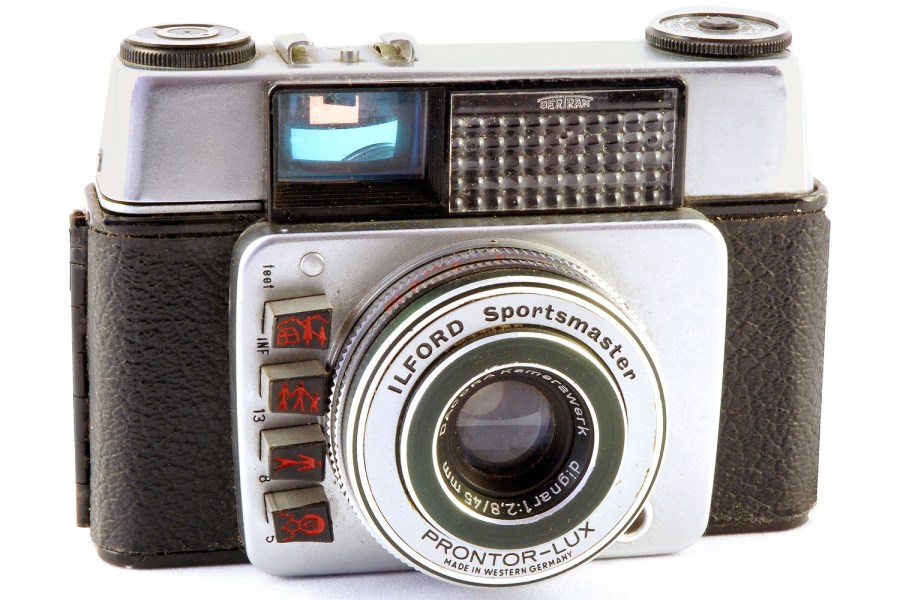
Back in the 1950s, many first-time amateur photographers aspired to owning an Ilford Sportsman because, unlike the snapshot models that had probably whetted their early appetites for photography, the Sportsman looked and behaved like a ‘proper’ camera. There was a range of models made for Ilford by Dacora in Germany, all rebadged versions of that company’s Dignette cameras.
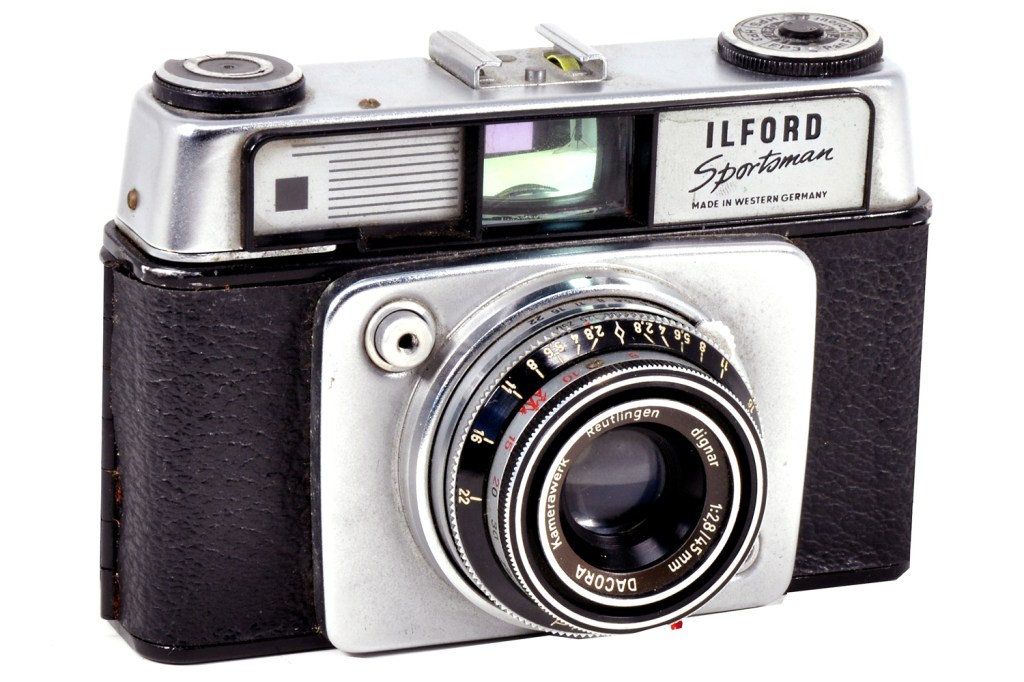
The original Sportsman, launched in 1957 used a Dignar 45mm f/3.5 lens that focused down to 3.3ft (an imperial translation of the Dignar’s metric 1m), a shutter synchronised for flash with speeds of 1/50-1/200sec and a simple direct vision viewfinder. In the years ahead, the Sportsman’s specification was improved in a range of models that added coupled rangefinders before building in Selenium cell meters with match needle metering.
- Original cost (first model): £13 17s 4d (about £17.87), Value now: £10-25 (depending on model)
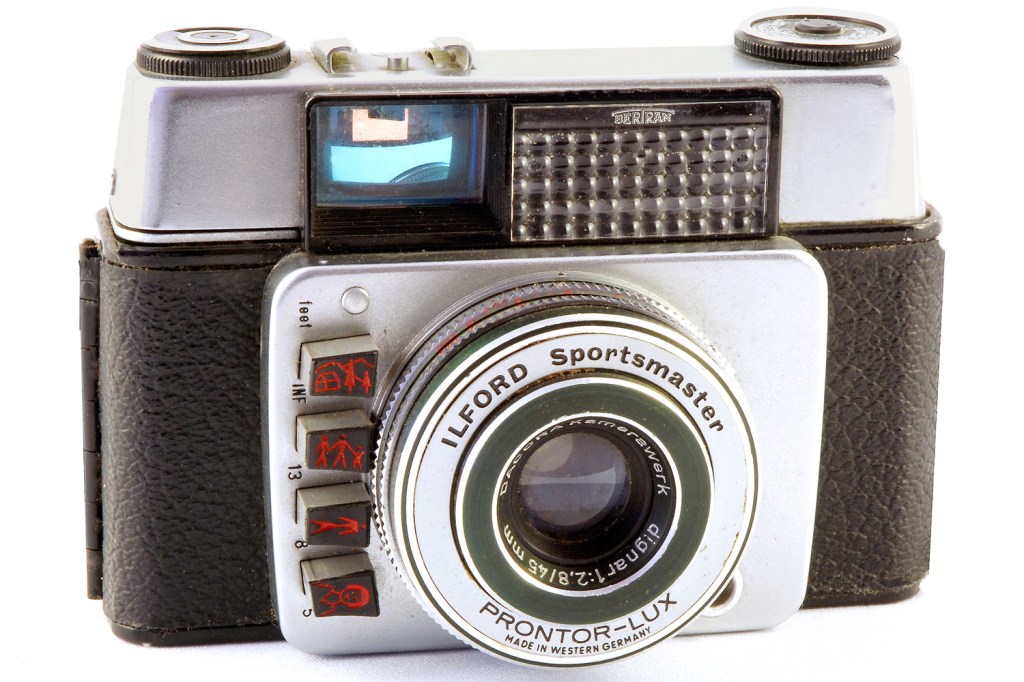
In 1961, the Sportsmaster arrived. As well as a coupled rangefinder and built-in meter, the Sportsmaster’s curious feature was having four shutter release buttons coupled to the lens’s focusing mechanism. At the moment of exposure, each button selected an appropriate focusing distance for different subjects: landscapes, infinity; groups, 13ft; full length portraits, 8ft; and head and shoulders portraits, 5ft.
- Original cost: £28 9s 8d (about £29.48). Value now: £10-20
Envoy cameras
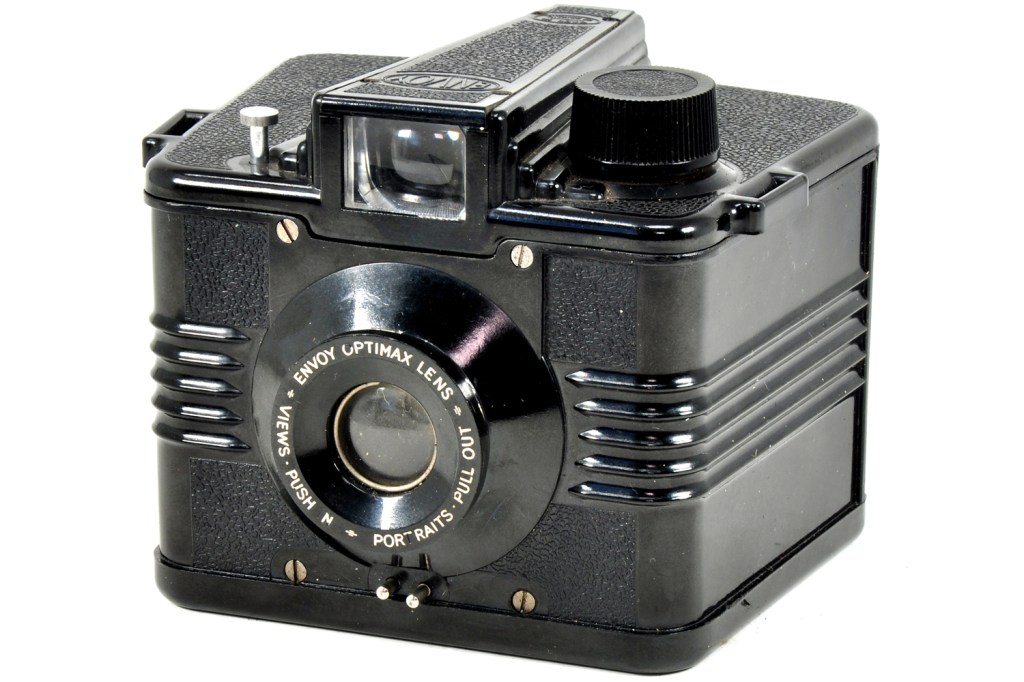
Envoy cameras were made by Photo Developments Ltd in Birmingham. Introduced in 1953, the Ilford Envoy was made of Bakelite in a kind of streamlined box camera style to take 120 or 620 size roll film. The shutter speed and aperture were both fixed and the only form of control was the focusing with instructions around the lens that stated, ‘Views, push in – portraits, pull out.’ In other words, pulling the lens out a little way from the body allowed focus down to 4ft, while leaving it pushed in gave focus to infinity. It shot eight pictures 6x9cm.
- Original cost: £1 19s 9d (about £1.99). Value now: £5-10
The other camera from Photo Developments was the Envoy Wide-Angle, made in 1950. Although never identified as an Ilford camera, it was sold by the company and listed in its catalogues.
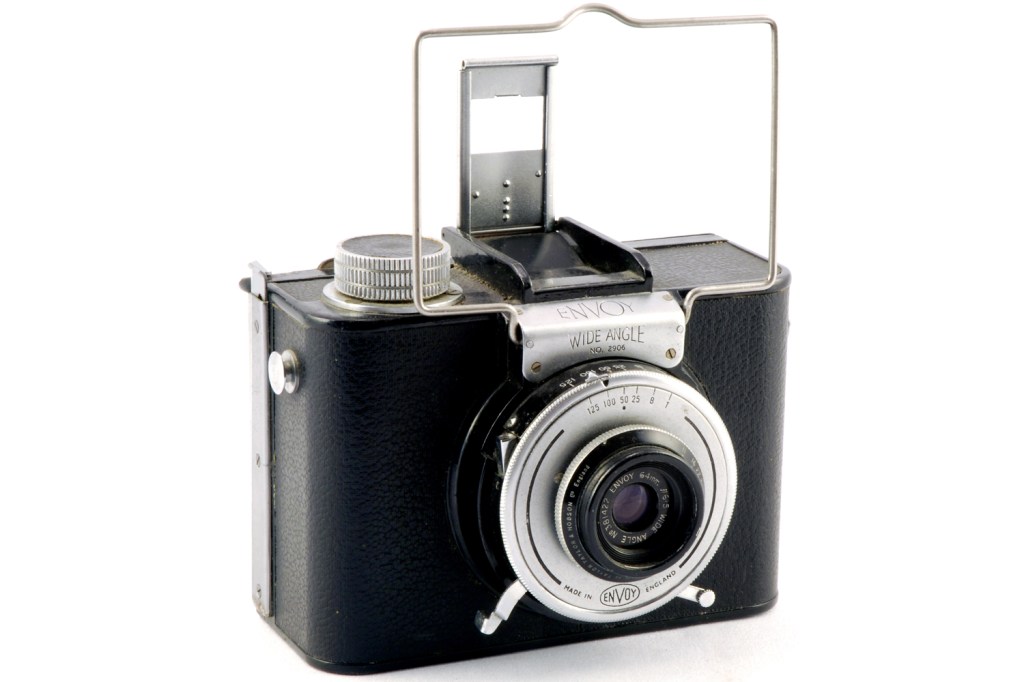
Based on the principle of putting a much wider than normal focal length lens on a roll film camera, the Envoy Wide-Angle produced pictures with an 82° angle of view. The lens was an Envoy 64mm f/6.5 and, on the basic model, shutter speeds were from 1/25–1/125sec. Two other models were available with better specified shutters. The camera took eight 6x9cm pictures on 120 size film, but had a special back that allowed the use of individual sheets of cut film. Although the viewfinder consisted of no more than a wire frame, it incorporated a parallax adjustment on the rear sight.
- Original cost (basic model): £33 4s 9d (about £33.24). Value now: £40-60
Ilford Monorail cameras
Now we enter the world of professional photography and monorail cameras. The monorail is possibly the simplest type of camera design, consisting of no more than a lens and shutter mounted on a front panel, linked by bellows to a film holder on a rear panel. The front and back panels move back and forth for focusing along a rail onto which they are locked into position. In some models the front and back panels can also slide and twist in ways that give the camera movements like rise, fall, shift, swing and tilt. Movements like these are used to manipulate specialised aspects of the image. In architectural photography, for example, shifting the lens vertically can help to record a tall building in its entirety without tilting the camera; in other scientific applications, camera movements might be used to bring multiple planes within a scene into simultaneous focus. (For those seeking a fuller explanation of such movements, try Googling ‘the Scheimpflug principle’.)
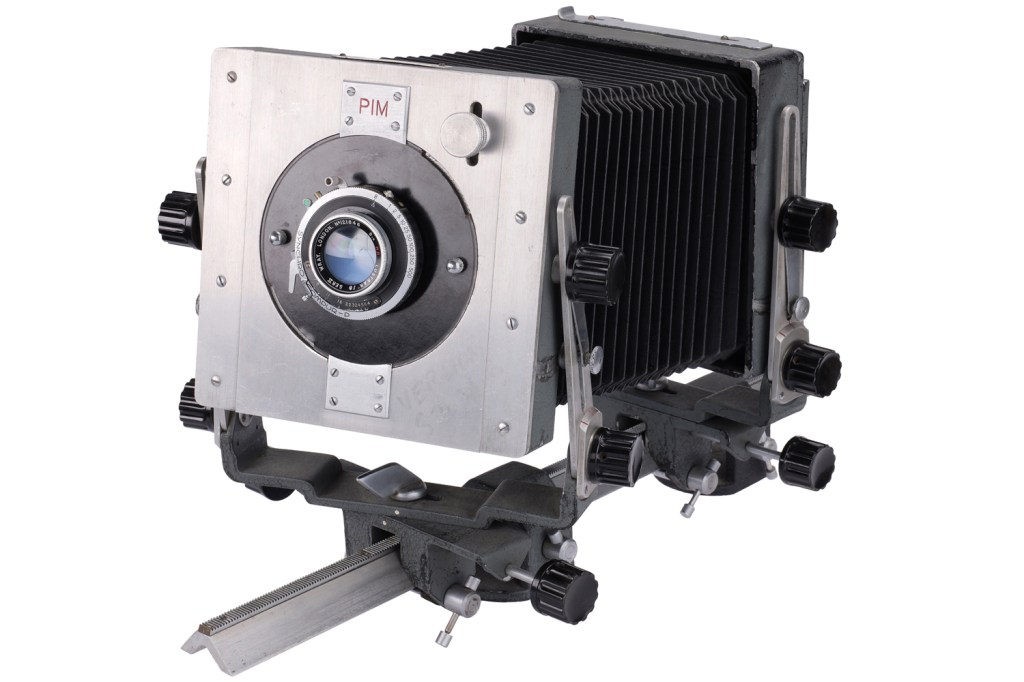
Traditionally such cameras were made for large format work, and the one advertised and sold by Ilford in 1953 was typical of the type, using 5x4in glass plates or sheet film. It was made for Ilford by the English engineering company Photographic Instrument Manufacturers (PIM) and was capable of required movements on both the front and back panels. Apart from the lens panel and locking knobs, the camera was built from an aluminium alloy that made it lighter and easier to use than some other monorail cameras.
- Original cost: £53. Value now: £112 (recent auction sale).
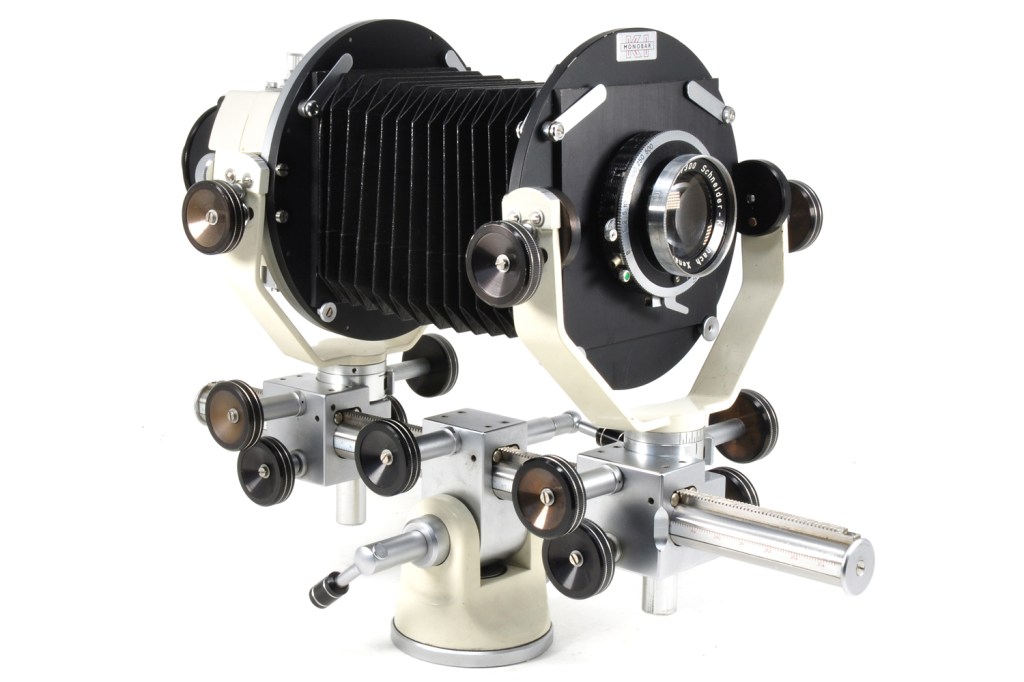
About this time, 35mm film was beginning to make headway in the professional world, particularly in the light of the quality that came with Kodachrome, unavailable in medium or larger formats. The problem was that monorail cameras invariably used large format film, and even if they were equipped with a roll film back it invariably took 120 size film for medium format images. So if work demanded the use of full camera movements, photographers were stuck with unwieldy monorail cameras and their attendant medium or large format films. What was needed was a small monorail camera made exclusively for 35mm. Enter the Ilford KI Monobar in 1954, designed by two medical photographers, Charles Engel and Dr Peter Hansell, and beautifully engineered for Ilford by Kennedy Instruments. Two models of the Monobar were sold.
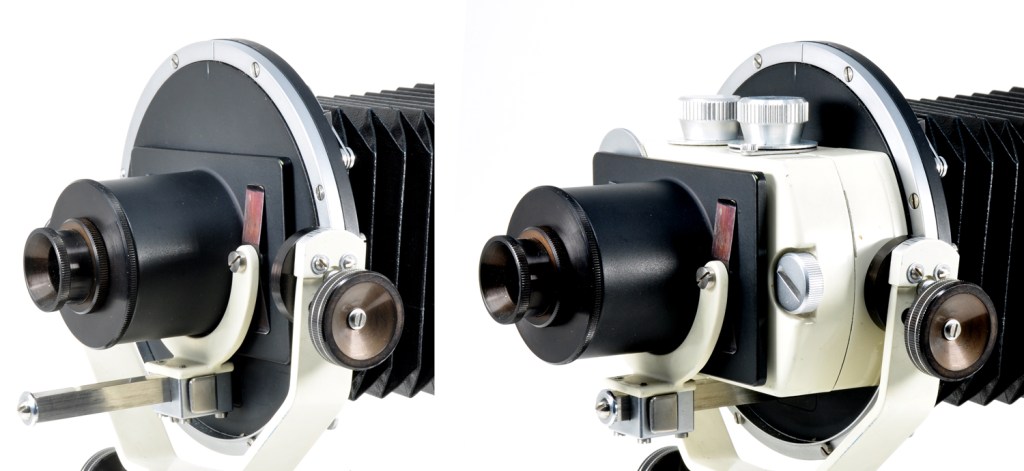
The first model, termed the Type U, held the front and back panels that supported the lens and film holder in U-shaped clamps made in a cream stove-enamelled finish similar to that of the Advocate camera body. A series of complicated knobs freed or locked the two panels in the required positions. Both allowed rise and fall over a range of 75mm, plus horizontal and vertical tilt or swing through 30°, calibrated in 10° and 5° increments. The two panels could be moved independently of each other along the rail, or locked together and moved simultaneously. At the front end, several lenses were available, but the camera was principally seen with Dallmeyer or Schneider lenses in Synchro Compur shutters speeded 1-1/500sec. The lens to film distance could be adjusted from 5cm to 27cm, catering for every type of subject from infinity-focused landscapes down to extremely close macrophotography.
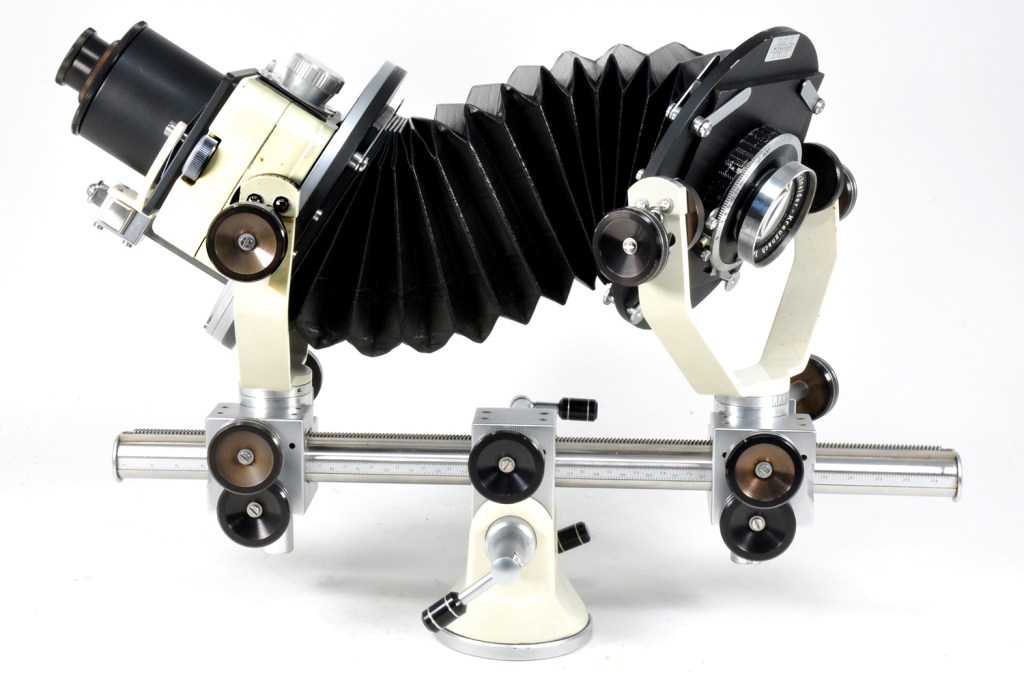
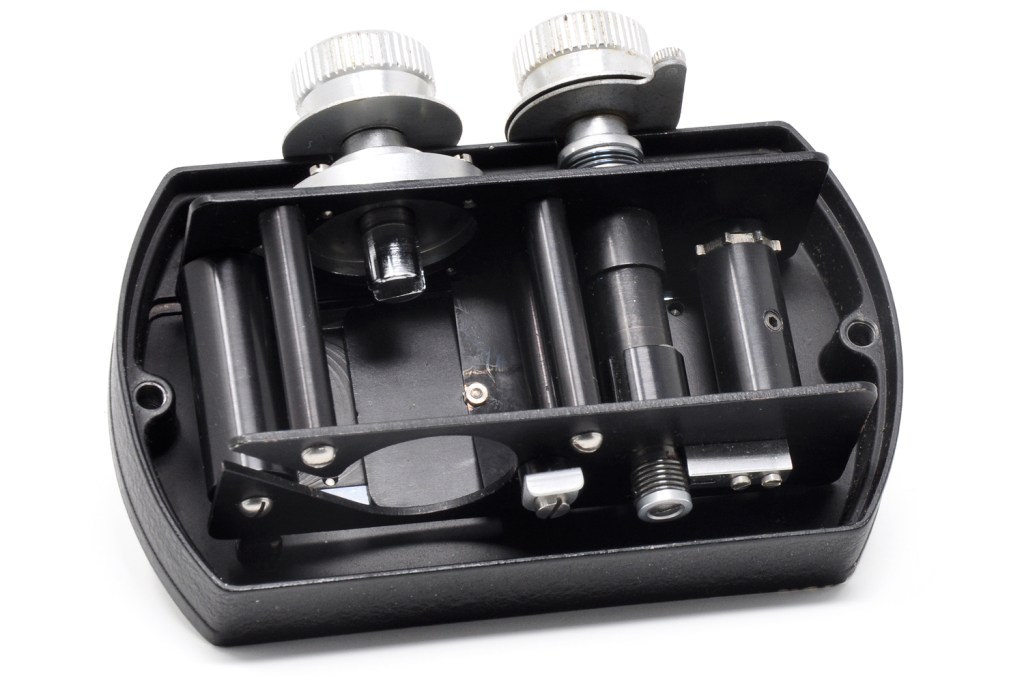
At the back end, a small, 24x36mm ground-glass screen covered by a magnifier was used to focus the image. When ready, the magnifier and screen were slid backwards along their own rail and a film back pre-loaded with 35mm was slotted into the film plane. A thumbwheel in the film back slid a mask in front of the film to prevent fogging when camera and back were separated and moved aside when the back was mounted on the camera. The rear panel with film back rotated through 90° for horizontal or vertical subjects. Accessories included a right-angle viewfinder attachment, bag-type bellows and a bulk film holder for loading up to 100ft of 35mm film.
- Original cost with Dallmeyer 2in f/3.5 lens: £209. Value now: £300-400
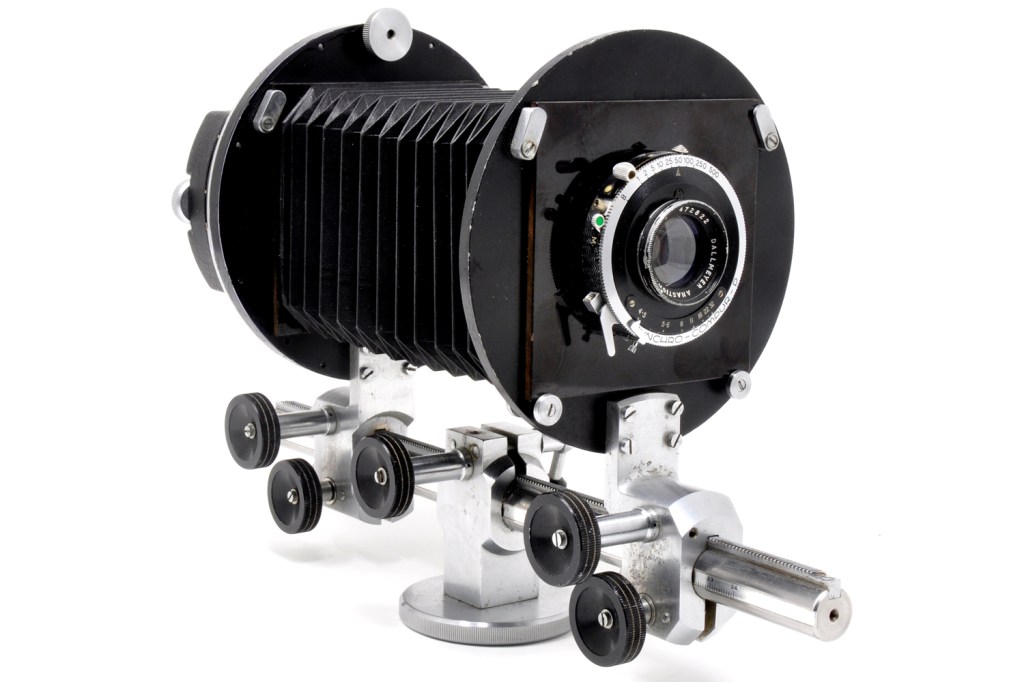
The second model of the Monobar, introduced in 1958, was termed the Type F. This was very similar in style to the Type U, involving the familiar front and back panels to hold the lens and film. Movement back and forth along the rail for focusing were the same, as was the film loading and focusing procedure. The difference was that the Type F did not provide the rise and fall, tilt and swing movements that made the Type U so versatile. The Type F, therefore, was perfect for those who required a less complicated camera but one that was perfect for close-up and macrophotography.
- Original cost with Dallmeyer 2in f/3.5 lens: £149. Value now: £150-250
Ilford cameras today
Over the years, Ilford went through changes of ownership until, in 2004, with the rise in popularity of digital cameras and the consequent decline in film sales, the company went into administration. A management buy-out, however, came to the rescue and the black and white division was relaunched under the name Harman Technology. The new name was in reference to the man who founded the company nearly 150 years ago, while the old Ilford brand is still seen alongside the new Harman name on cameras, film and printing paper.
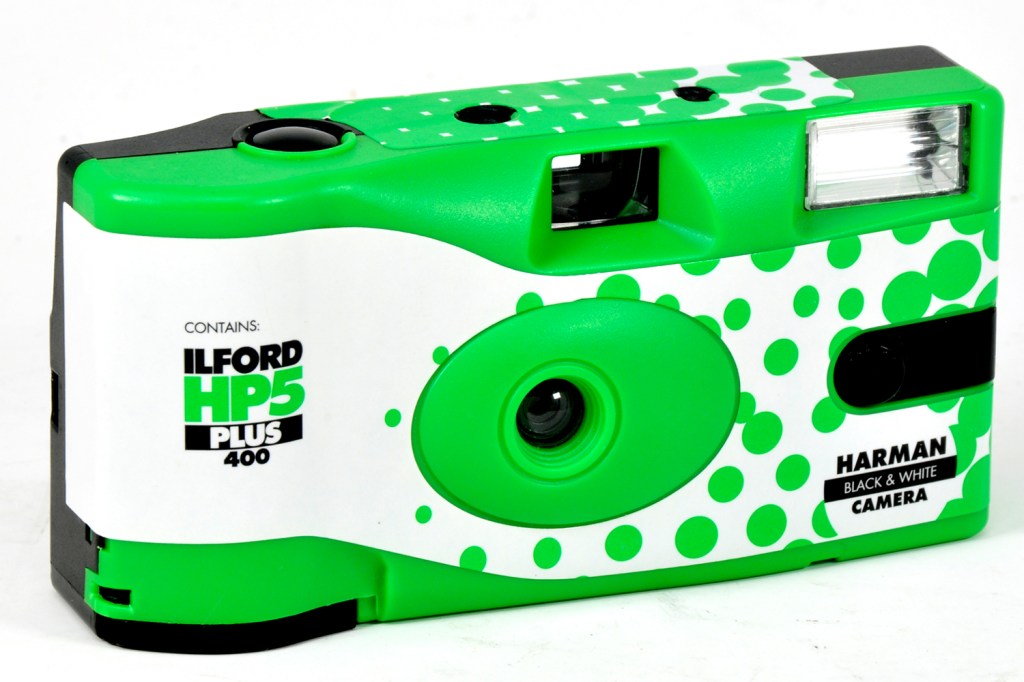
Today, single-use disposable film cameras alongside reusable models carry on the Ilford legend. It is, however, unlikely that those who buy one of these will realise the significance of the name Harman subtly displayed on the front of the camera. Still available for around £20.
Related reading
Follow AP on Facebook, Instagram, YouTube and TikTok.