Amateur Photographer verdict
The Flashback ONE35 V2 definitely is not for everyone, but it presents an enjoyable novelty for those who appreciate such things- Fun product
- Carry-everywhere camera
- Good battery life
- Has that Disposable Camera experience
- Can’t use flash outside
- Long process to download images
- DNG files can’t be read by Adobe software
- High price compared to alternative options
- Needs more than three film types
Flashback ONE35 V2 at a glance:
- $119 / £84.95
- 13MP, 1/4in, 3:4 aspect ratio sensor
- 28mm equivalent f/1.8 lens
- 1.87GB internal memory
- Shoots JPEG and DNG files
- Bluetooth, Wi-Fi and USB-C interface
- 405-shot battery
- 8 body designs
For a period of about 40 minutes in my late teens, I was almost quite cool and fashionable. I bought a very groovy coat from a ‘vintage’ shop which my friends thought was exceptionally hip, and made me feel like the king of Essex. When my father saw it though he laughed, and asked which bin I’d got ‘that old thing’ out of. He then regaled me with some long tale about being issued with such coats during his National Service, and how they didn’t keep the wind out when you were on the rifle ranges at Bicester in winter. Old people, I said to myself, just don’t get it.
There’s a chance young people might now see me as ‘old people’, so I’m careful to remind myself to ‘get it’ and not dismiss their ideas or wonder, even when what amazes them we have all seen before – records, film, flares, DM boots etc. When my friend’s twenty-something son showed me his new Flashback ONE35 V2 camera I was conscious not to say ‘which bin did you get that old thing out of?’ but to ask him about it and to find out why he was so pleased with it. I may have laughed when he told me the price ($119 / £84.95), but then I got one in to review so I could see for myself what I wasn’t getting.
Flashback ONE35 V2 – The concept
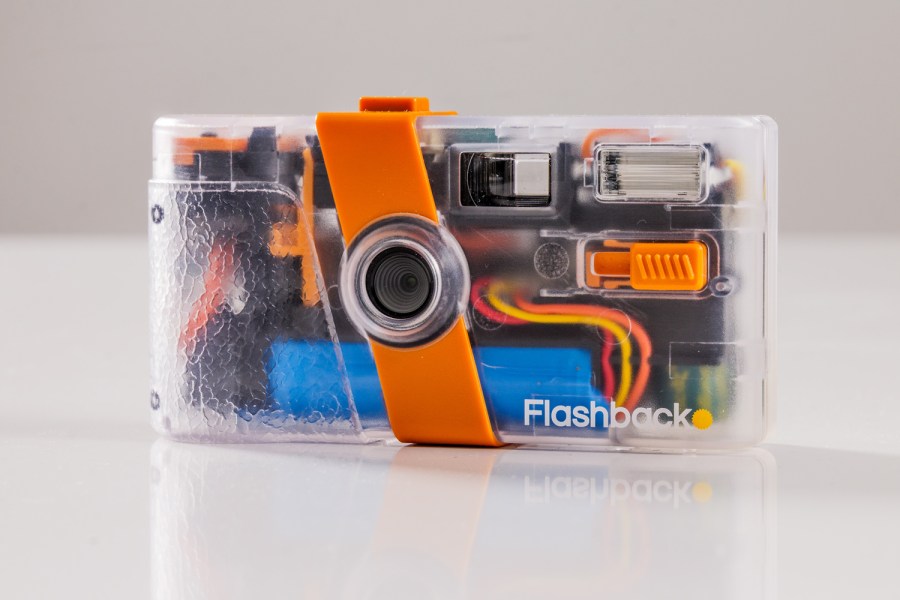
The Flashback ONE35 V2 is a digital camera that aims to give its users the experience of using a single use film camera. The camera connects to a smartphone app that controls the ‘film’ you are using by loading one of three pre-created ‘looks’ for the camera to apply to your images. Then the images you’ve taken are downloaded to that phone through the app, too.

By default, the app will be set to Film Camera Mode, which means we don’t get to see the pictures we’ve taken for 24 hours. This is intended to give us the sense of taking a film to the chemist and waiting for it to be developed and printed. In the V1 version of the Flashback camera this was the only option, but in this V2 model we can switch to Digicam mode which allows us to see the pictures straight away. Well, almost straight away. On connection, we have to upload the images in the camera to the ‘Lab’ in the app, where they are ‘processed’ so we can view the ‘roll’. Then we can download them from app to our smartphone, share them in a .zip format via email, or download them to a computer with a USB cable.

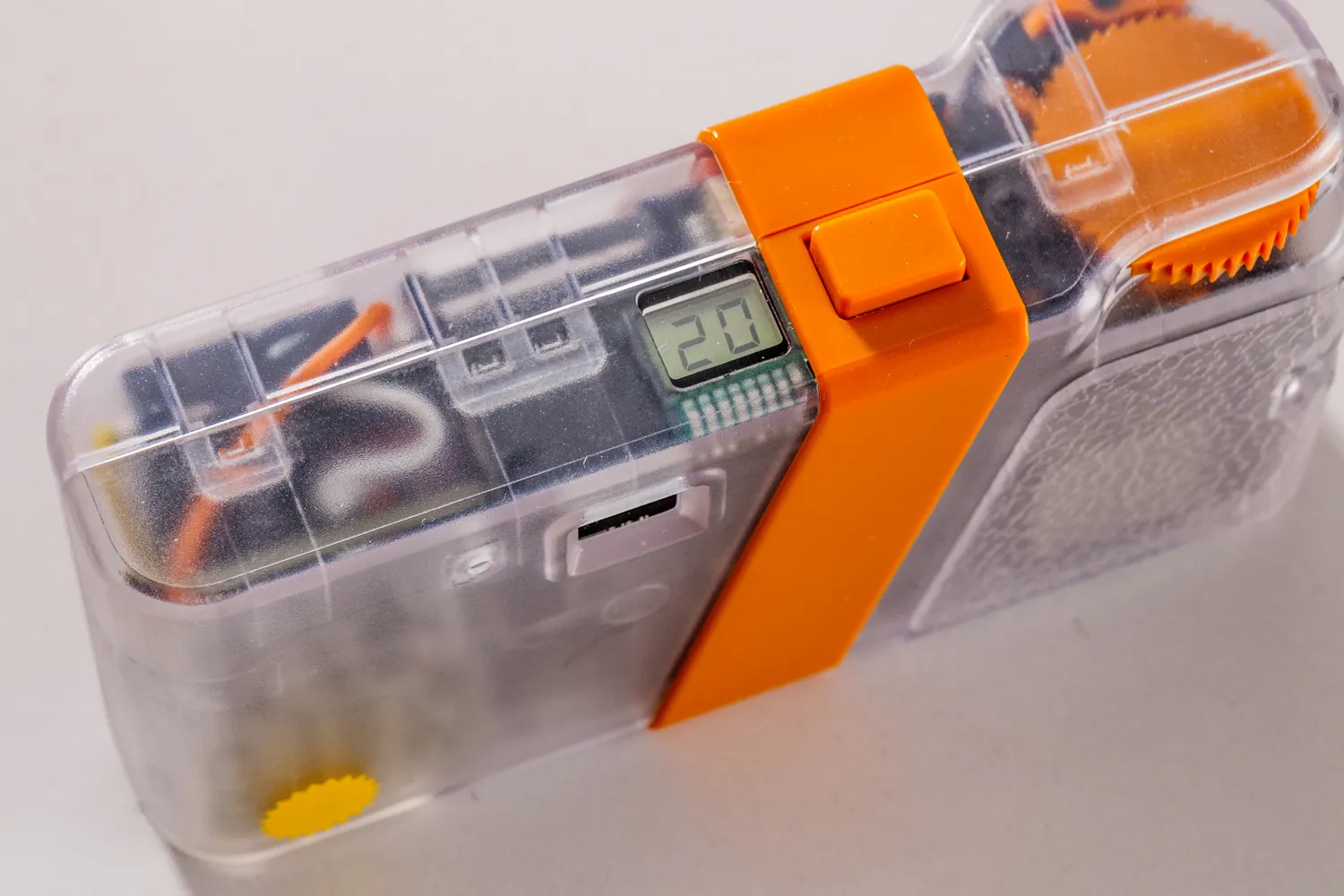
Once the pictures are accessed and downloaded somewhere, the camera’s memory is wiped clean and the ‘film’ is ready to use again. To hammer home this film experience we can only shoot 27 pictures at a time, before the film is full and needs to be processed. We even need to wind the ‘film’ on between pictures, sometimes turning the winder so many times you’d expect 65:24 XPan aspect ratio pictures.
Flashback ONE35 V2 – Features
- Disposable Camera experience: If it looks like a duck and quacks like a duck…it doesn’t mean it’s disposable, or that it takes film
- Fun product with a retro feel: This is the main point really, and that which will appeal to its audience. It looks cool, and takes pictures that look different
- App control: the Flashback app is used to add the looks to your film before you shoot, and can add date stamps too. It’s also used to ‘develop’ your ‘rolls’ and then to distribute the images to your phone or to share them elsewhere
The camera uses a 13MP sensor with a 4:3 aspect ratio, which produces images measuring 4144×3088 pixels. Users can save images to the camera’s 1.87GB internal memory, and have the choice of downloading JPEG files and/or images in the raw DNG format.
The manufacturer fails to specify the optical construction of the lens, its aperture or focal length. But from the occasionally available EXIF data, it’s possible to see that the lens has a 3mm focal length and a fixed aperture of f/1.8. That lens gives us the sort of angle of view we’d expect from a 28mm lens on a full frame camera, so the sensor in this Flashback ONE35 V2 probably has a diagonal of 4.5mm. So we have what’s known as a 1/4in sensor, of the type commonly used in lower-end compact cameras.
Again, from the patchily available EXIF I can see that we have a collection of ISO settings, from 100 to 1000, taking in ISO 196, 278, 484 and 531 along the way. Though these seem a little odd, they are probably the genuine ISO settings of the sensor rather than the politely rounded and tuned ones we encounter in other cameras.
It seems our longest shutter speed is a rather moderate 1/30sec, but on a bright day that can whizz up to 1/5000sec – which is much needed with that fixed wide aperture. We have a built-in flash for shooting indoors, eight colour designs for the body, and the internal rechargeable battery is said to last two months, or 15 ‘rolls’ (15×27 shots = 405 shots) depending on how often you download and how many shots you take with flash.
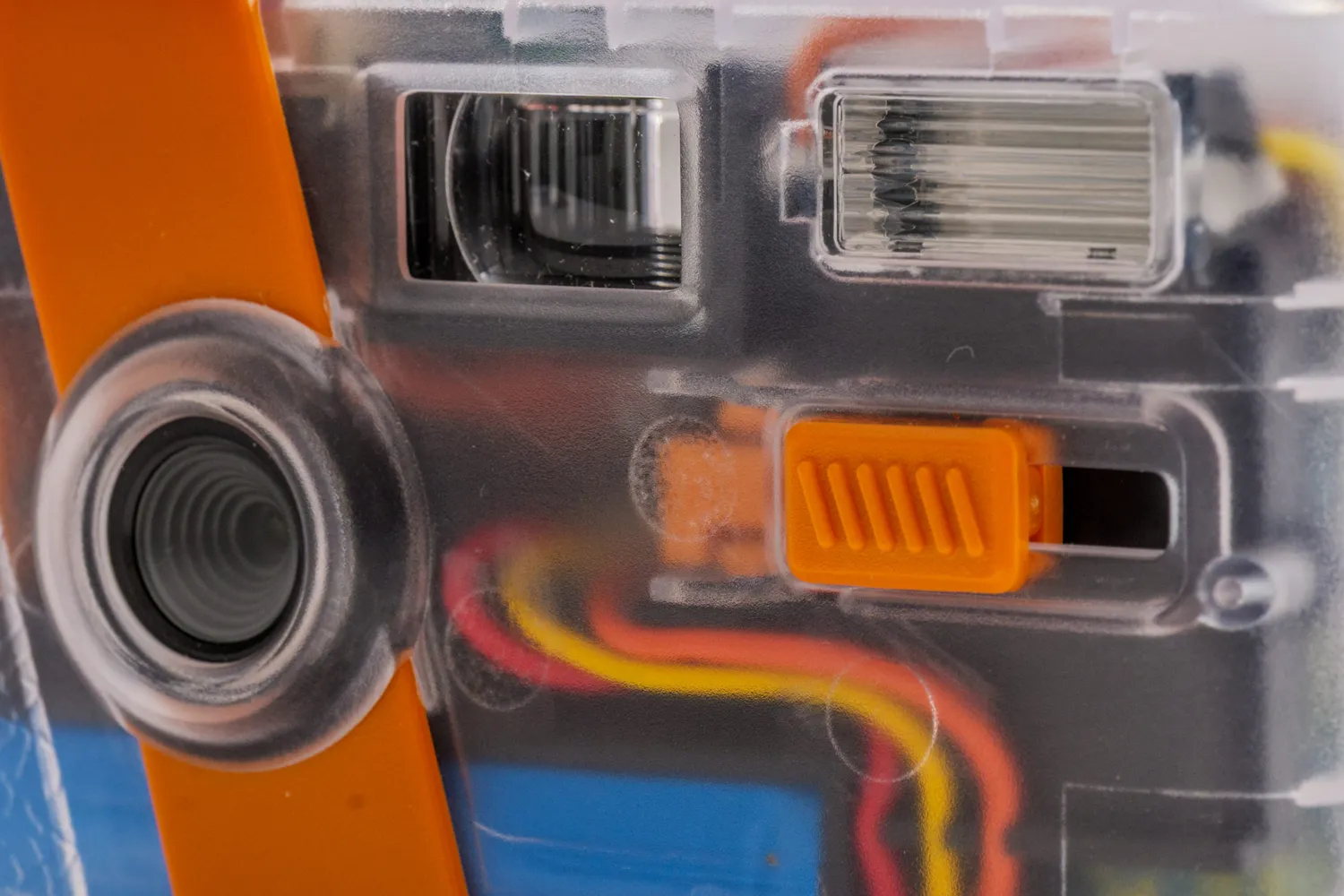
There’s no rear screen on the camera, so framing will have to be attempted through a viewfinder. However, it offers an angle of view that is closer to a 35mm lens than the 28mm we’ll be shooting through. This means everything we see should be included in the final shot, but plenty more else will be, too.
Flashback ONE35 V2 – Some perspective
While young dudes and dudettes of today probably associate the Single Use Camera with the ancient history of the 1980s, which is when they really became popular, right back in the Jurassic year 1900 Kodak Brownie users sent their cameras back to Kodak once the film was finished so the film could be processed and printed. But it was the 1980’s that made the idea popular again.
I’m old enough to remember when they were at their height and every film manufacturer had at least one – including a black and white one from Ilford. I remember too Kodak trying to educate me and other journalists to call them Single Use Cameras instead Disposable Cameras. In my camera room I have a Roamio single use video camera from that period – although, predictably, that failed to get off the ground at all.
Flashback ONE35 V2 – Image quality
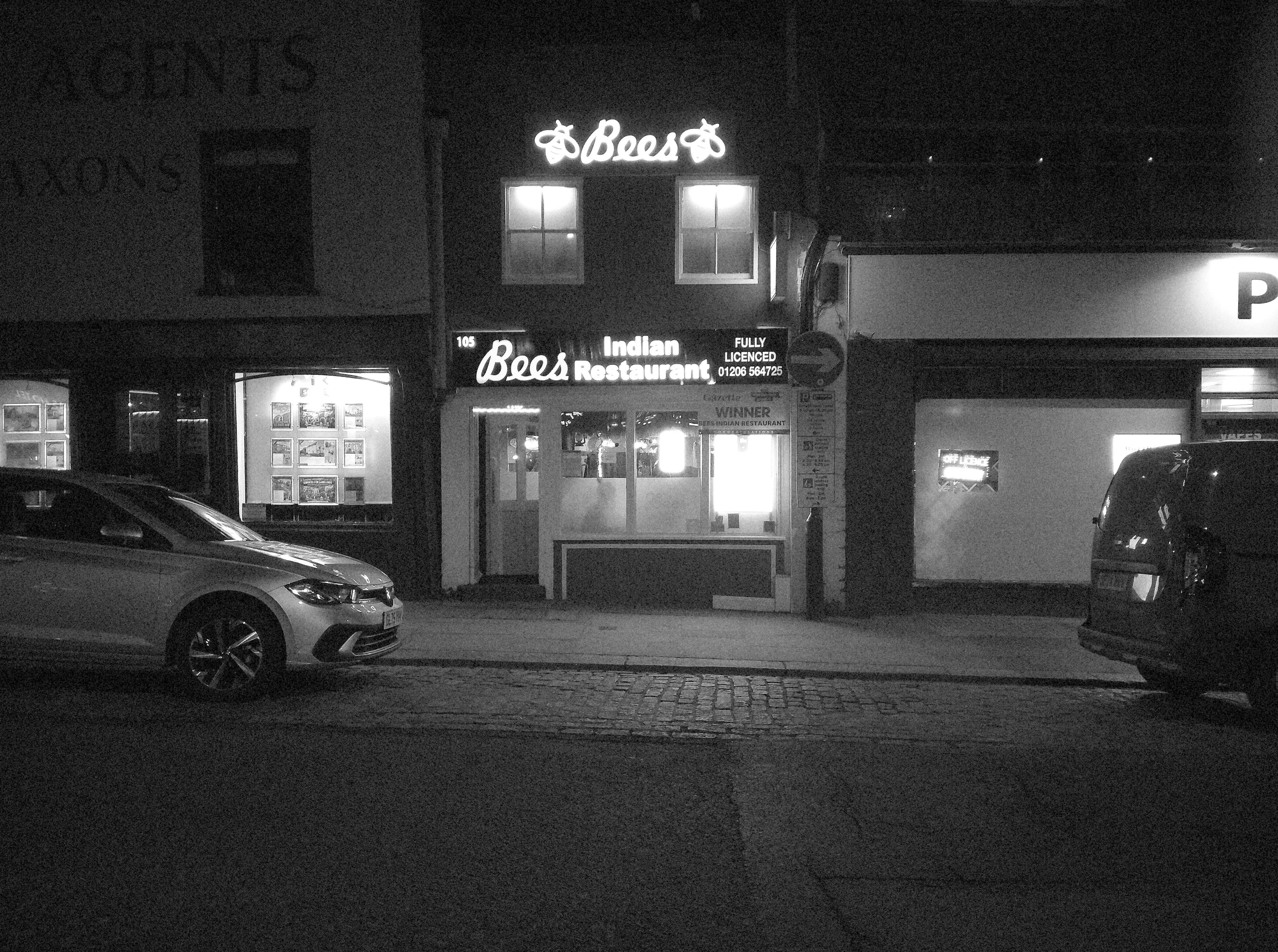
Reviewing this camera in the UK during the months of February and March was never going to produce the sort of results you might expect had AP had the budget to send me on a lad’s holiday to Ibiza or a gap year to Asia. But we had enough hours of sunshine to clearly demonstrate that this is a sunny day camera. In fact, on a sunny day it’s really rather good, and is able to produce lots of sharp detail and some nice exposures.

In dimmer conditions, though, the limitations of the sensor are more than apparent. Given the stated aim of emulating the look of a film single use camera, we can hardly complain as it does that really quite well. The extremely understated noise reduction delivers us plenty of unmolested ‘grain’ and the need to boost shadows in indoor images lifts the blacks to give us a reminiscent ‘soft’ contrast. It appears that when the flash is activated the shutter speed automatically defaults to 1/30sec, so we can’t use flash to fill shadows on a sunny day as the images are dramatically over-exposed. And indoors, the ideal subject distance is about 5-6 feet when the flash is on.
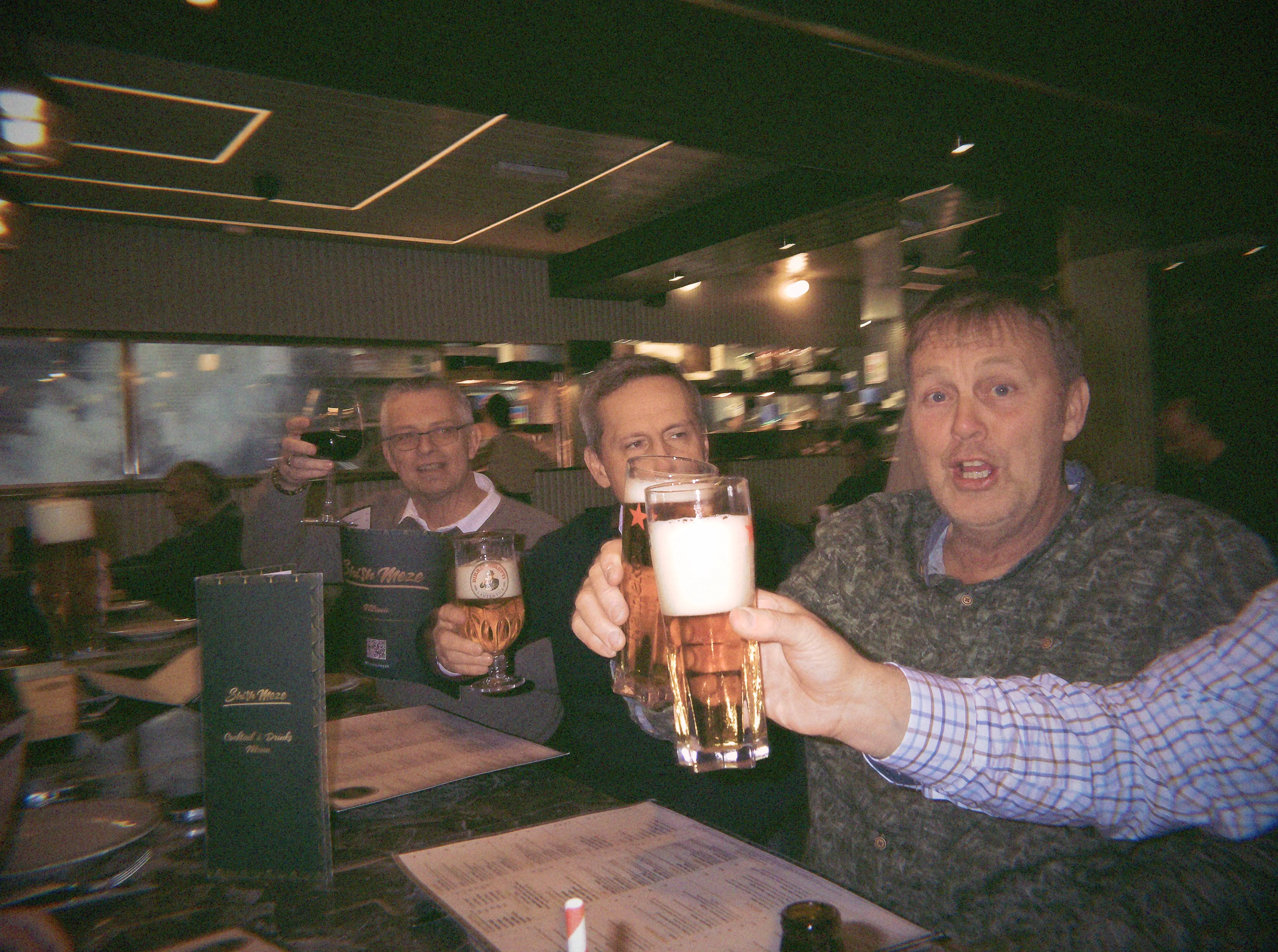
The built-in looks are interesting, though ultimately I stuck with the basic setting. The DNG files aren’t yet compatible with Adobe products – they are working on that, I’m told. But the files do open in Raw Therapee, which offers a cleaner image but not necessarily the solution to all the camera’s issues, and I suspect working on raw files in a computer rather goes against the whole idea. You may as well use a real camera if you are going to do that.
Flashback ONE35 V2 – Verdict
It’s important here to keep in mind that this isn’t supposed to be a technically good camera. It is supposed to be cool, retro and to transport us back to the 1980s. And it does that very well, with its grain, its odd colours and under-exposed indoor images. Whether we want to be transported back to a much less convenient time is another question, but I have to say using the Flashback ONE35 V2 has been a lot of fun – and I will take it out again.
It did occur to me, though, that for the same money we could just buy a secondhand digital compact camera and get ‘better’ results. But while that would achieve the function of a small carry-everywhere snappy camera, it wouldn’t perhaps offer the same experience. The Flashback ONE35 V2 definitely is not for everyone, but it presents an enjoyable novelty for those who appreciate such things.

Related reading:
- Kodak Snapic A1 review – a stylish 35mm film camera that’s a bit of a lightweight
- Canon PowerShot G7X Mark III Review – TikTok’s favourite camera
- Kodak Charmera review – is the viral keychain camera actually any good?
- Fujifilm Instax Mini Evo Cinema review – please don’t fall for the hype
Follow AP on Facebook, Instagram, YouTube and TikTok.
Flashback ONE35 V2 – Full Specifications

| Specifications | Flashback ONE35 V2 |
|---|---|
| Sensor | 13MP, 1/4in, 3:4 aspect ratio sensor |
| Lens | 28mm equivalent f/1.8 lens |
| Memory | 1.87GB internal memory |
| File type | Shoots JPEG and DNG files |
| Coonection | Bluetooth, Wi-Fi and USB-C interface |
| Battery life | 405 shots |
| Designs | 8 versions available |