Established in 2001, the Hasselblad Masters Competition has accepted work from all over the world, made with any camera making it one of the best competitions to enter. The criteria is straightforward: each year, they are looking for technical mastery and a strong personal and conceptual vision in the entries.
From more than 100,000 entries, the Grand Jury selected 70 finalists, who competed for the Hasselblad Master title and a 100MP Hasselblad X2D II 100C camera with two XCD lenses alongside a €5000 creative fund. Today the winners for the seven categories, Architecture, Art, Landscape, Portrait Project, Street, Wildlife are revealed.
The winning images reflect the diversity in contemporary photography, showcasing striking architectural compositions to intimate portraits and compelling wildlife scenes, with each category winner demonstrating a distinctive vision and technical excellence.
Read on to find out more about each project, and see the winning images.
From Hasselblad, GOTHENBURG, SWEDEN:
Kalle Sanner, Executive Director at the Hasselblad Foundation and Grand Jury Chair, commented, “What this year’s Hasselblad Masters submissions demonstrated, with rare consistency, is that the most compelling photography does not simply record, it constructs. Across categories, the strongest work operated on more than one level simultaneously: legible on first encounter, yet resistant to easy interpretation. These are images that require attention, that continue to unfold the longer you stay with them. What unites the winners is a shared understanding that photography’s real power lies not in what it shows, but in what it withholds, reframes, and quietly insists upon.”
Art
Yudha Kusuma Putera – Waste Colonialism (Sapi-Sapi Piyungan), Indonesia
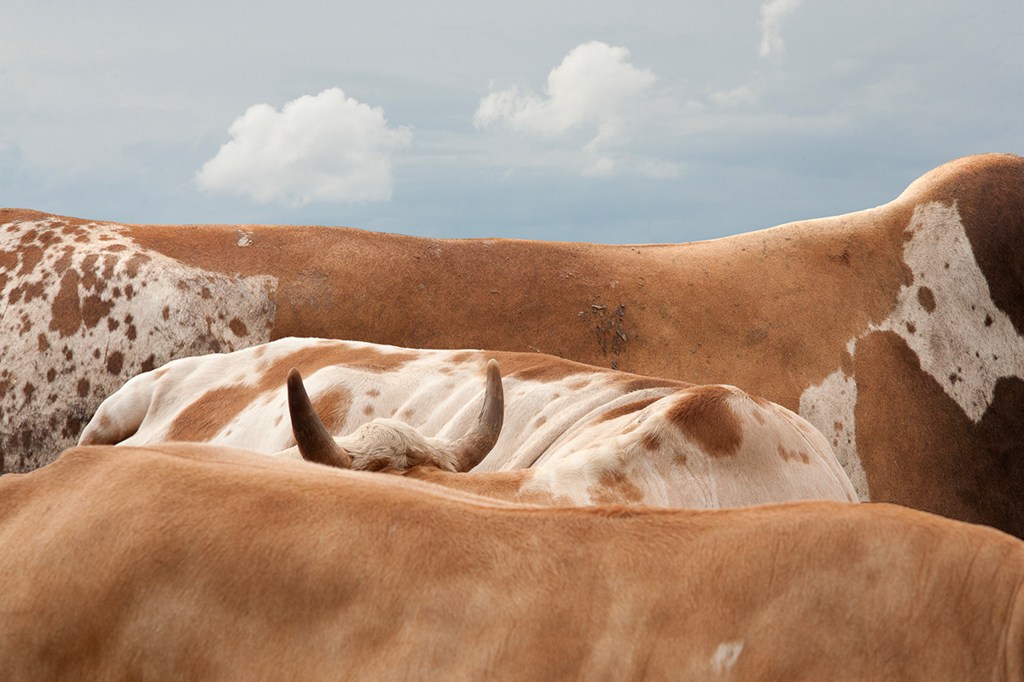
Rooted in everyday life and inspired by its complexity, Yudha Kusuma Putera turns a keen eye toward the social issues that hide in plain sight, exploring the tensions between humans, nature, and the systems we build around us.
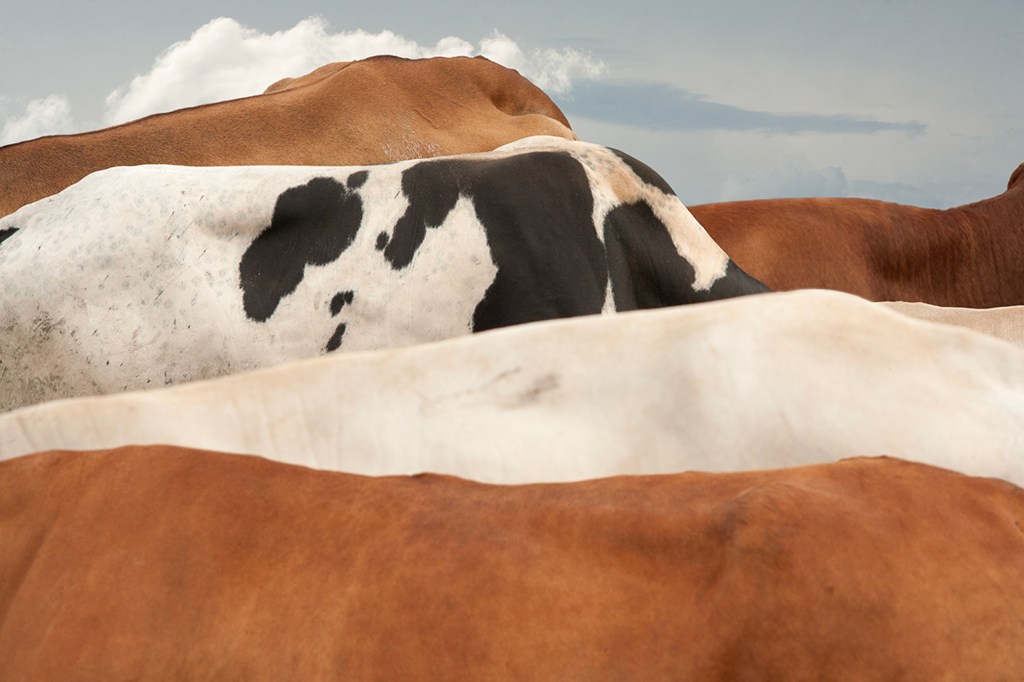
The winning images are part of a project examining how developed nations export their waste to developing countries, where labour and costs are lower. This logic repeats on a smaller scale too: within cities, landfills are built on the outskirts, kept out of sight and out of mind. At Yogyakarta’s Piyungan landfill, a city’s waste is sorted by scavengers and consumed by cows, quietly piling up into a second hill. He photographed the backs of these cows stacked together, with their forms mirroring the landscape of trash around them. The work does not seek to assign blame, but to invite collective reflection on the waste we produce, and the futures we are building from it.
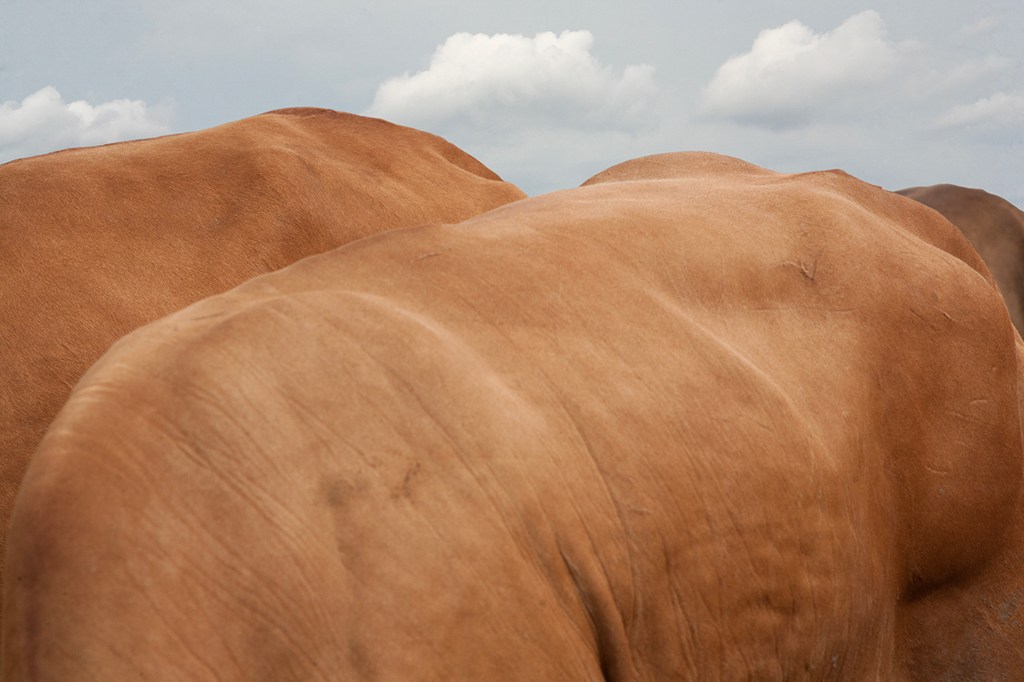
“On the surface, the images appear direct and unambiguous, and yet they consistently resist easy reading, generating a sense of visual uncertainty that keeps the viewer engaged and questioning. The images do not announce themselves loudly, but reward sustained attention with a slow-building sense of strangeness that is both intellectually stimulating and visually striking,” says Kalle Sanner, Executive Director at the Hasselblad Foundation.
Architecture
Kevin Boyle – DaySleeper, Movieland, Canada
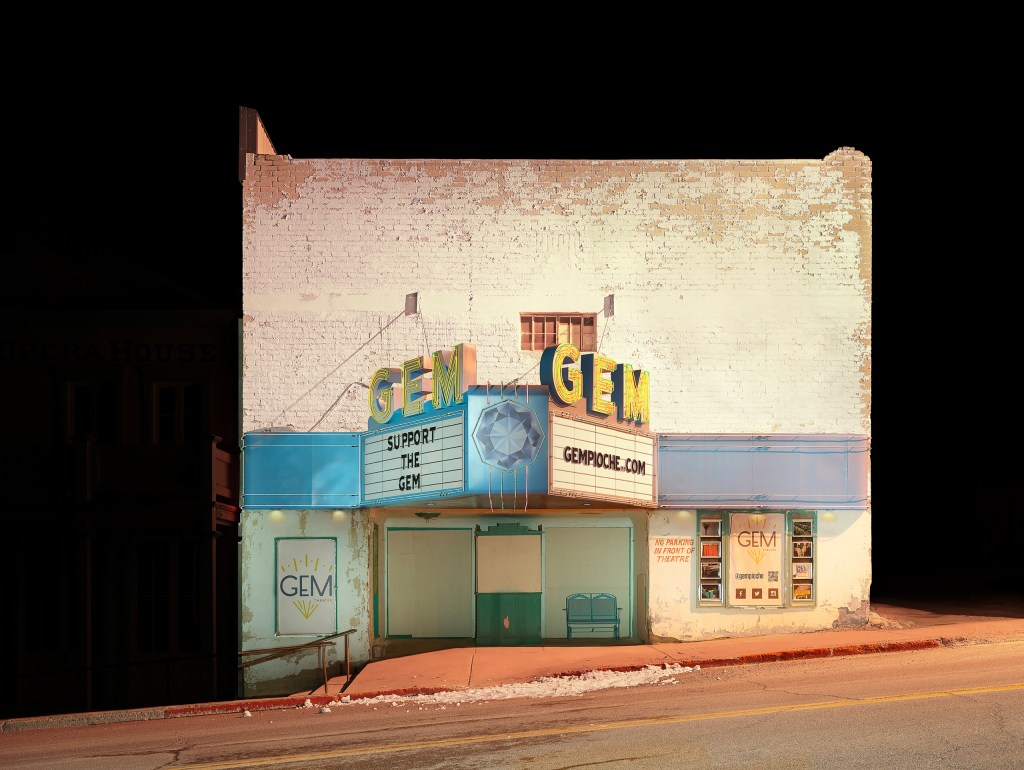
Kevin Boyle was shaped by the open skies and close-knit communities of the Canadian prairies. After the loss of his father, he returned home, only to find the places he once knew hollowed out and silent, their gathering spaces boarded up and left to disappear. For over ten years, his photographic journey has been a profound tribute to the abandoned architecture of North America’s local communities.
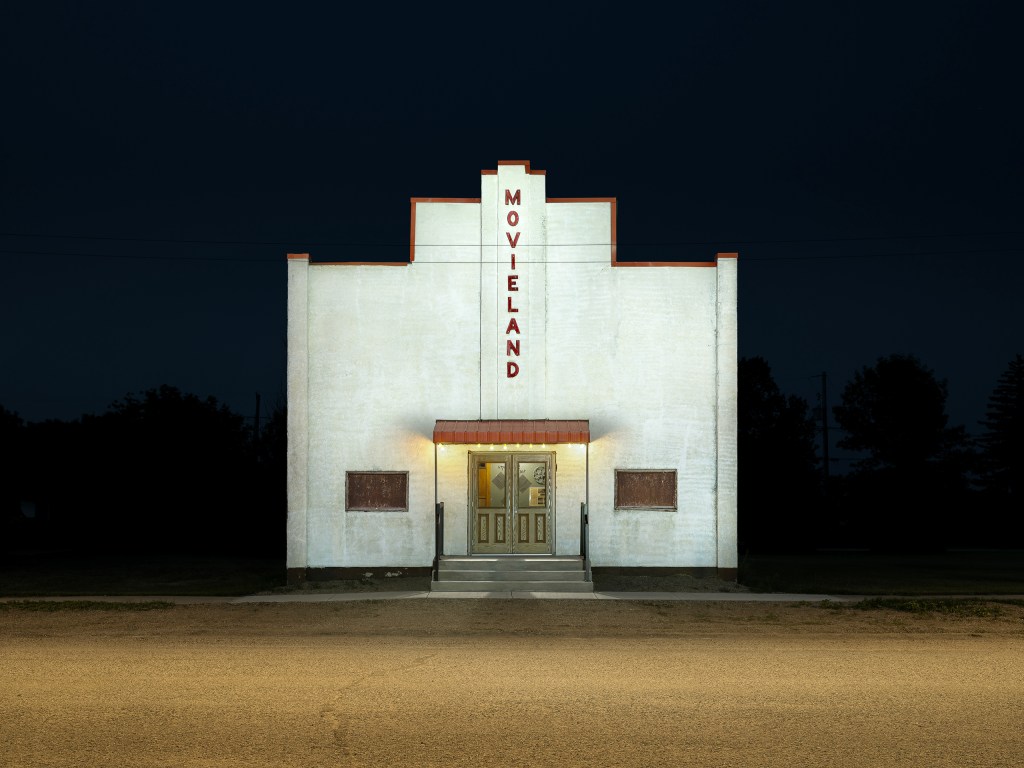
The winning series is comprised of photographic montages, with each part of the building lit with flashlights and blended in post-production to create an ethereal “portrait” of once important gathering places. Through his lens, these forgotten spaces become vibrant, glowing symbols of community
heritage and shared human connection.
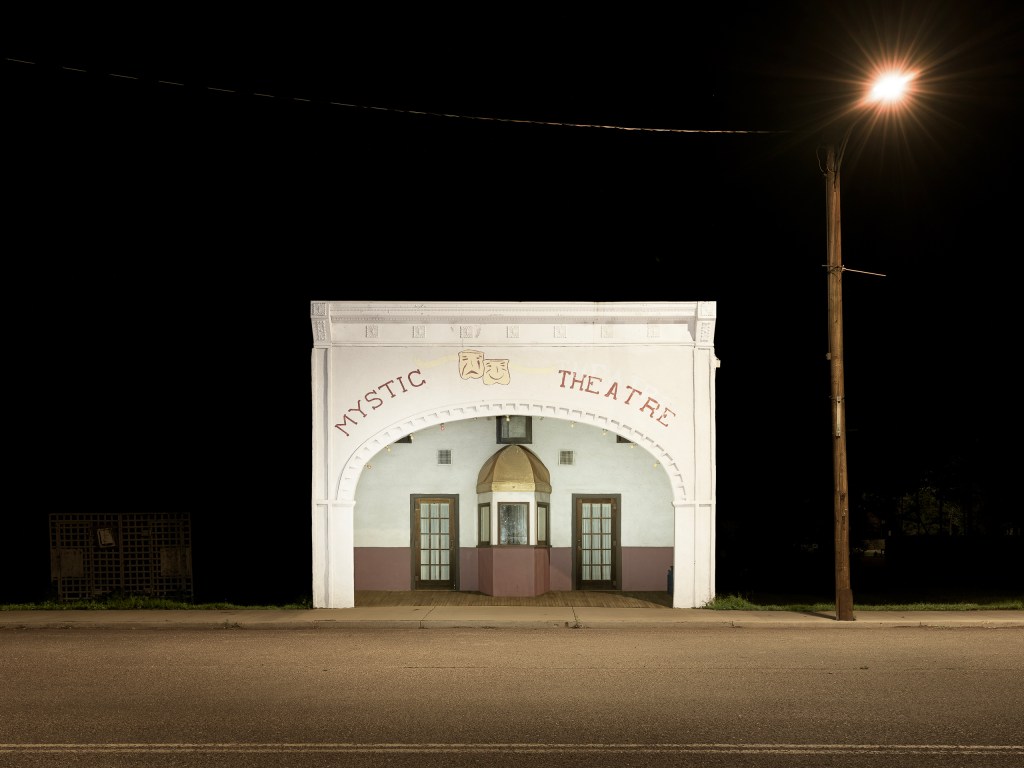
“The composition, and the fact that the images are empty of people, triggers our imaginations, taking us back to a time when these buildings would have thrived with the community meeting for evening entertainment. By making this series, the photographer invites us to consider the myriad of small venues that make up the social fabric of small communities,” says Sonia Jeunet, Photography Consultant and Education at Magnum Photos.
Portrait
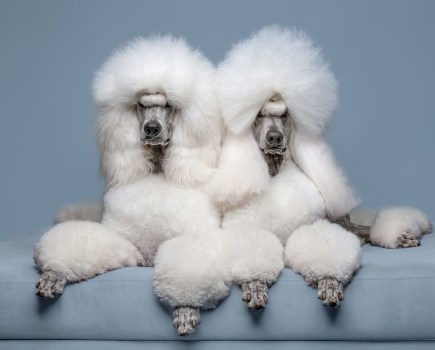
Svetlana Jovanovic – Otherness, The Netherlands
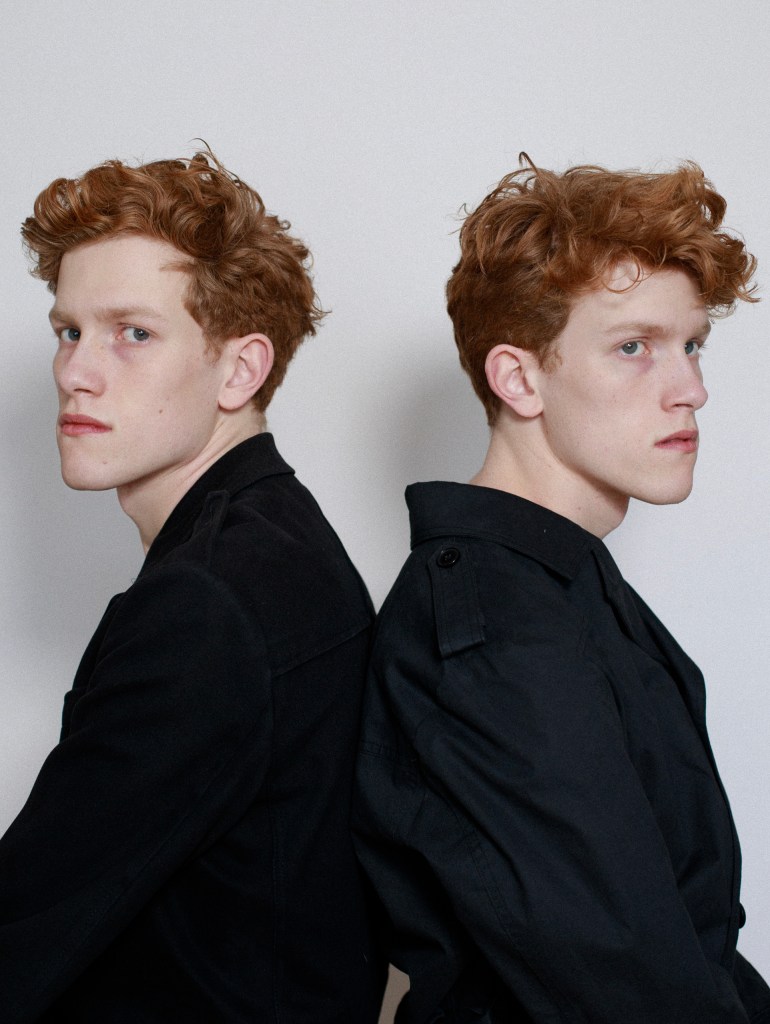
With a psychology background, Svetlana Jovanovic’s portraiture is driven by a deep curiosity about identity — how we experience the world, construct our sense of self, and see ourselves through the eyes of others. Her style brings together fine art portraiture and a commitment to visual beauty, believing that the conceptual and the aesthetic are inseparable: each gives the other meaning.
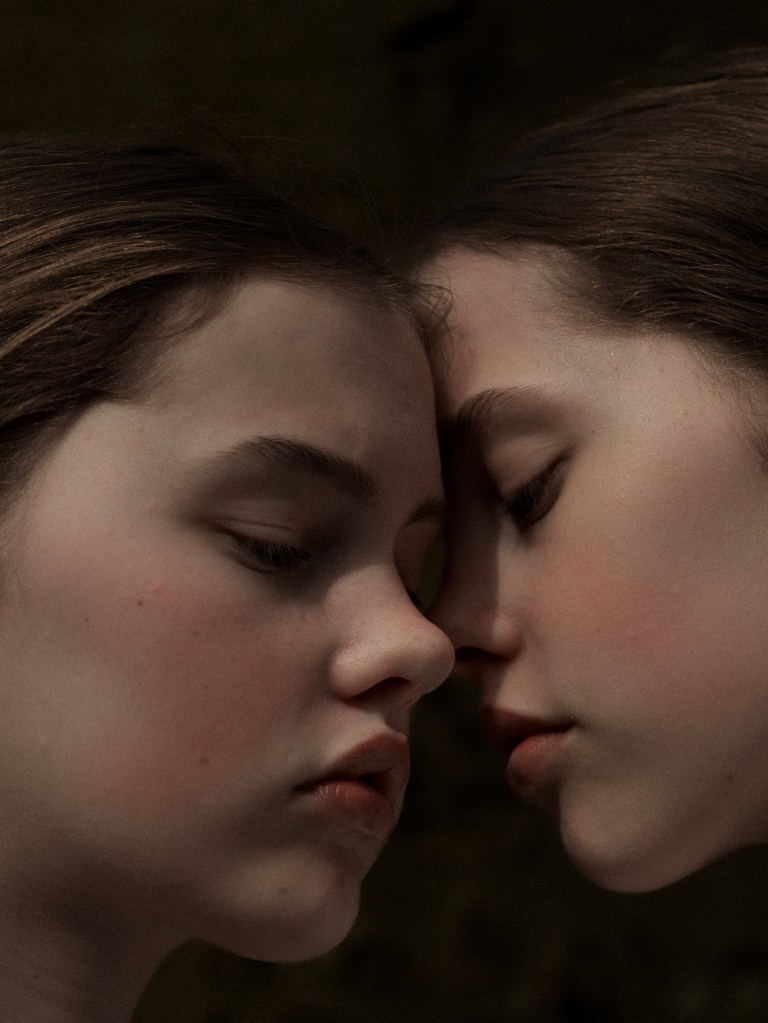
The winning images are part of Otherness, an ongoing long-term project exploring identical twins and the tension between shared identity and individual presence. While twins share so much, it is the small differences that emerge over time, the subtle ways each person’s character becomes visible within the shared image, that lie at the heart of the work. Each portrait is a collaboration, shaped as much by the relationship between the twins as by the photographer’s own vision, inviting viewers to reflect on how we define ourselves both apart from, and through, one another.
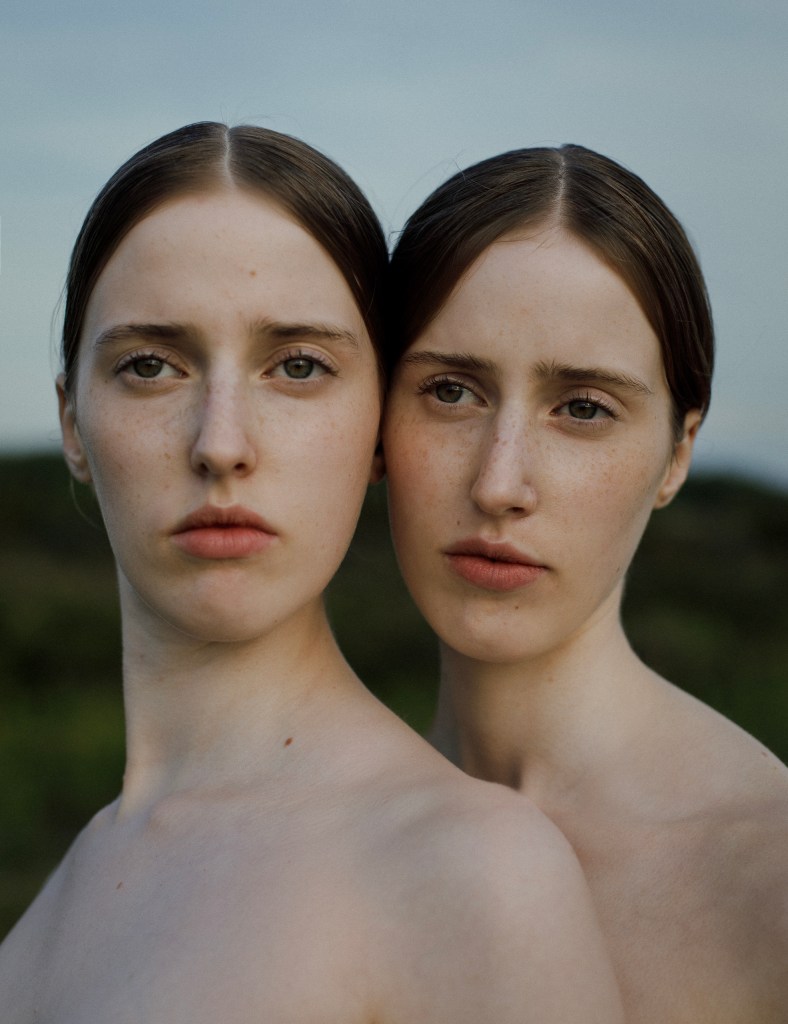
“Through precise use of light and composition, this portrait series explores the themes of mirroring and duality. Whether capturing two sides of the same face or the closeness of two kindred souls, the images reveal subtle layers of emotion with quiet precision,” says RongRong, Co-founder and Artistic Director at The Three Shadows Photography Art Centre
Landscape
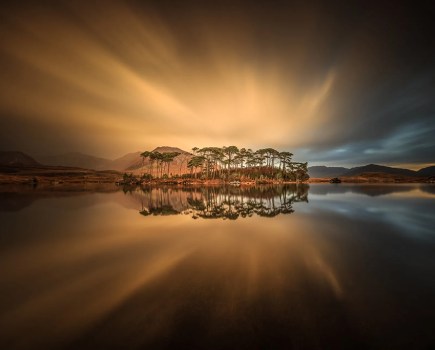
Rohan Reilly – Ephemeral Visions, Ireland
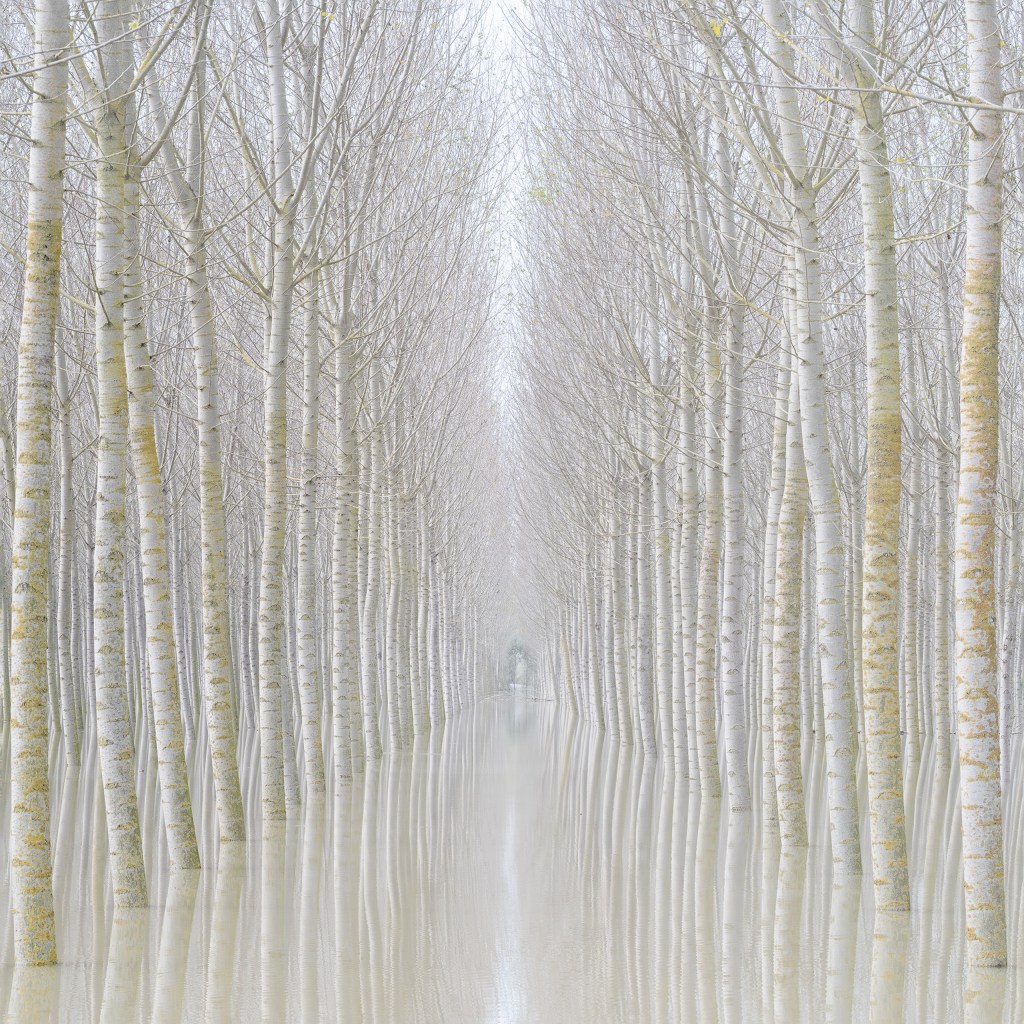
Rooted in the discipline of a composer, Rohan Reilly’s images strip away complexity to reveal the essentials, which are texture, tone, and stillness. His signature long-exposure technique transforms moving water and shifting skies into silk-like surfaces, while vast negative space and low saturation give his work a poetic, meditative quality that transcends documentation. The process is one of patience and preparation: studying weather patterns, returning season after season, and waiting for the precise conditions that cannot be engineered but only earned.
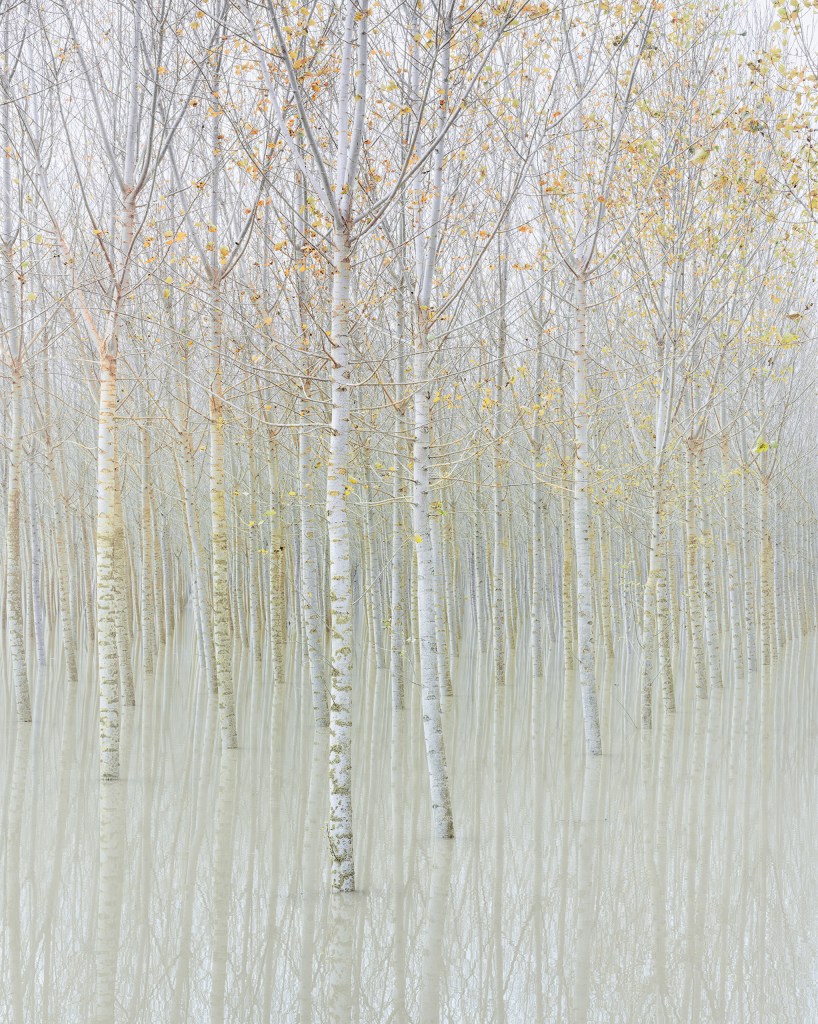
This winning series captures a row of poplar trees planted along the banks of the River Po in Italy, which are natural guardians against flooding, now standing immersed in perfectly still water beneath soft, diffused light. What was once a purely functional landscape transforms into something surreal and dreamlike. In this quietly breathtaking scene, the photographer’s vision can find its fullest expression: nature distilled to its core, and time momentarily held still.
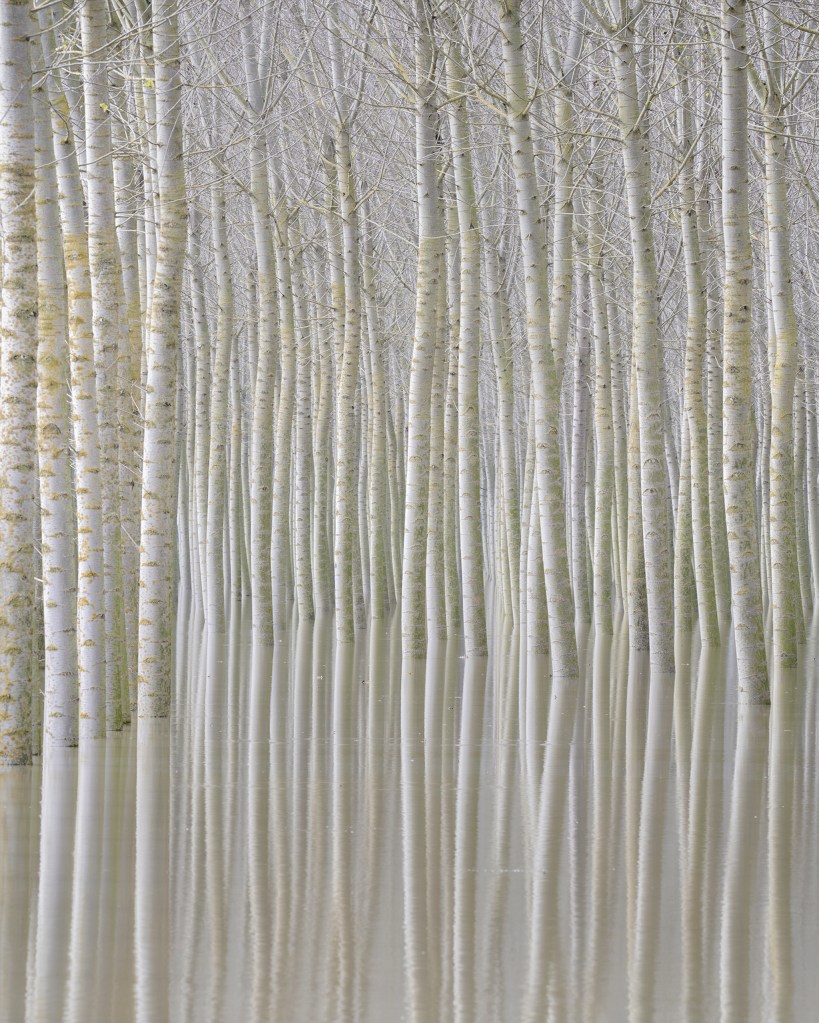
“A forest of poplar trees could be a monotonous subject. But these photographs are hypnotic objects of meditation, creating something expansive through repetition and ostensible sameness,” says Zack Hatfield, Managing Editor at Aperture Magazine.
Project//21
Panitbhand Paribatra Na Ayudhya – Dwellers of the Night, Thailand
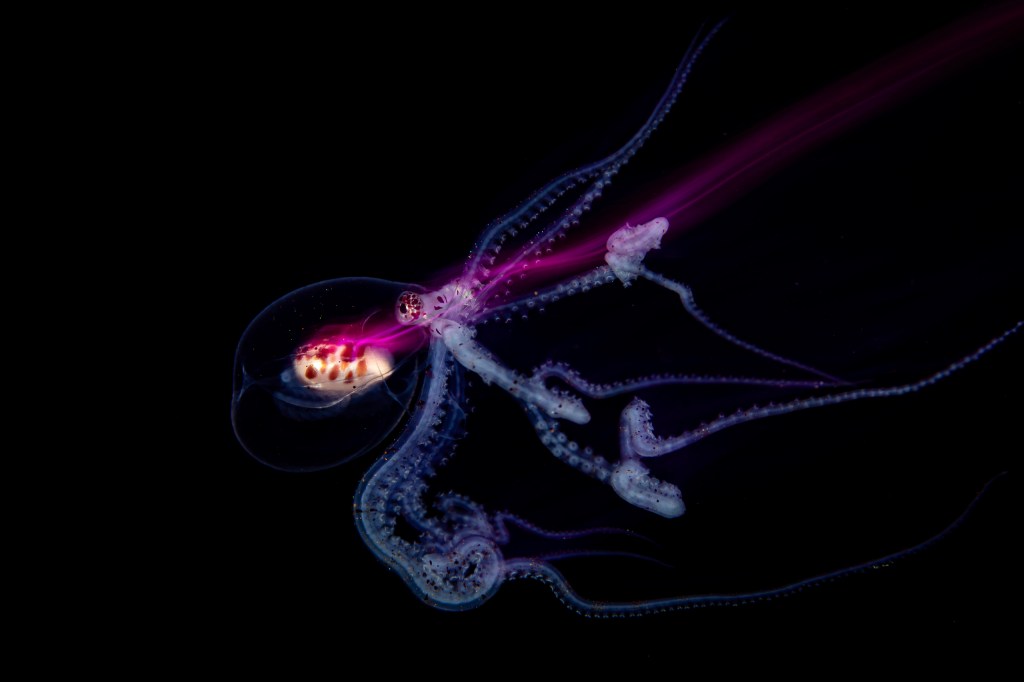
Panitbhand Paribatra Na Ayudhya is a young underwater photographer and scuba diver from Thailand. His work is rooted in a quiet dedication to the ocean, documenting its life, its fragility, and the ecosystems that sustain it, in the hope that what is seen through his lens will not be forgotten.
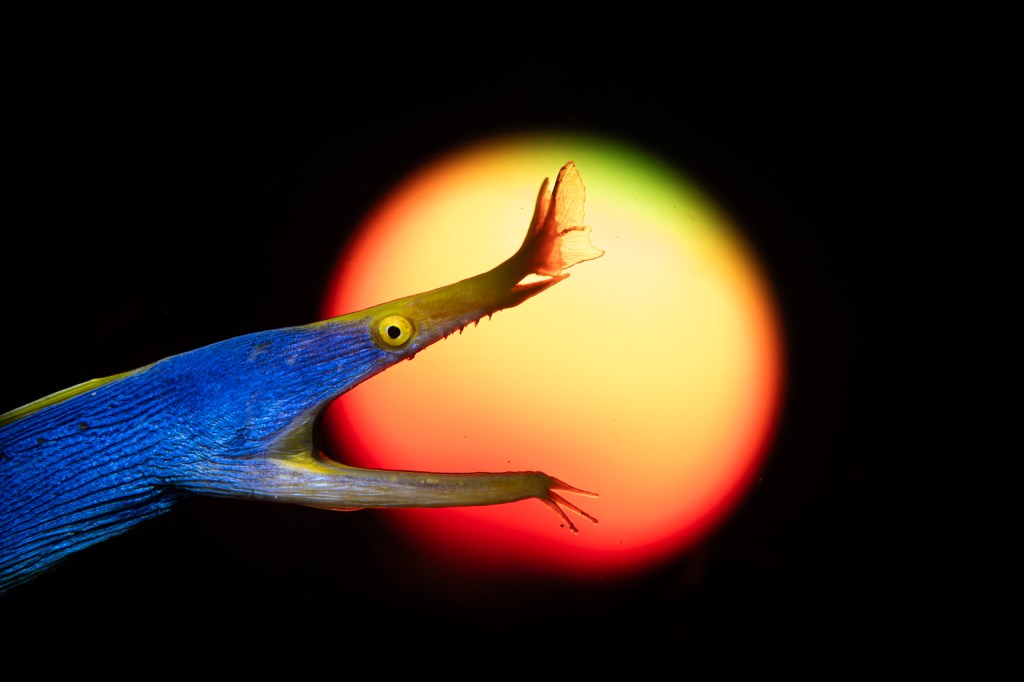
His winning series was captured in the waters of Anilao, Philippines, where pelagic and larval marine life migrate from the depths each night to feed under the cover of darkness. Using slow shutter speeds to capture the elegant motion of his subjects, and carefully chosen coloured lighting to reveal their form and beauty, he illuminates a world rarely seen. For the ribbon eel, a diffused warm light conjures a subtle sunset behind the subject — crowning it as a master of the night. Some of these creatures spend their entire lives in the open ocean, making the pelagic ecosystem as fragile as it is extraordinary.
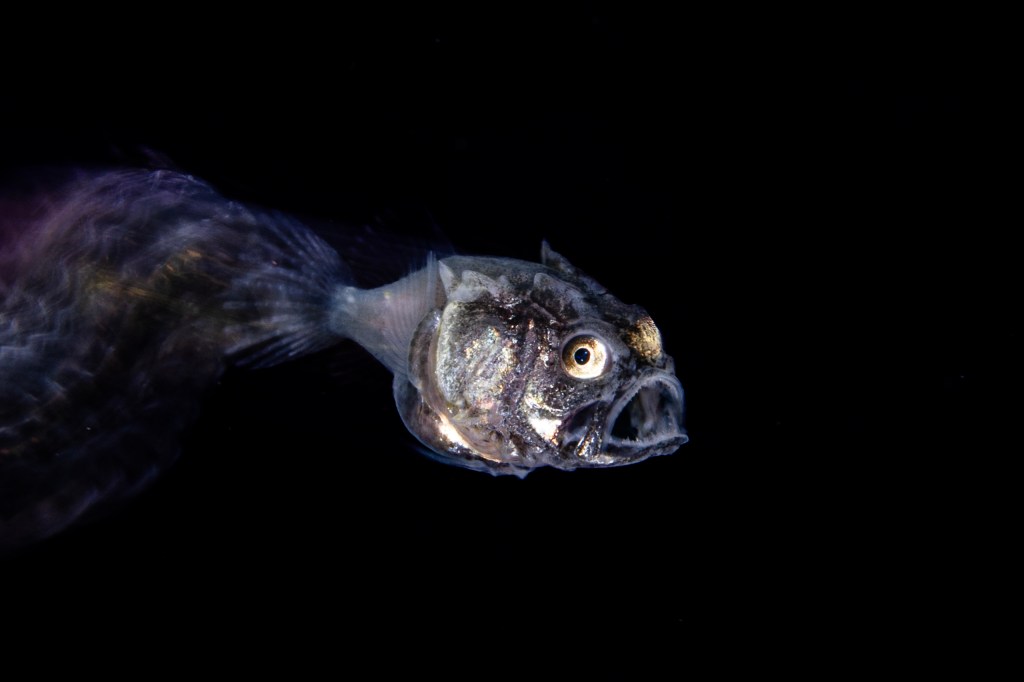
“I’m drawn to the quiet whimsy of these sea creatures. Set against black, the creatures feel almost otherworldly- strange, delicate, and entirely captivating. There’s a simplicity to the presentation that allows their inherent oddness to shine, reminding us how unfamiliar and compelling the natural world can be when seen without distraction.” says Alex Pollack, Director of Photography at National Geographic.
Street
Gosse Bouma – Morning Ritual, The Netherlands
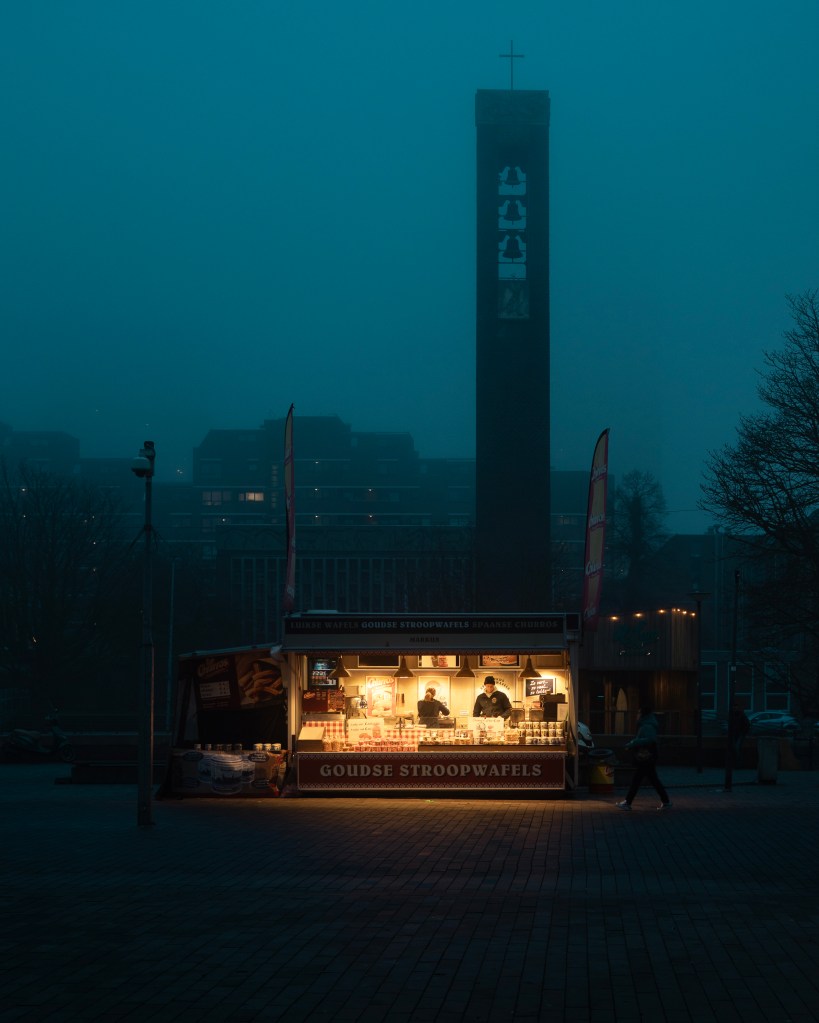
Gosse Bouma is a photographer whose work is driven by a quiet pursuit: to offer moments of tranquility in a world that rarely slows down. His distinct style lies at the intersection of urban geometry and natural elements, pairing the hard lines of architecture with the soft, unpredictable textures of weather. Each photograph is infused with the intention of invoking serenity amidst the chaos of everyday life, creating visual experiences that invite stillness and reflection, even if only for a fleeting moment.
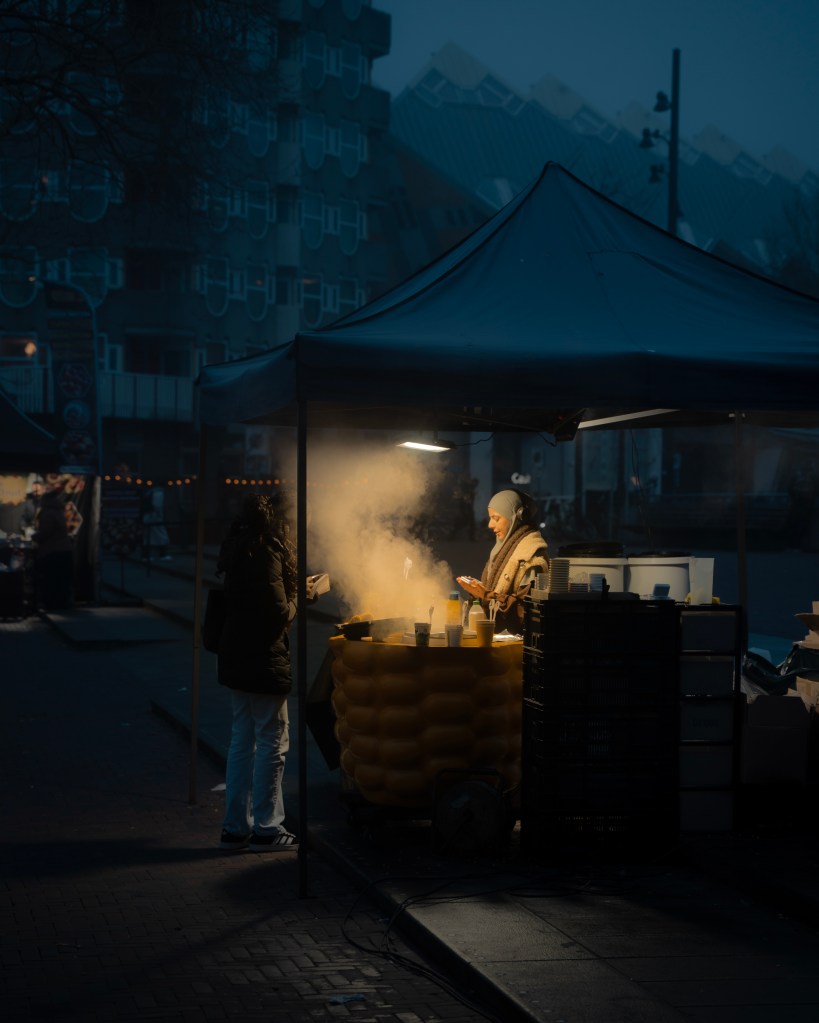
His winning series, taken across the Netherlands, turns to the street market as its subject, a space where people of all ages and backgrounds meet, exchange a few words, share warmth, and move on. In capturing these small, unhurried encounters, Bouma preserves something increasingly rare in
contemporary life: a genuine sense of togetherness.
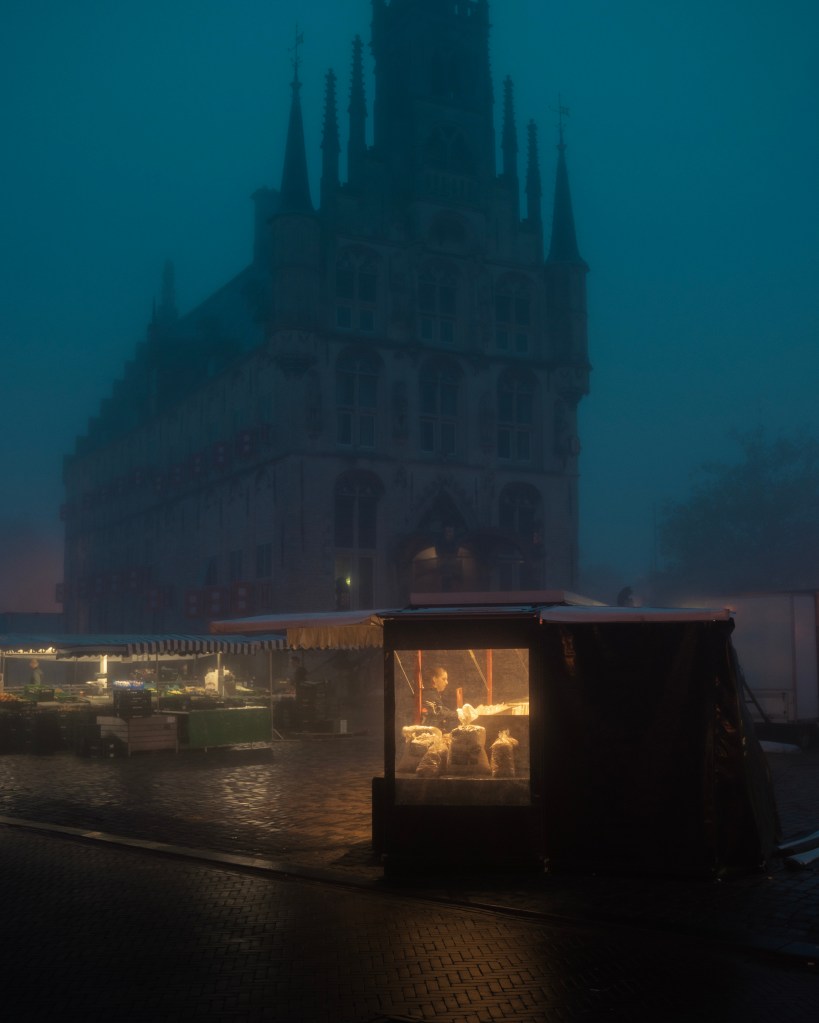
“The photographer understands atmosphere, scale and timing. The small lit kiosks within the vast blue urban emptiness create images that feel both intimate and monumental. Here, genuine photographic tension emerges. The series uses colour structurally, not decoratively. Mist, artificial light and
architecture form one coherent world,” says Aya Musa, Senior Curator at Foam.
Wildlife
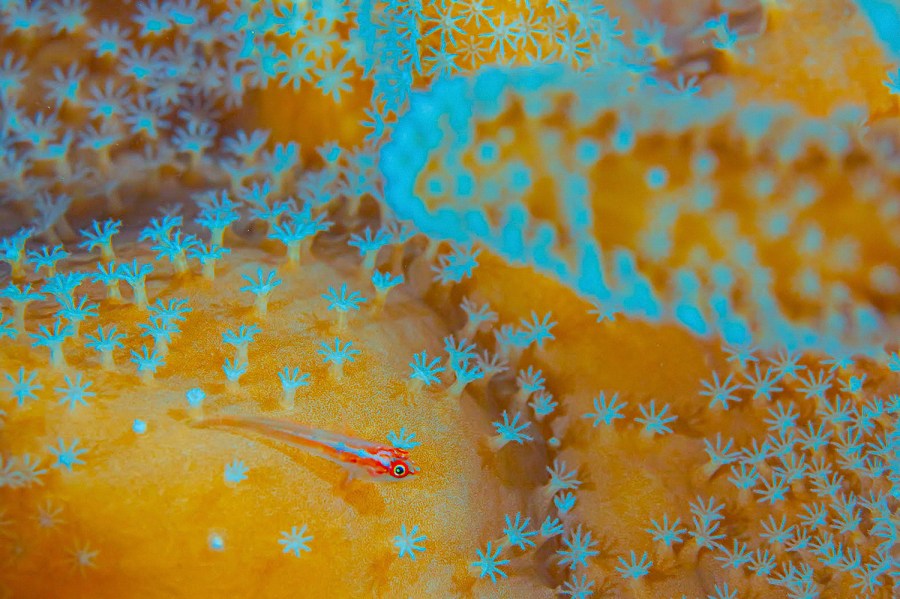
Alfred Minnaar – The Forest I Roam, South Africa
Alfred Minnaar’s creative process often begins with observation and patience. Rather than simply documenting his subjects, he seeks to understand their behaviour, environment, and relationship with the surrounding ecosystem. Over a decade of global exploration, his fine-art philosophy has evolved from a traveler’s passion into a powerful voice for conservation, capturing fleeting deep-sea and wildlife narratives to inspire the preservation of our planet.
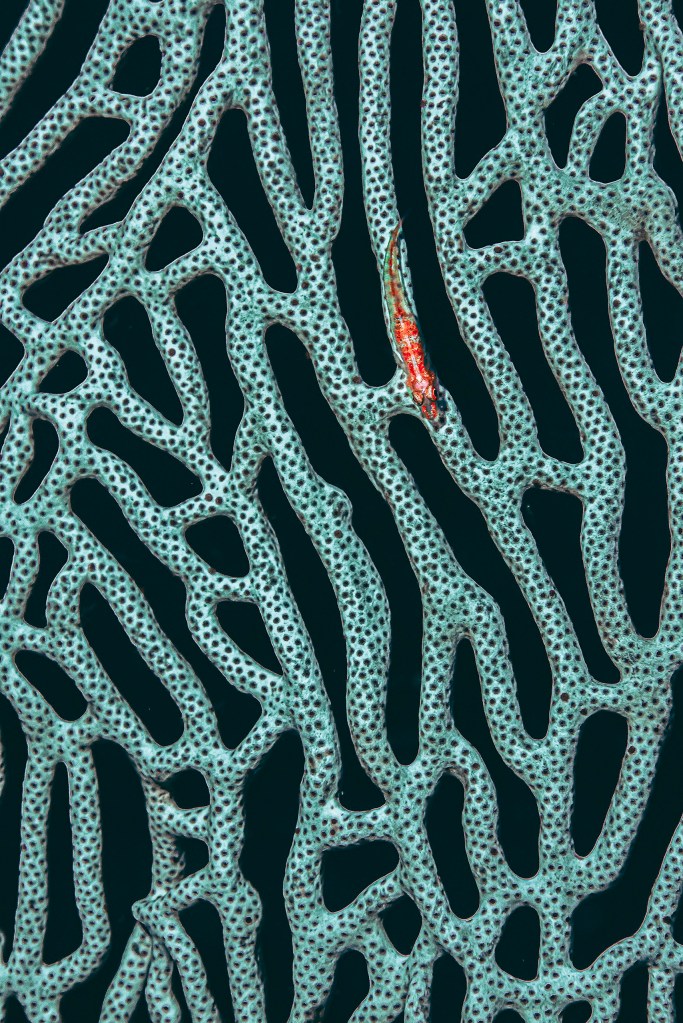
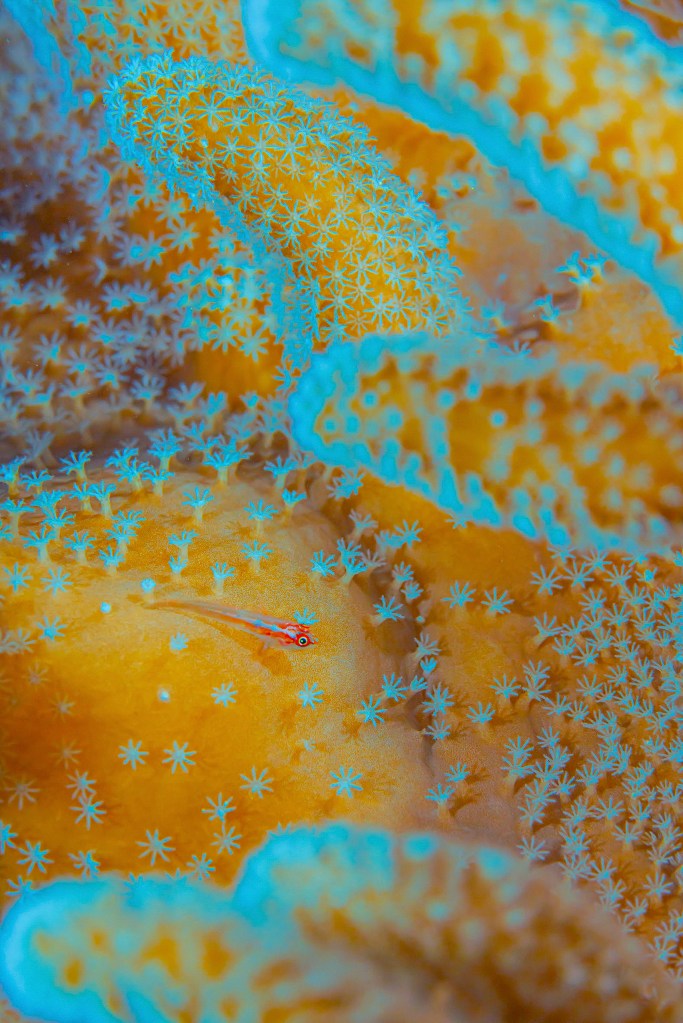
The winning images of a tiny goby living amongst coral were created to challenge our perception of scale and encourage viewers to look closer. Rather than focusing solely on the fish, the photographer wanted to use it as a point of reference within a much larger world. By placing the goby within its environment, the reef itself becomes the subject, inviting viewers to imagine its vastness from the perspective of one of its smallest inhabitants.
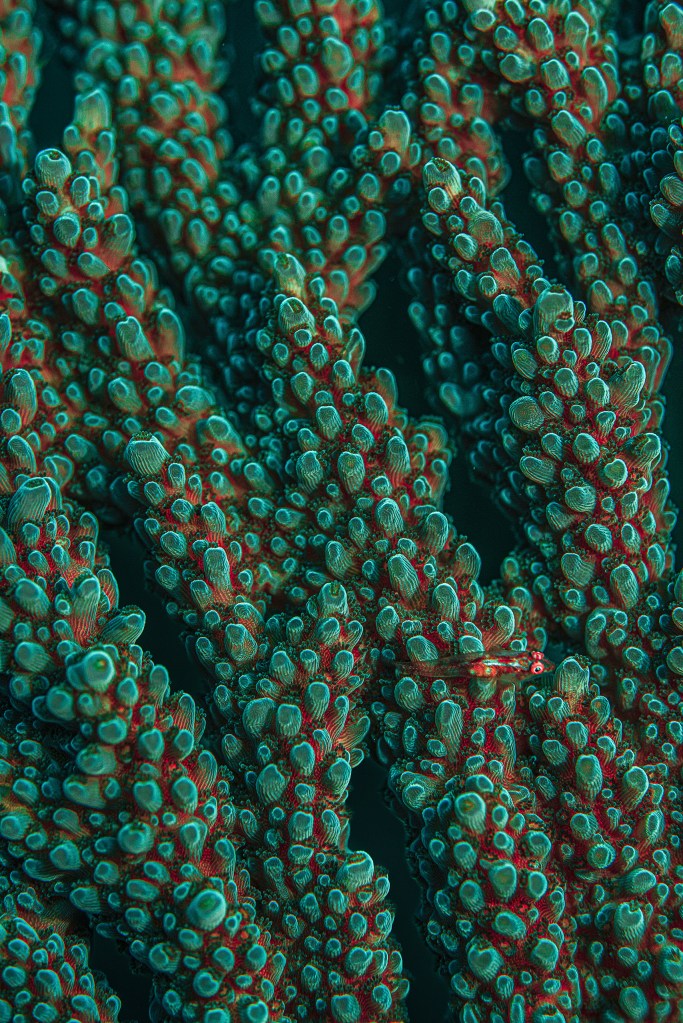
“The vibrancy of the palette immediately draws you in, and the way the small fish are framed against their environments creates a sense of scale that almost reads as landscape. There’s a nice balance here between detail and composition, with the micro subjects holding their own within a larger, almost abstracted environment,” says Alex Pollack, Director of Photography at National Geographic.
Related reading:
- Best photography exhibitons to see this year
- Why every photographer should enter a competition (at least once)
- This photographer has just won £30,000 – what do you think of their work?
Follow AP on Facebook, Instagram, YouTube, TikTok and Irys.