One of the joys of film photography is that there are over 100 years of great cameras out there to play with, get to know and enjoy. Many of them never had built-in light meters and of those that did many either no longer work or aren’t accurate, so an external meter is essential to accurately calculate the correct exposure.
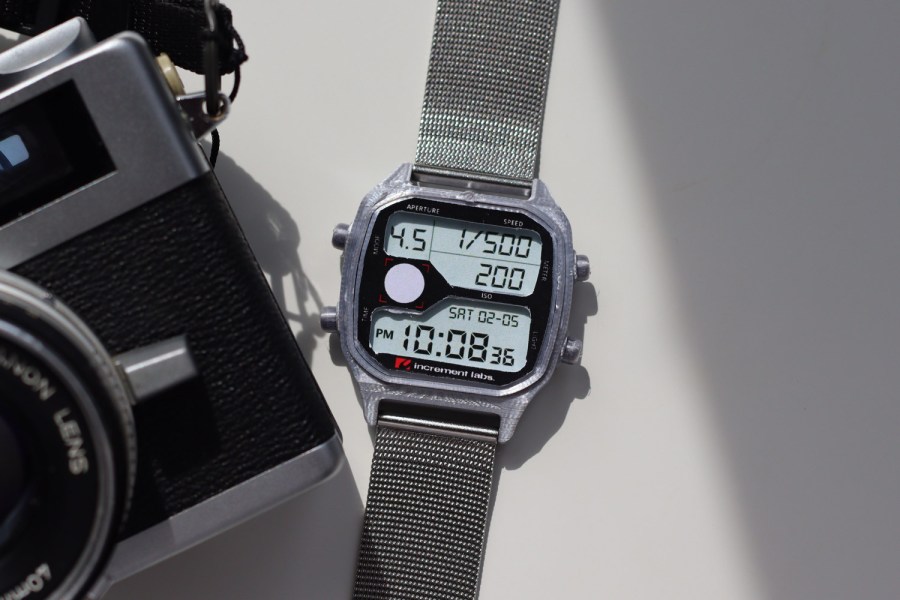
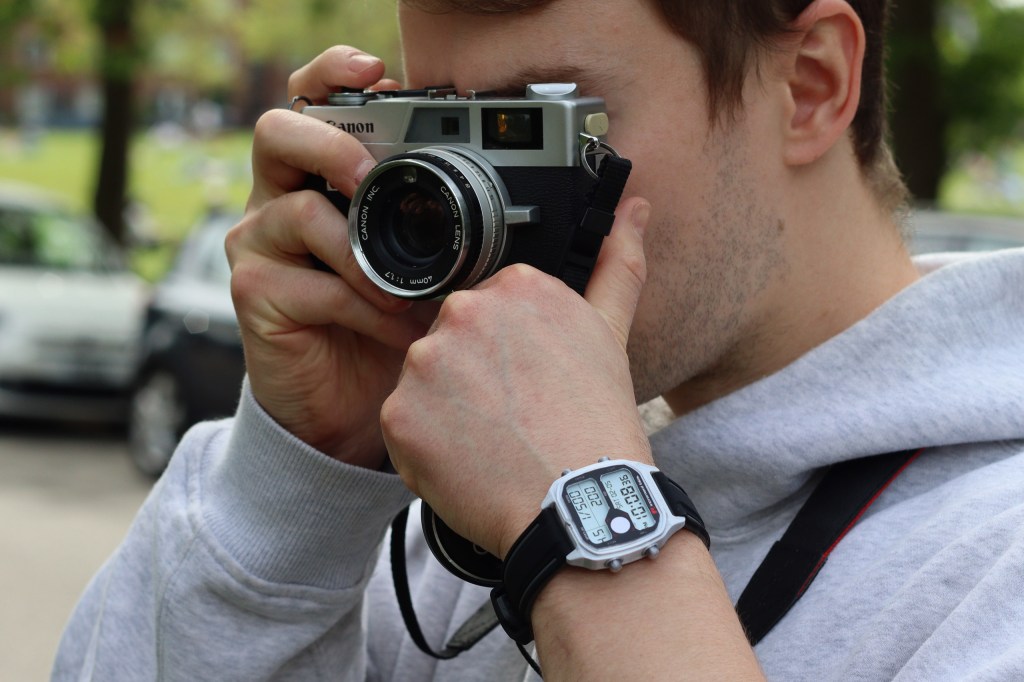
There are lots of vintage meters out there from brands like Weston and Sekonic, and a micro industry has sprung up in recent years producing small, coldshoe-mounted meters but it’s just something else to have to remember to carry. But now two young friends have come up with an interesting solution – what if you had an exposure meter built into your watch? That way, it would always be on your wrist.
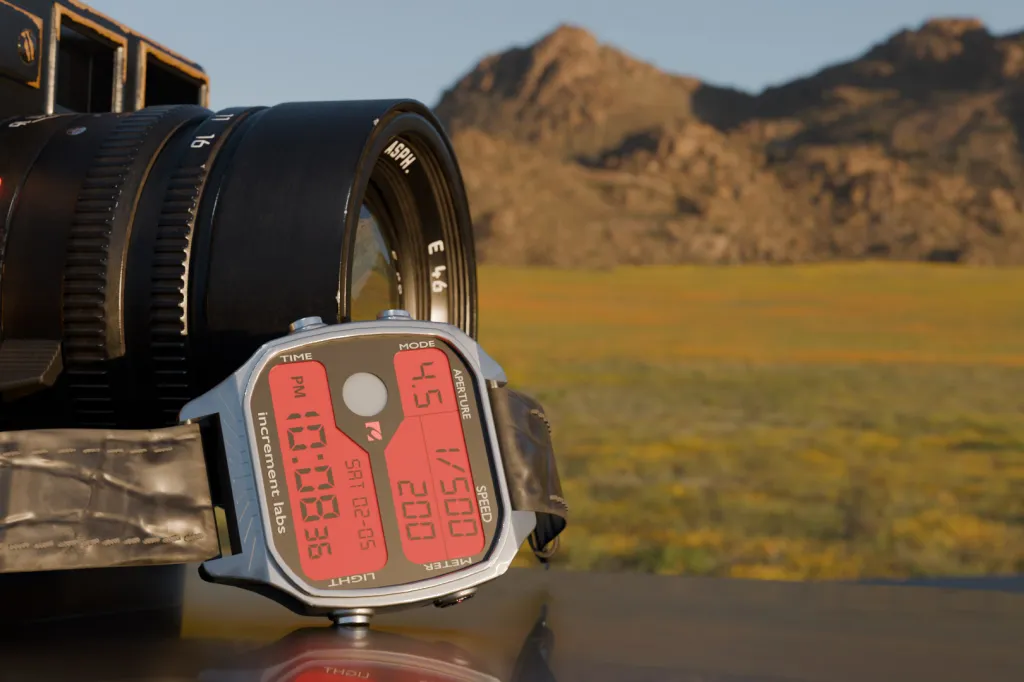
Richard Soler and Edward Wells have spent over 18 months developing what they claim is the world’s first truly portable, instant and ergonomic light meter, built into a watch, and they set up a company, Increment Labs, to put the watch into production. We were keen to know how the idea of the light meter watch came to be, so we spoke to Richard to find out all about it.
Firstly, tell us more about yourselves and how you started Increment Labs
Eddie and I are longtime friends since meeting at Loughborough University, meeting on the first day as our rooms were next to each other. Eddie’s first words to me were “Nice watch!” (it was my dad’s old vintage 90s Bulova). Since then, over the years we’ve always joked about the idea of starting a business together (usually after a beer or three), so when the idea of a light meter watch first came about, I knew he was the first person to bring on board.
Increment Labs is our first foray in running a business, so everything is being done from the ground up with little resources. It’s surprisingly fun to piece together your next steps based on limited info. For example, I’m more creatively minded so I’ll bring wacky suggestions to the table for new features and marketing ideas. Eddie on the other hand is a numbers man, so he’s got his head screwed on with spreadsheets, being the voice of reason and sound logic (for the most part). Ultimately, we both challenge each other and force one another to think in new ways which is always a good thing.

How did you become interested in photography?
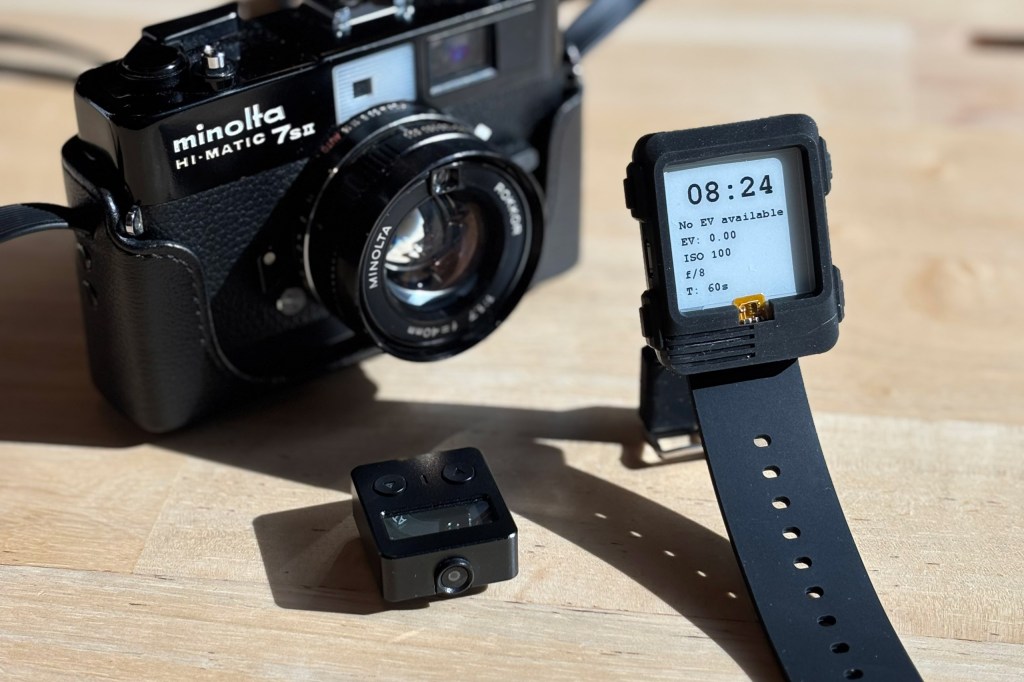
I’ve always liked photography but wanted to delve into the ‘analog’ side of things. After playing around on my grandad’s inherited Olympus point and shoot, I bought myself a lovely Minolta Hi-Matic 7Sii which had a broken light meter, which I essentially took as my sign to learn manual photography. That’s how the inspiration came for creating a light meter watch!
I feel like everything nowadays is too easy and automated, but there’s something satisfying about learning those core skills the ‘hard way’. Also, when your iPhone camera requires zero skill, it’s great to slow down and think about what you’re doing in an age where everyone is moving at 100mph. I definitely think this is why analogue has had such a resurgence, and our watch plays perfectly with this movement.
Were your degrees relevant to setting up such a business?
I studied Psychology, and my Masters was in ‘Consumer Behaviour’ – essentially the psychology behind marketing and consumer branding. This was hugely influential in how I approached creating a new product and positioning it to an audience. Eddie on the other hand, is a Systems Engineer, so he understands what it takes to get a product manufactured. He sourced our engineering team, looks after the numbers and keeps our feet on the ground.
What problem is this light meter watch trying to solve for photographers?
We noticed that photographers don’t have their camera in their hand the majority of the time, meaning there are great spans of time where they cannot test the light. Our theory is that by having a light meter on your wrist, you can train your eye for aperture and shutter speed everywhere you go in daily life, meaning that our watch will naturally make you a better photographer over time. Not only this, but analog photographers will also see an added benefit of having a safety net of the watch to ensure they never over/underexpose a shot.

How does the watch compare to existing light meter solutions?
We found that all the existing light meters in the market have significant drawbacks related to ergonomics, portability and size. For example, hot shoe mounted meters are hindered by awkward sizing, limited screen space and lack of buttons, meaning the user experience is sub-par.
These meters generally have a lower build quality as they are often made from plastic. Furthermore, they are designed to be attached to the camera in which the problem around portability arises again.
Incident meters are a professional standard, but they are not designed for the ‘everyday photographer’ meaning regular casual photographers are not buying them nor bringing them out as an everyday essential. Again, these models are bulky and not designed for everyday carry-use. Not only this, but the pricing for these models (£200 or more) makes them prohibitive for the majority of casual photographers.
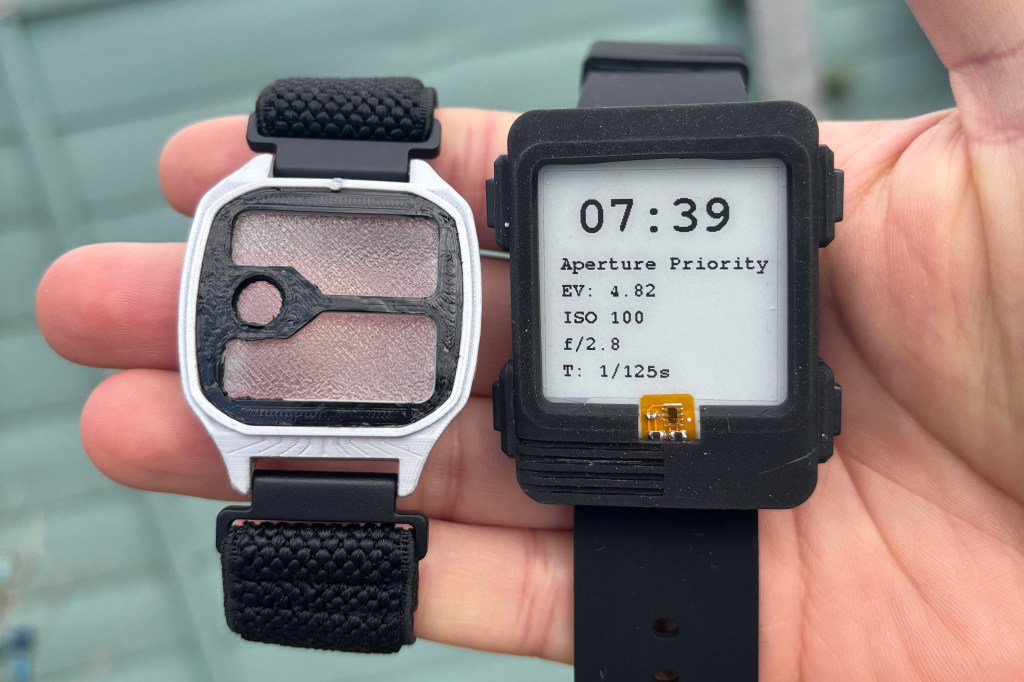
When it comes to smartphone apps, the light sensors in phones are not the same as what is used in photography sensors, so there’s less accuracy with phones. Also, when you consider that you have to unlock your phone, scroll to find the app, load the app, adjust the settings, you may have missed the shot. With our watch you only have to press a button and you’re done.
Tell us about some of the challenges you encountered
As two mates living in London starting a business in our twenties the biggest hurdle for us is money. We could have gotten our project off the ground a year ago if we had the funds but as is the way with life, things are never that simple. We actually spent many months pitching to investors but no one took us up because we were considered ‘too risky’ for them to invest. Because of this, we had to pivot our approach hence why crowdfunding on Kickstarter is our new method for launching our watch. Not all is bad though, pitching to investors made us really sharpen our business minds and made us consider problems we’d previously overlooked such as logistics, distribution, supply chain etc. We’re planning on manufacturing in the UK so it really helped us to nail the whole process down. Safe to say we’re a lot more polished now than we were 12 months ago!
Who is the target audience?
We really believe this watch has genuine benefit for all photographers. Saying that, we feel it has greater relevance for film shooters and beginners. If we treat this as a learning tool then all beginners, whether using film or digital, will benefit. But film shooters especially, when you consider how many vintage cameras have broken or expired light meters.
We also spoken with a number of street photographers who particularly liked how the inconspicuous nature of the watch means they are able to blend into a scene without notice or arousing suspicion (e.g. by not lifting a camera to their face to meter with the built-in meter). And many of the professionals we spoke to also said this would be a perfect birthday or Christmas gift.
Why choose a British manufacturer when you could probably source more cheaply in China?
Eddie has a lot of experience in logistics and components, and is more familiar with UK supply chains. Also the world is a funny place right now with tariffs and international tensions. Our theory is that while China may be cheaper, we prefer the stability of manufacturing within the UK. It also speeds up our development process so we can test and launch projects on a much faster time scale.
Will you be developing new products and features?
Right now, we have a working prototype and are in the fundraising phase of the project. But we have an ambitious roadmap and plan to add more features in the next model such as an incident meter variant, flash sync, colour/white balance and backlight compensation.
Where should people go for more info, and to order one?
Our crowdfunding campaign is live NOW! So check out our campaign and support our project via the link here.
Related reading:
- Best 35mm film cameras
- Luma Power light meter review
- KEKS KM-Q review – a tiny light meter for film shooters
- Keks vs Doomo, which compact lightmeter for film camera users?
Follow AP on Facebook, Instagram, YouTube and TikTok.