Most of us have played a variant of the classic Top Trumps game, launched in the 1970s. In the Anglican Cathedrals of Britain version, players ‘trump’ each other with statistics related to height, external length and number of bells. (Wells Cathedral has the heaviest ring of ten bells, Canterbury Cathedral is the oldest cathedral in England and Salisbury Cathedral has the tallest church spire in the UK – just in case you were wondering.) Now a children’s card game might not seem the most obvious catalyst for a photographic project, but the late Peter Marlow (member and two-time president of Magnum Photos) was an original thinker and liked to draw inspiration from unusual sources.
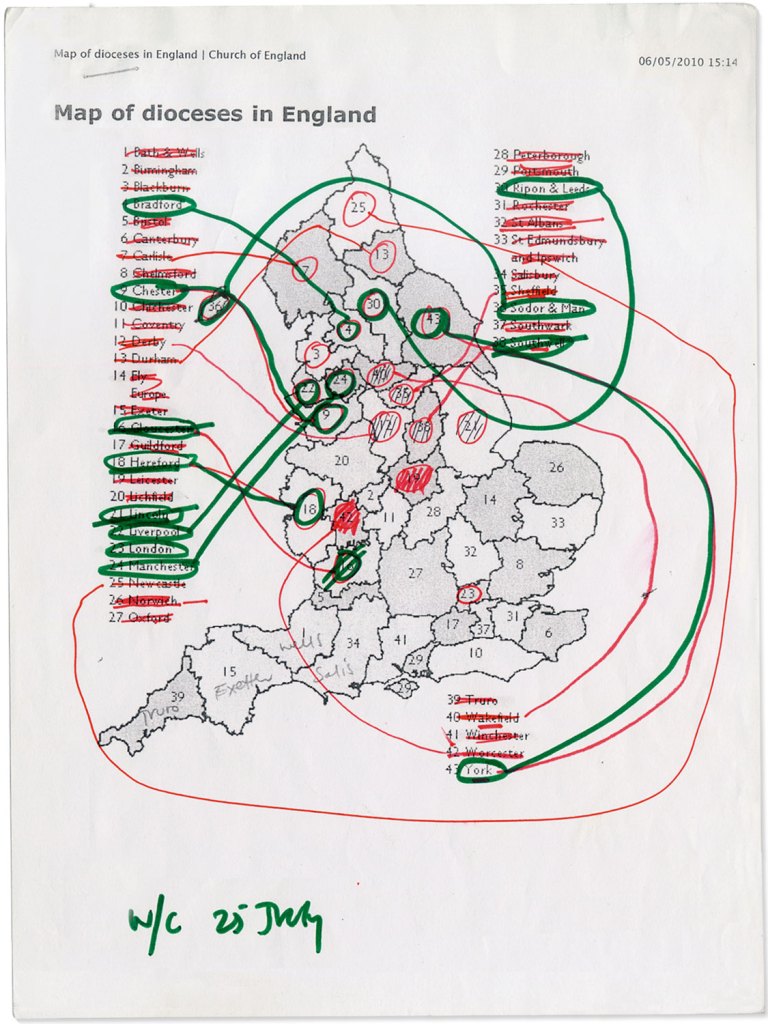
In 2008 Peter was commissioned by Royal Mail to produce six images of cathedrals to be used on a set of commemorative stamps. Once the project was complete, he took his Top Trumps cards (along with a copy of the 1989 book English Cathedrals by Edwin Smith and Olive Cook) and set himself the challenge of photographing all 42 of England’s cathedrals.
‘Peter was fascinated by history, and even at a young age he understood that cathedrals are part of what this country is,’ says Fiona Naylor (Peter’s partner and chair of the Peter Marlow Foundation). ‘It’s not just about religion, it’s also about society, crafts, architecture and the evolution of a building – he was fascinated by all of that.’
The timing of the Royal Mail commission was serendipitous: Peter wasn’t working on a longform project at the time and the structure and taxonomy of the ‘42 cathedrals’ idea really appealed to him. Also, having travelled to more than 80 countries during the course of his career, he was eager to explore his homeland with new vigour. ‘He talked about it being a bit of a pilgrimage …a way of re-examining what England was,’ recalls Fiona. ‘You spend your whole life travelling around the world and then you suddenly realise you’ve never been to Chester!’
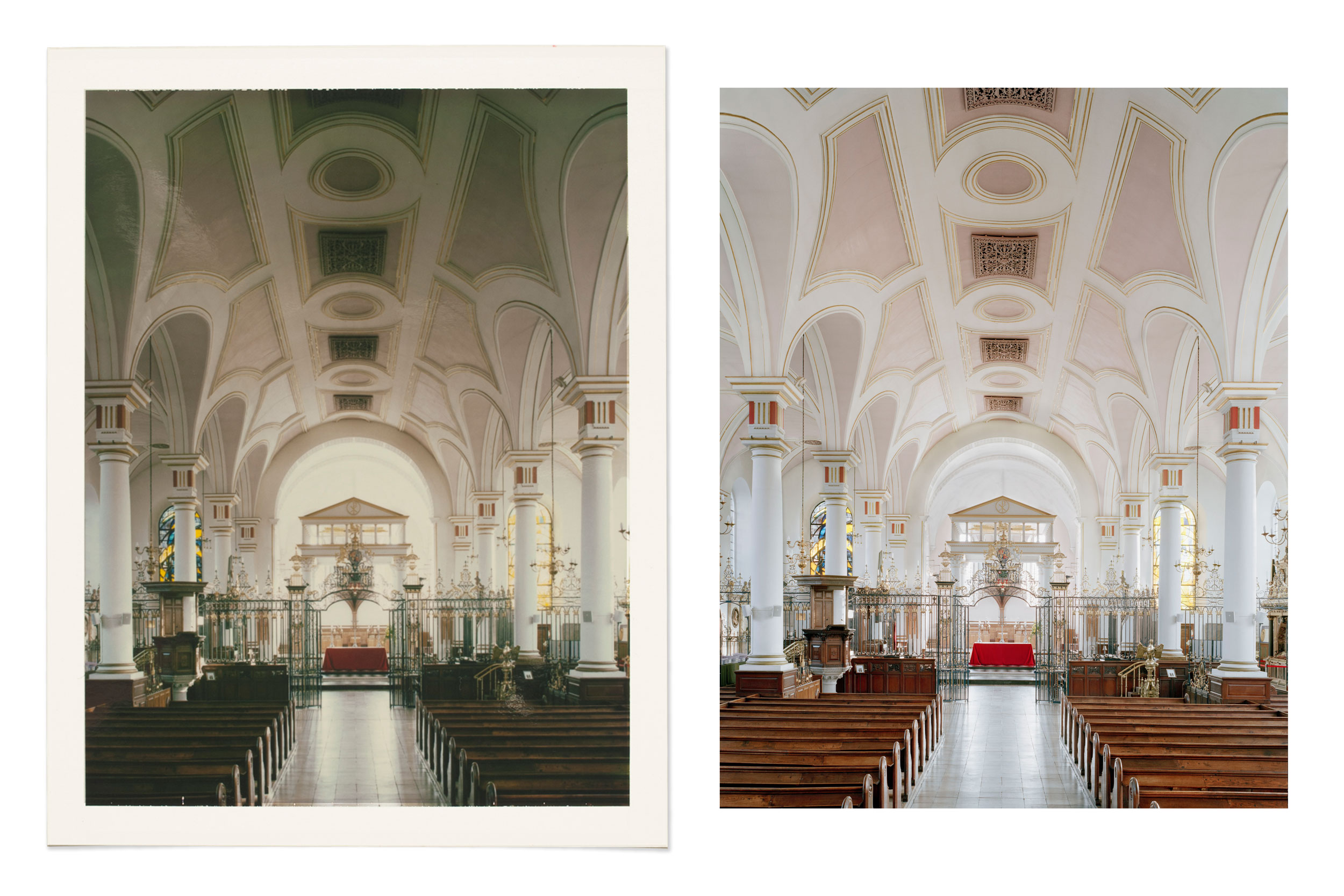
Much of Peter’s early work could be classed as shortform photojournalism, but the personal longform projects he embarked on were hugely important to him. In the late 1970s, for example, he worked alongside fellow Magnum photographer Chris Steele-Perkins to document the rise of the far-right, even covering the infamous anti-immigration riots of Lewisham in 1977, where members of the National Front clashed with demonstrators. What’s more, in the 1980s and 1990s he spent eight years photographing the declining conditions in inner-city Liverpool – a location rich in maritime history that was struggling to cope with the fallout of deindustrialisation. ‘He enjoyed working on projects with a continuous thread where he had a number of years to get things done,’ explains Fiona.
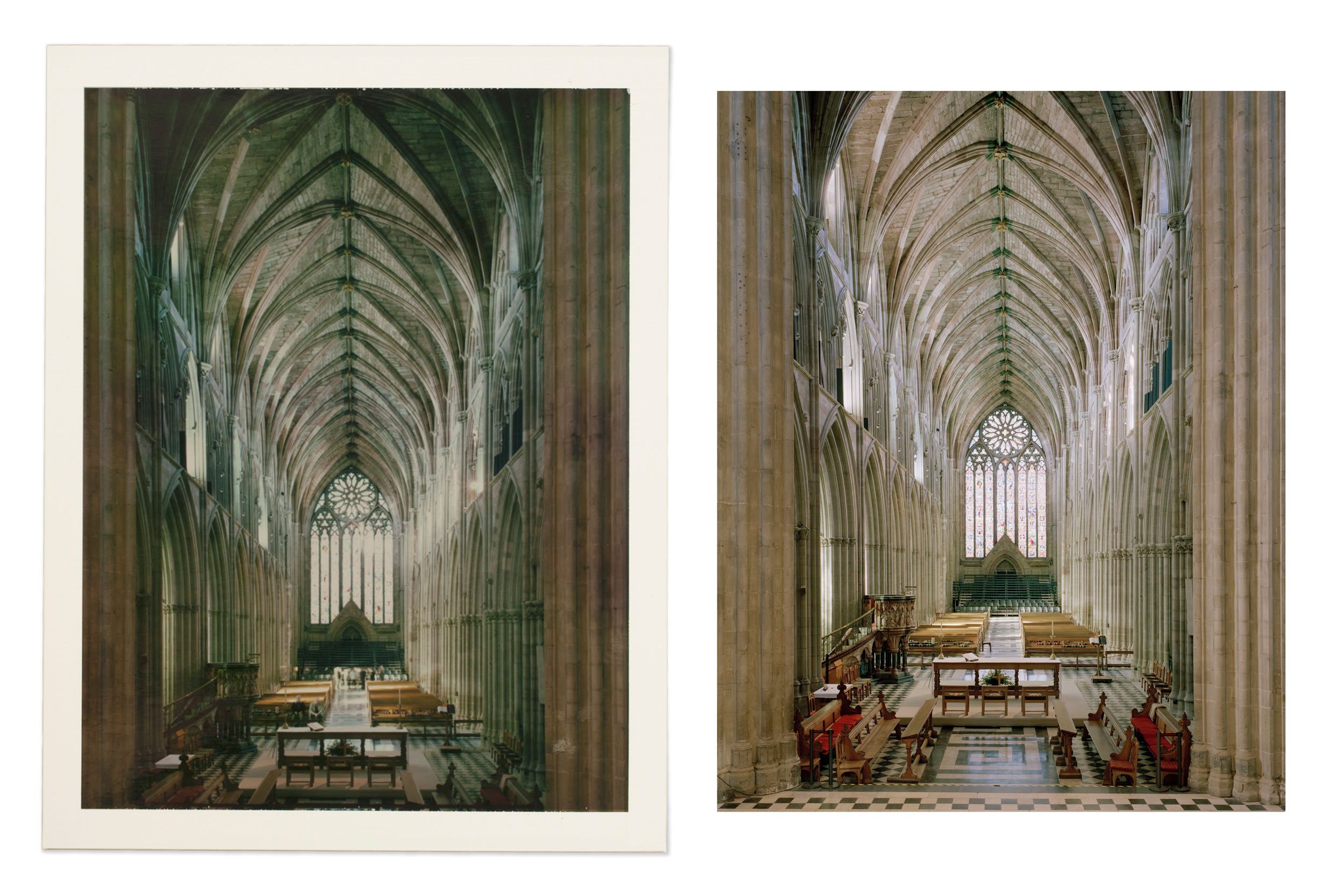
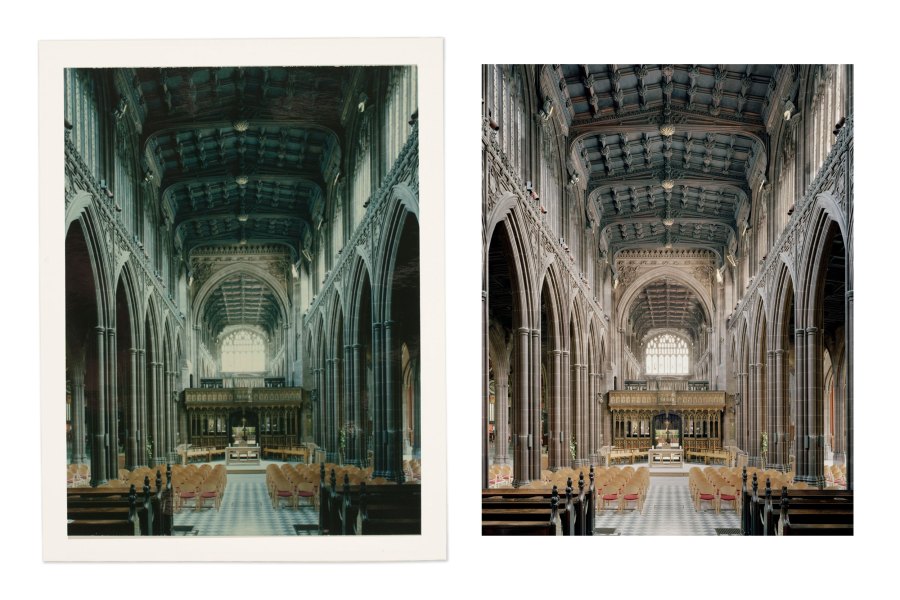
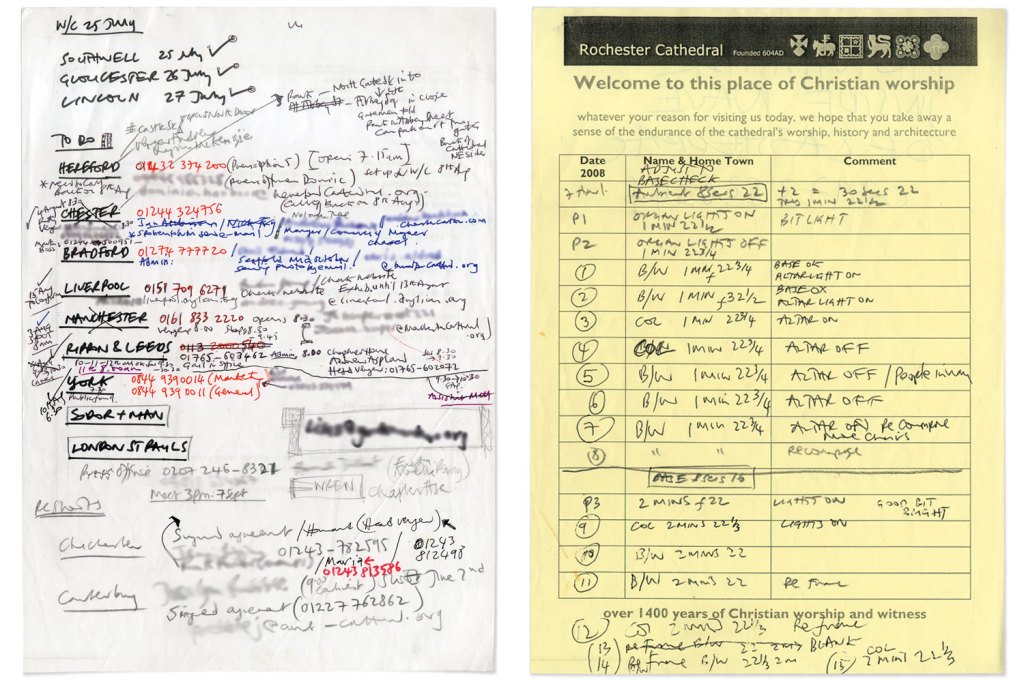
The English Cathedral project took Peter three years to complete and didn’t come without its challenges. From the outset, he decided to photograph the buildings empty, from the same position if possible (looking east towards the nave and altar) and in natural daylight. ‘It’s the way people would have experienced the cathedrals when they were first built,’ says Fiona. ‘Peter wanted to shoot with the dawn light coming in – they all face the same way, so at dawn the light comes in through the east window.’ But capturing this fleeting light was easier in some locations than others. ‘Most of the photographs were taken between April and September otherwise by the time the light came up it was too late,’ says Fiona. By ‘too late’ Fiona is also referring to the arrival of the cathedral cleaners (and the general public).
As part of his recce Peter would try to find out where all the light switches were so that he could eliminate any artificial sources. But even this could be tricky. ‘In one instance – I think it was Chester – nobody knew where the light switch was, because it hadn’t been turned off for 15 years,’ laughs Fiona. On such occasions Peter embraced the challenges and chose to treat them as part of the process. ‘He wasn’t a person who got stressed by things,’ smiles Fiona. ‘He would always come up with a solution – he was endlessly innovative.’
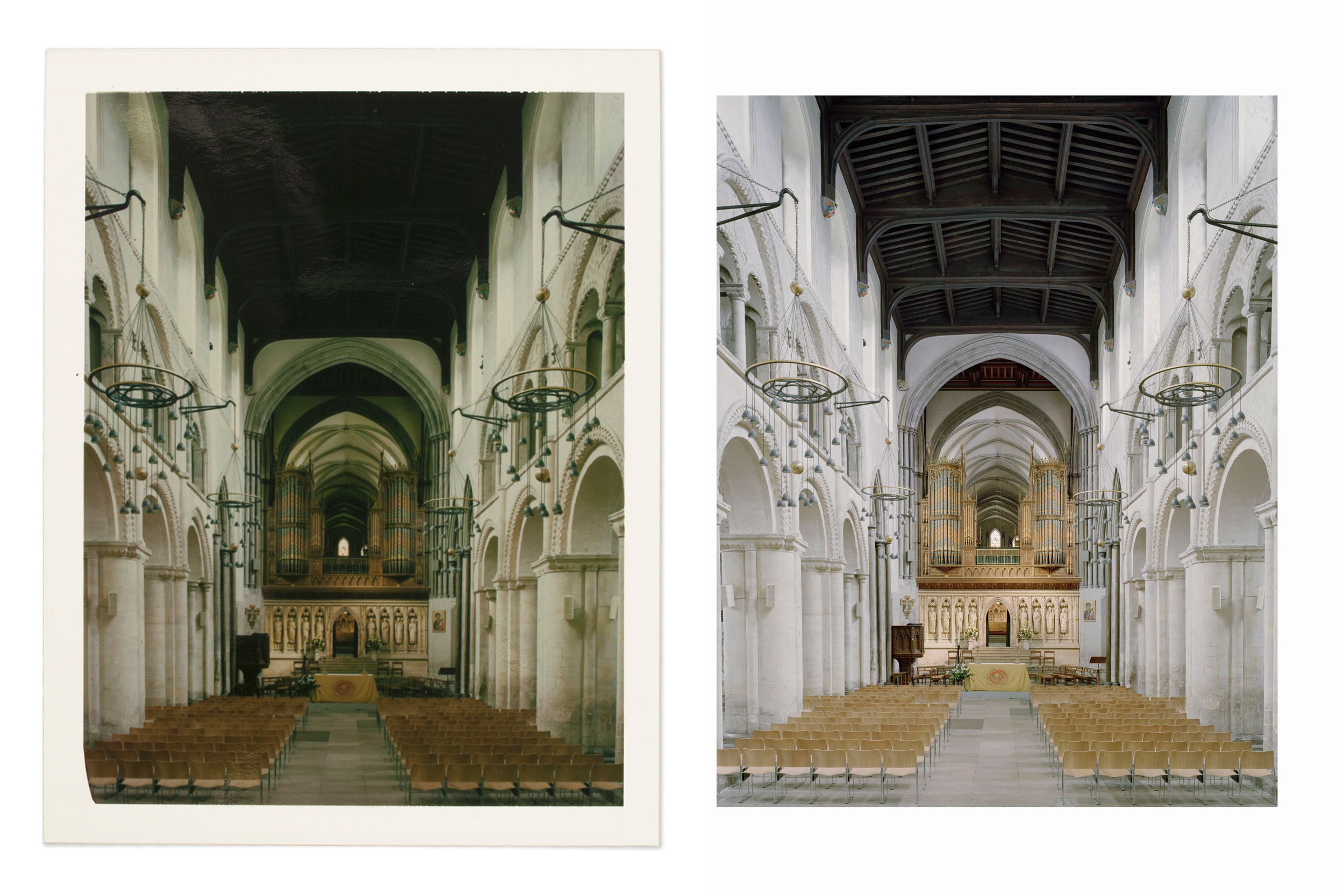
To add to the complexities, Peter decided to shoot each cathedral from the same height. Using a six-foot ladder (and the tallest tripod he could lay his hands on) he fitted his Sinar F1 monorail camera with a Sinaron-W 115mm lens and loaded it with Fuji 160 Pro film. Once in situ he used the rising front of the Sinar to keep the verticals parallel. ‘It was important to Peter that everything was in focus too,’ says Fiona. Using small apertures – between f/22 and f/32 – allowed him to maximise depth of field, but also led to relatively long exposures (between one and five minutes).
Transporting all of this heavy equipment into a cathedral was exhausting, so Peter invented a parking permit that he stuck in his car windscreen so he could park outside the west doors without being challenged – an example of the resourcefulness that Fiona speaks of. Once inside, he removed anything that might be distracting in the final image including posters, bins, prayer books and welcome desks. ‘He did what he could,’ says Fiona. ‘In fact, I would say 50% of the project was spent rearranging, discussing access and planning the shoot for times when there were no particular decorations up!’ Cathedrals have busy programmes of events, so the logistics were complicated.
Power of the architecture
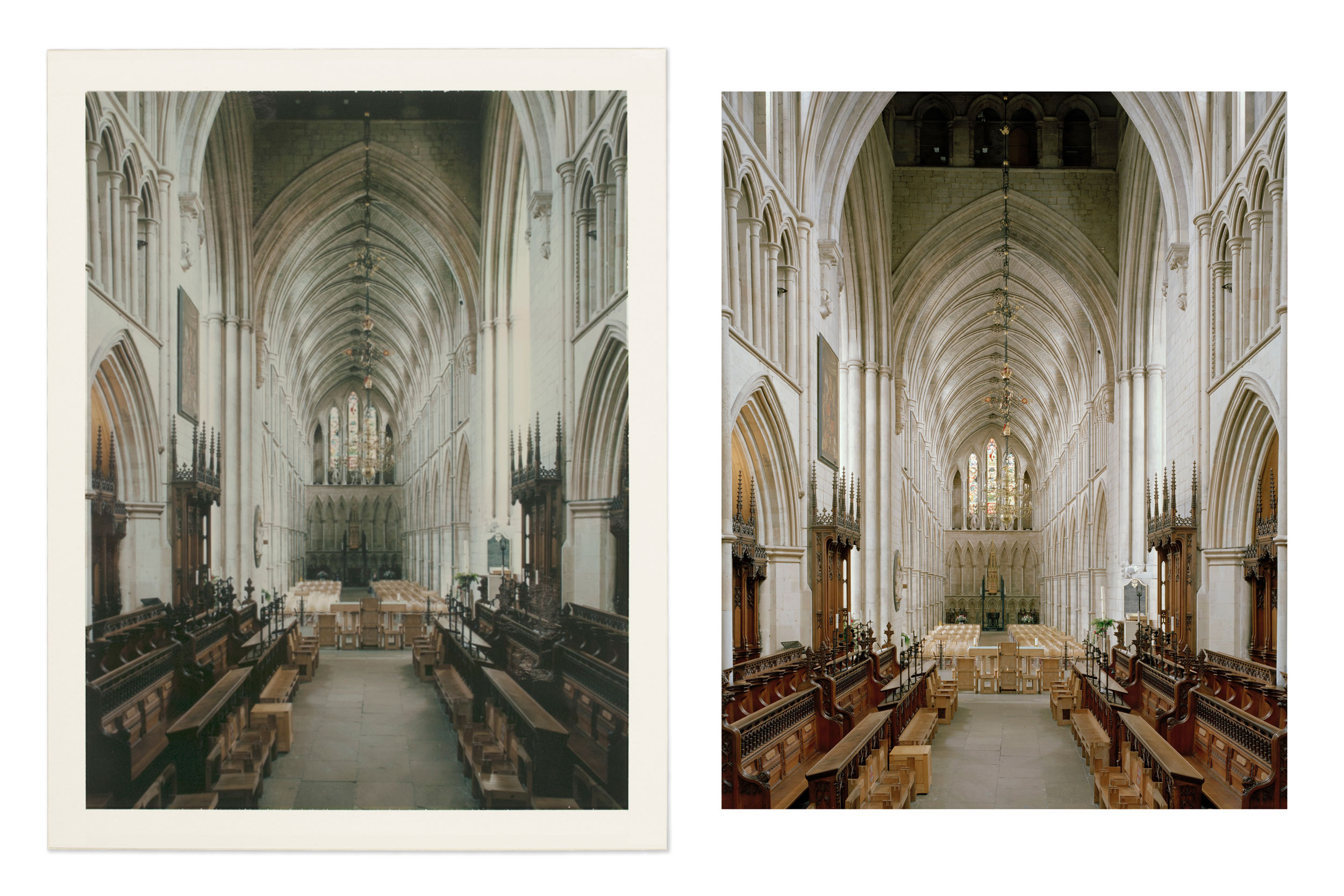
For this project, Peter needed to be seriously prepared. If everything was in place in good time, he could concentrate on the experience of being in the cathedral. ‘He did most of the project on his own, and I think that was important to him,’ says Fiona. ‘He wasn’t a religious person, but he felt the power of the space and architecture. He would spend time walking around afterwards, absorbing everything. He took something from being in those spaces on his own.’
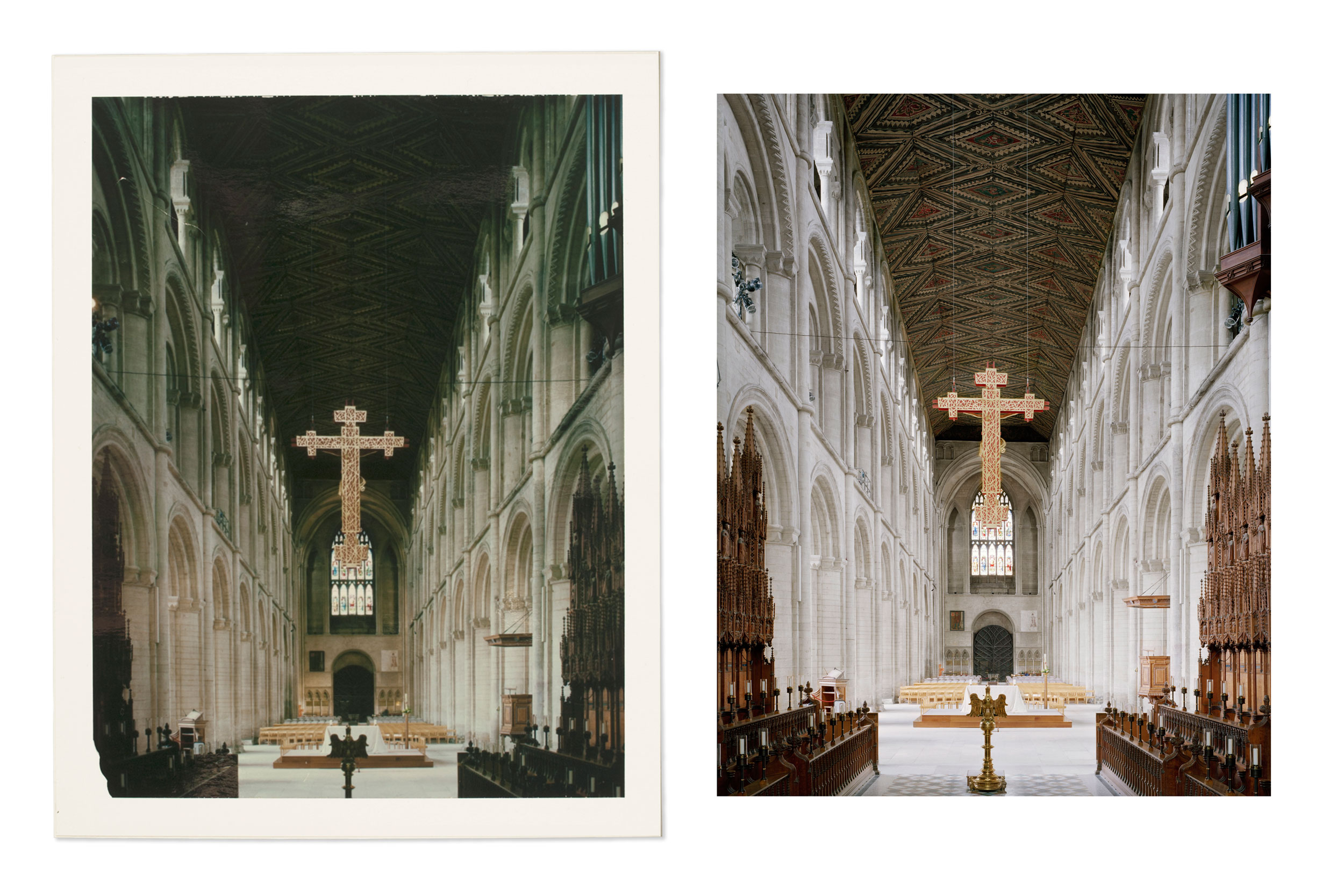
Now Fiona is enjoying the opportunity to retrace her husband’s footsteps. A few years ago, his project The English Cathedral began touring cathedrals in England, and it’s a trend that Fiona (and the Peter Marlow Foundation) are keen to continue. A new showing of it will be held in the beautiful Southwark Cathedral in London. It’s the oldest gothic church in the city, set on the South Bank of the River Thames. ‘It’s a privilege to be showing the work in these spaces,’ says Fiona. ‘Effectively, we have been given some of the most beautiful galleries in the country.’ Beautiful they may be, but these spaces were never intended to be art galleries, so Fiona and her team have to plan the show around immovable objects such as tombs, pillars and door frames.
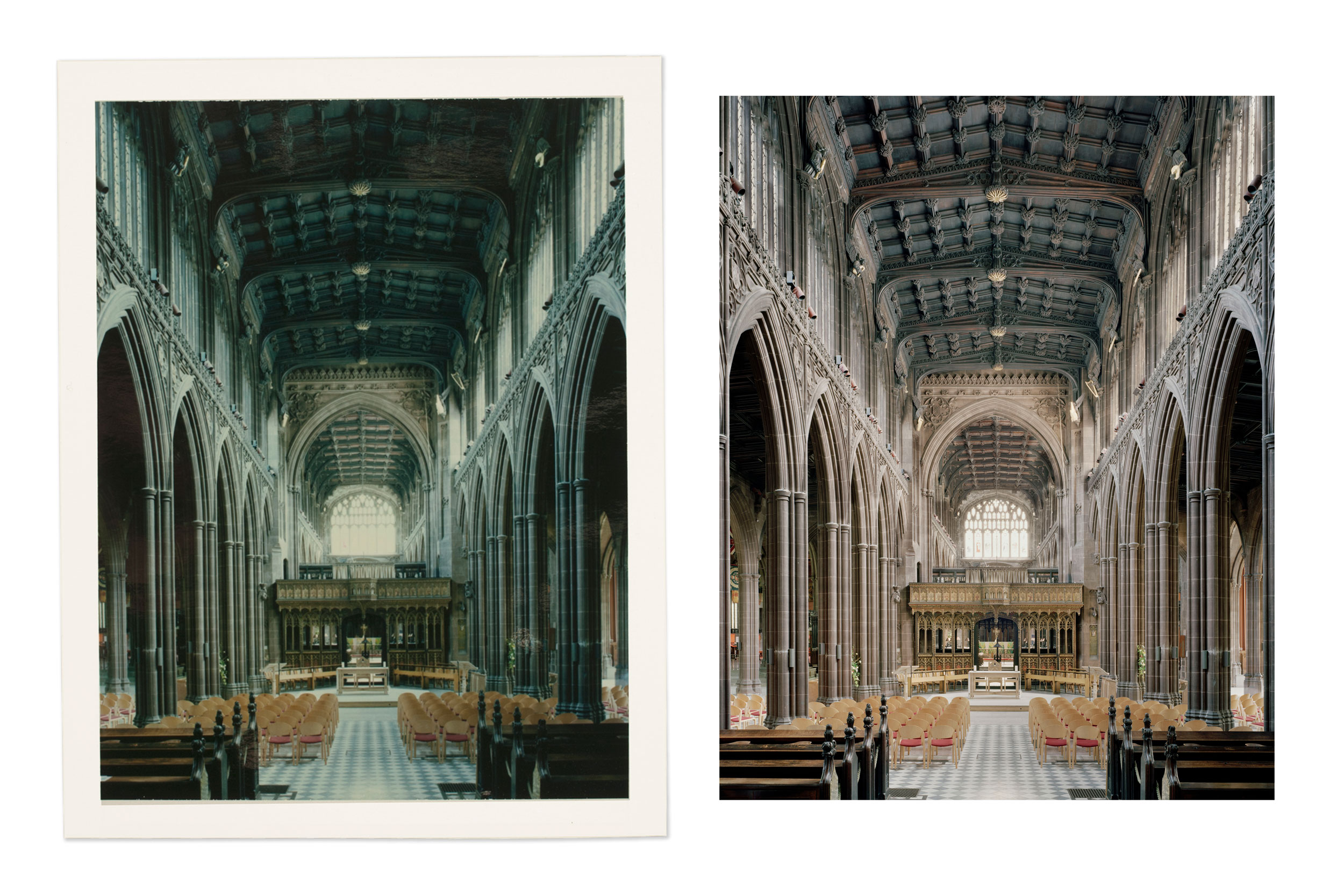
Running her own architecture and design practice, Fiona is used to finding workarounds in tricky spaces and she makes sure that she visits each location before work is installed. ‘I go on a recce and talk to the verger, dean or team – it’s part of my own pilgrimage,’ she says. On these visits Fiona looks at the uneven floors, the light and the pillars that could hinder the installation and, like her husband, views them as a natural part of the process. In fact, some of the quirks delight her. ‘There is some interesting subsidence on cathedral floors,’ she notes, ‘but when you walk over these floors you think about all of the people who have walked over them before you. You can tell the route most people have taken around the space. It’s things like that that get me emotionally – it’s the time the buildings have stood there and what they have seen.’ In short, it’s the spirit of the place.”
Peter Marlow: The English Cathedral runs at Southwark Cathedral until 31 August 2026. More information about future touring dates can be found at petermarlowfoundation.org.
Related reading:
- Magnum photographer and former president Peter Marlow dies at 63
- Lift your spirits: how to photograph churches
- Best photography exhibitions to see in 2026
Do you want to win some great prizes for your photography? Enter your photos in our International Amateur Photographer of the Year competition. Free entry for photographers aged 13-21.
Follow AP on Facebook, Instagram, YouTube, TikTok and Irys.