Harry Borden reflects on a photo shoot with the diminutive pop princess almost three decades ago…
“It was early January 1998 and I was still in the early years of my career when I was commissioned by the Observer Life magazine to photograph someone en route to becoming one of the most famous pop stars of the era: Kylie Minogue. She was then 29, had released her album Impossible Princess a couple of months earlier and was about to do her first tour for seven years.
The shoot was to take place in a private members’ club in the West End of London, where she was also being interviewed by an Observer journalist. I wasn’t a big Kylie fan, but I obviously was aware of her career and hit songs. I remembered seeing her, years before, on the video for I Should Be So Lucky and thinking she had a real million-dollar smile, one that lights up a room.
In person, she was surprisingly small (just 5ft tall) and very slight. Although she looks like a sexy siren with a curvaceous figure in videos, when you see her in person you realise it’s all a question of scale, lighting and camera angles.
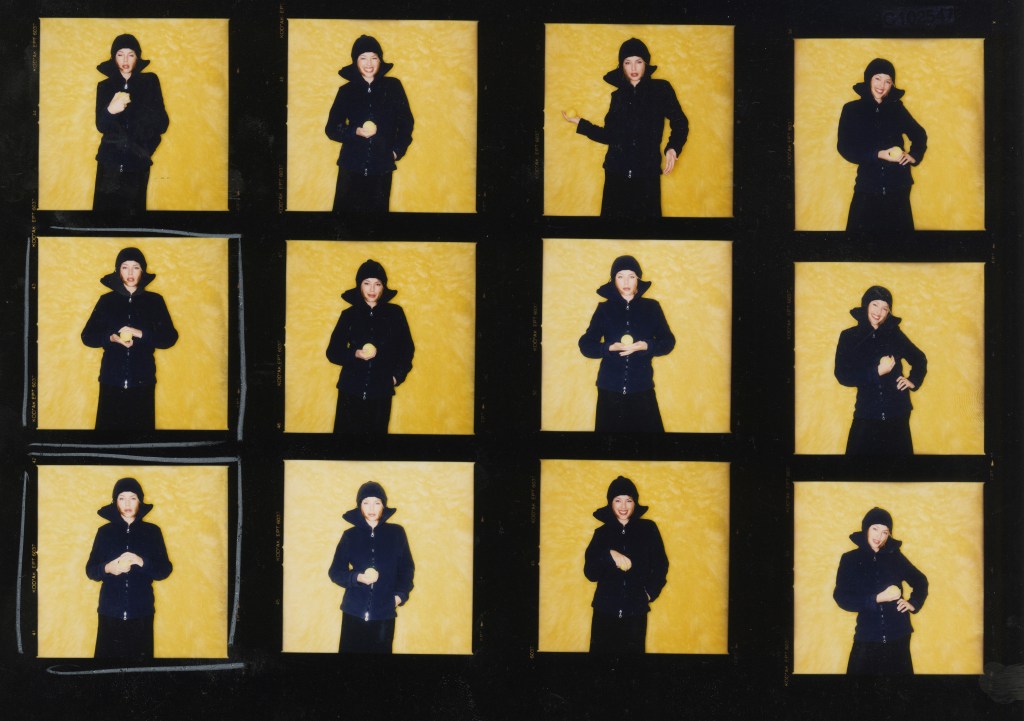
I was told I’d have half an hour or so with her in the club and I knew I’d just have to make the best of the situation. While driving to the location, I stopped off at Brick Lane in the East End. At that time, there were several remnant shops in the area where I knew I could buy sheets of fabric to use as backgrounds. They were considerably cheaper than buying a roll of Colorama and a lot more fun and original. I bought a sheet of bright yellow fake fur material, which I felt would be a good background for Kylie.
When I arrived, Kylie was curled up like a kitten on a big leather chair. Before I could get started, I was approached by people from her management company who gave me a contract to sign. This contract essentially gave them the copyright of all my images in the shoot for just £1. They played it down by saying it was just about controlling subsequent use of the images and wanting to prevent bad images being used without their consent. The clear implication was that the shoot wouldn’t happen unless I signed the agreement.
This put me in a difficult position. I didn’t want to have an argument with them in front of Kylie because that would have impacted on the pictures I was going to get. I wanted to keep things light, fun, playful and creative. Reluctantly, I agreed to sign it. I tried to put it to the back of my mind and think positively: I thought, maybe the shoot will go well, we’ll become friends and I’ll get the chance to work with her a lot more in the future. So I set to work.
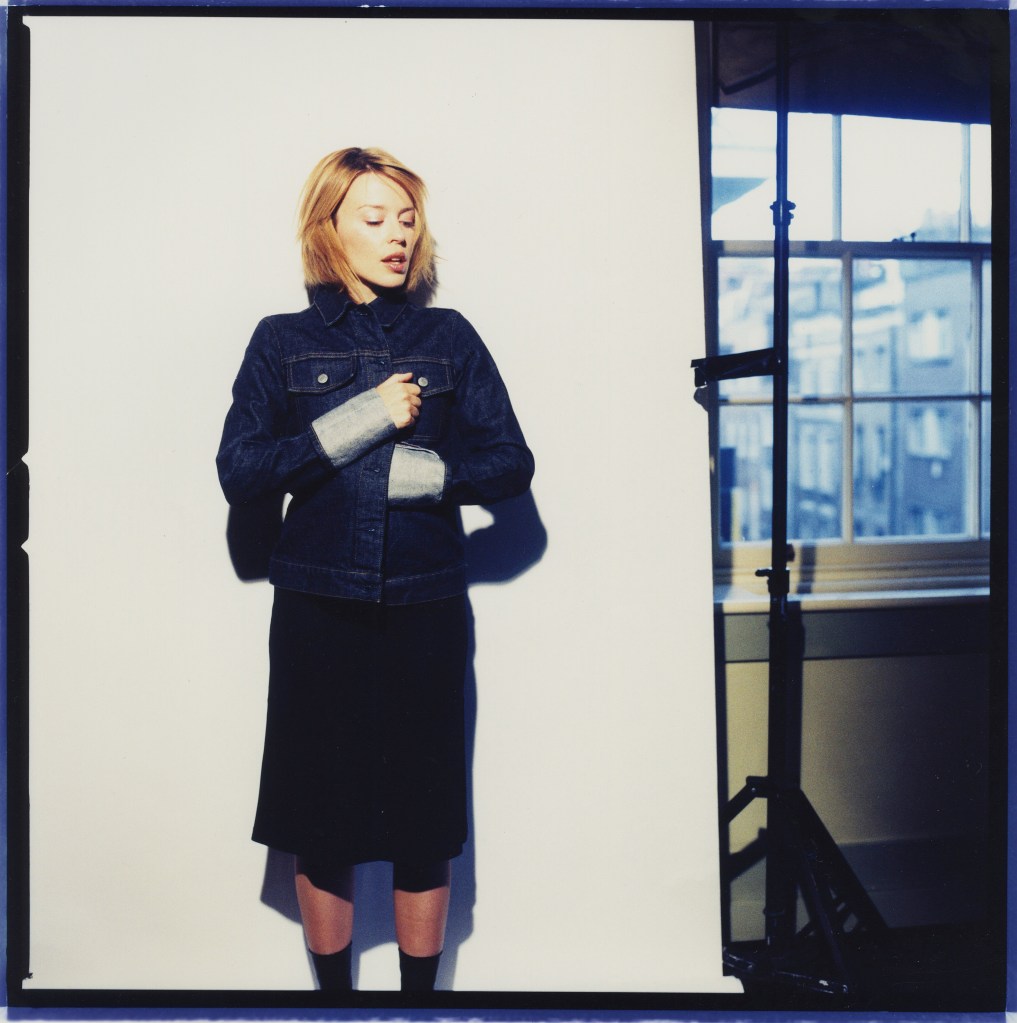
I was shooting with my Hasselblad 500 CM fitted with a 60mm wideangle and a standard 80mm lens, and rolls of Kodak transparency film. I later cross-processed the films in C-41 chemicals for a more contrasty, colour-shifted look that I liked at the time. I used a ring flash for most of the shoot, but for some shots I used a tungsten Redhead light that gave them a warm look.

Kylie had a rack of clothes from which she chose a few different outfits, and I paired them with either a plain white or yellow fake fur background. She was incredibly easy to photograph, because she just went through a set series of poses that she thought I wanted.
She was so naturally photogenic that it was like shooting fish in a barrel, but at the same time, because she was going through lots of expressions by rote, I wasn’t getting any sense of who she really was. She was very professional, but I wasn’t really able to establish a rapport. All too soon the shoot was over, but I got everything I needed for the Observer and one of the images was later used on the magazine’s cover.
If asked what I thought of Kylie, I’d say I found her inscrutable. Who knows how involved she was in the policies of her management company. But if someone can effectively rights-grab a lot of work from photographers they’re obliged to do photo shoots with, further down the line it makes it a whole lot cheaper to use those images to produce a book. And that’s what subsequently happened to some of my images in the book Kylie La La La (2002).
Kylie split from her management company in 2013 and I never even received the £1 fee. So, as far as I’m concerned, the contract is null and void.
The takeaway from this story is that photographers own the rights of their pictures unless they are employees. If you’re freelance or taking pictures for fun, the default position is that you own the copyright. This has been the case in the UK since 1988. My advice, if you’re being pressured to sign away the copyright, is to kick the can down the road say you need to get some professional advice.
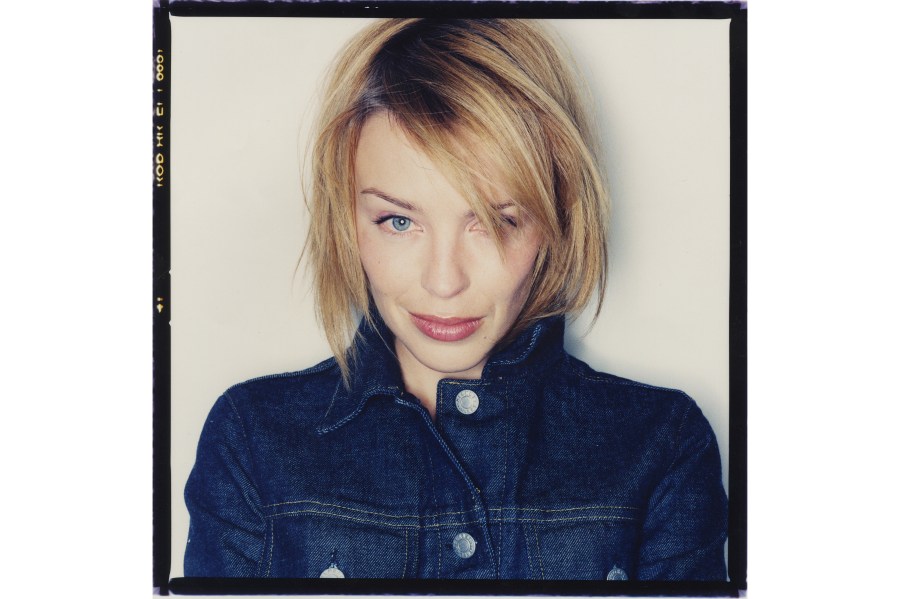
As far as the shoot itself goes, my favourite shot is the one with her in a denim top and her hair over one eye. The shot was a precursor to what I do now, which is ask people for less. I just tell them to give me absence of thought. It’s not what you’re used to seeing with Kylie – she’s usually shown as an effervescent little pixie performing – and I think it’s a simple but striking image.”
Harry Borden Bio
Harry Borden is one of the UK’s finest portrait photographers. He has won prizes at the World Press Photo awards (1997 and 1999) and was awarded an Honorary Fellowship by the Royal Photographic Society in 2014. The National Portrait Gallery collection holds over 100 of his images. He tells the stories behind dozens of his celebrity shoots on www.youtube.com/@fredandharryborden.
Follow AP on Facebook, Instagram, YouTube and TikTok