For years the GoPro brand has been synonymous with action cameras. So much so that, like the adoption of ‘Hoover’ as a generic term for all vacuum cleaners, it’s hard to imagine anything other than GoPro’s market ubiquity, despite stiff competition.
After all, its units joined the astronauts on this April’s NASA Artemis II trip round the Moon.
This prestigious hookup aside, however, it’s been the opposite of lift-off for GoPro this year. Due to decreasing demand, the industry stalwart could be up for sale, or subject to a strategic merger.
More positively, I reckon recent releases have displayed ambition.
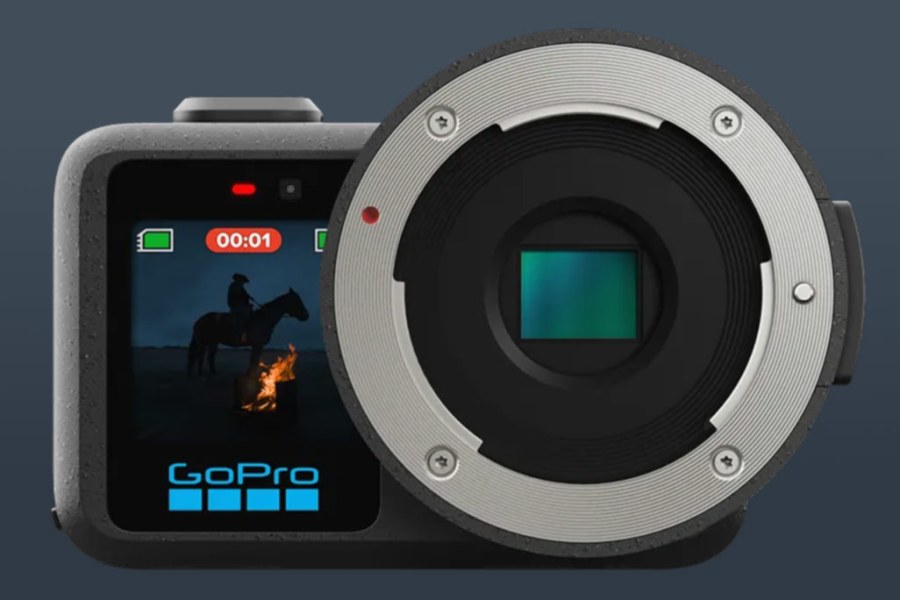
In April, it announced a triple whammy of pro grade action cameras: the Mission 1, Pro and Pro ILS; the latter being a mirrorless camera with Micro Four Thirds lens mount. I believe the series’ timing and nomenclature is something of a masterstroke while NASA’s GoPro-equipped space mission is still fresh in the memory.
With the Mission 1 trio now hitting retail, the specs also impress. Claiming to be the world’s smallest and lightest 8K and 4K open gate cinema cameras, they boast a new 50MP 1-inch sensor, new GP3 processor, RAW capture, plus the apparent capability to pick up on intricate detail in dark environments.
All this suggests something more – much more – than an old-school knockabout GoPro I’d tether to my bicycle.
But, with rumours swirling regarding GoPro’s future, might their introduction still prove a ‘Mission Impossible’ – and too little, too late – in terms of turning around the company’s fortunes?
Mission drag?
So, what on earth has gone wrong in the world of the once all-conquering GoPro?
Like many camera manufacturers, it has had to contend with not just falling sales, but rising component costs. Plus, it’s also suffered a patent battle loss against its Insta360 rival.
Then there are the numbers – and they’re stark reading.
For the first quarter of 2026, GoPro reported a sizeable 26% year on year drop in revenue, while the number of camera units sold (313,000) was down 29%. The company’s own statement from May 2026 reveals it’s engaged a financial adviser to ‘review strategic alternatives’.
So, what does that mean?
The new Mission 1 cinema cameras aside, at the start of this year it partnered with ASUS laptops and a youth sports app, while it is currently exploring business opportunities in aerospace and defence. GoPro reckons these two markets could be worth billions of dollars. All are now attempts to survive, as much as they are as innovative or creative solutions.
So, while falling sales of core products is bad news for GoPro, it’s not uniformly bad news. Plus, it’s not alone in facing the challenges of uncertain times, or, despite its once market-leading status, immune to them.
Just as well, then, that GoPro cameras have always been built to withstand turbulence.
The views expressed in this column are not necessarily those of Amateur Photographer magazine or Kelsey Media Limited. If you have an opinion you’d like to share on this topic, or any other photography related subject, email: [email protected]
Related reading:
- Is this the end of the Action Camera as we know it?
- GOPRO has lost the action camera market, with these two companies winning
- Opinion: GoPro needs to innovate or die
Follow AP on Facebook, Instagram, YouTube and TikTok.