At one time you weren’t considered serious about photography unless you used Photoshop. But has free editing software, including the likes of Affinity by Canva, and AI rendered it unnecessary for most?
When I was Dep Ed of What Digital Camera, almost a quarter of the issue was taken up with Photoshop tutorials. You couldn’t consider yourself a professional photographer – or even photo enthusiast – unless you owned a copy of what we termed ‘the image editor exemplar’. Our Editor was particularly keen to Photoshop our team photos, removing every wrinkle and blemish until we resembled showroom dummies – uncannily ‘AI’ like, before AI was a thing.
The software wasn’t just top dog by the mid-2000s, it was pretty much the only dog in the fight for serious users. But 20 years on, it feels that’s no longer the case and, certainly since it transitioned to a subscription model in 2013, the package is rarely mentioned by my contemporaries.
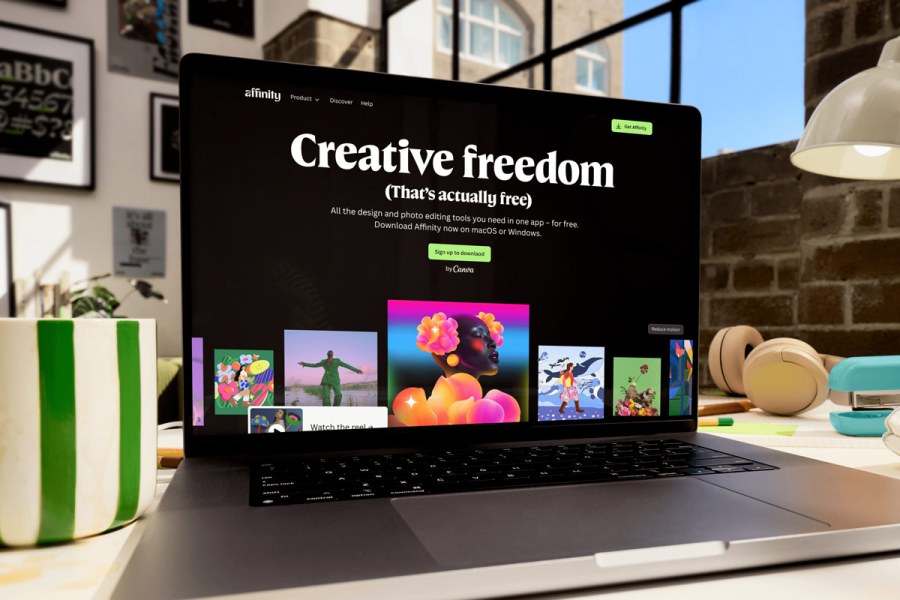
If all I want to do is some simple image clean-up, adjust brightness, boost contrast or retrieve some shadow detail, then the photo viewer that came free with my PC or Mac does the job. Should I want something a little more involved in terms of photo editing, graphic design or page layout, then Affinity by Canva is a capable free all-in-one software for PC and Mac, albeit with some AI enabled features exclusive to paying Canva premium plan customers.
Image editing to enhance, not just rescue
Whether a casual or serious user, however, the core downloadable version of Affinity, which combines photo, design and publishing applications, seems ideal. The fact that non-destructive editing is allowed, meaning that I’m not automatically over-riding or replacing original files, provides freedom to experiment or change my mind. In a current climate where ‘warts and all’ authenticity is increasingly valued, especially by creatives and viewers decrying ‘AI slop’, less is more when it comes to image editing after all.

That said, Affinity’s ability to edit Raw files, apply filters, healing and dodge and burn tools, while monitoring their effects in real time, isn’t going to result in my pictures looking AI-like ‘uncanny’. I feel that photo editing is at its best when the result *doesn’t* look obviously edited. I don’t want as a viewer to be taken out of the photo and whatever it makes me think or feel.
I’ve always appreciated the argument of pro photographers like Harry Borden for getting it right in-camera (or as near as dammit) in the first place, so that any subsequent image editing is something I want to do as part of my creative process, not something I *have* to do, to correct mistakes or sloppiness.
It will come as no surprise to learn that I haven’t personally used Photoshop in years. And it looks like, with free-to-download image editing tools like Affinity on the market, there is now no going back – whether I’m an aspiring pro or proudly amateur photographer.
Related reading
- Opinion: Photographers, it’s time to boycott Adobe
- Best Photoshop alternatives – no-subscription photo editing software
- Want better mental health in 2026? Look at more photos…
The views expressed in this column are not necessarily those of Amateur Photographer magazine or Kelsey Media Limited. If you have an opinion you’d like to share on this topic, or any other photography related subject, email: [email protected].
Follow AP on Facebook, Instagram, YouTube and TikTok.